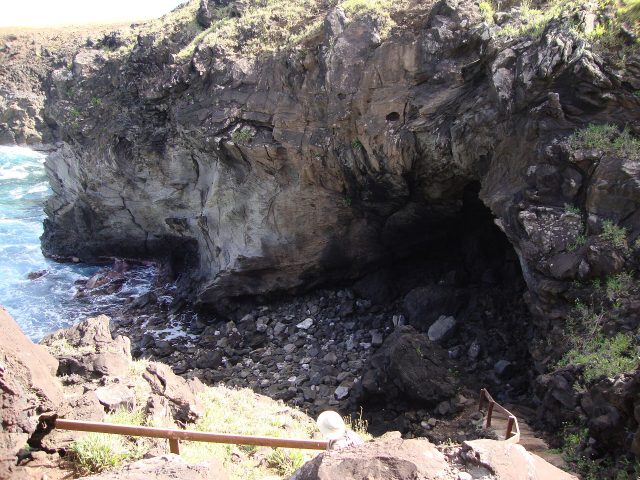
Pea Beach is one of those quiet corners of Easter Island where the ocean meets the land without fanfare. There are no luxury resorts, crowded bars, or the usual trappings of tourist hotspots. Instead, you’ll find a narrow stretch of black sand framed by jagged rocks, where the Pacific rolls in gently one moment and crashes against the shore the next. It’s less a postcard-perfect beach and more a slice of raw nature, drawing those who value atmosphere over amenities.
Just a short distance from Hanga Roa, the island’s only real settlement, Pea is easily accessible. A half-hour walk along the coastline or a quick drive down a winding dirt road brings you here. There’s no infrastructure—no sun loungers, no beach umbrellas, no cafes. Only a few fishing boats tethered to the rocks and the occasional local casting a line or sitting by the water. Pea isn’t a place for those seeking comfort; it’s for those who want to experience the island as it is—unpolished but undeniably real.
The black sand underfoot is a reminder of the island’s volcanic origins, shaped by eruptions millions of years ago. Here, at the edge of the Pacific, the land still bears the marks of its fiery past, and Pea is one of the few places where that history is so visible. The water is clear but cool, even in warmer months, and the waves can be strong, so swimming requires caution. For snorkelers, though, the underwater world near the rocks is rich with fish and coral, with good visibility most days.
Pea Beach is deeply tied to the history and culture of the Rapa Nui people. Long before tourists arrived, this was a place for traditional fishing and rituals. Local legends say it was here that the island’s first Polynesian settlers stepped ashore centuries ago. While no physical traces of that past remain, the beach still feels ancient, as if the silence broken only by the waves carries echoes of a time when the island was untouched by the outside world.
Unlike other spots on Easter Island, Pea hasn’t been turned into a tourist attraction. There are no guided tours, no souvenir stalls, no crowds. It’s a place for solitude, for quiet reflection, or simply for stepping away from the noise of everyday life. Mornings are often empty, the sand untouched except for the tracks of seabirds. A few visitors might wander in during the day, but they rarely stay long. By evening, when the sun dips below the horizon, Pea becomes a perfect spot for watching the ocean turn gold and pink, the sky deepening into a shade so rich it feels almost within reach.
The island’s rainy season runs from April to October, and during this time, Pea can be especially striking. After a shower, the sand darkens even more, and the air fills with the scent of salt and seaweed. But even in the drier months, from November to March, the beach has its own quiet charm—the sun is warm but not harsh, and the ocean breeze keeps the heat at bay. Weather here is unpredictable, though, and even in summer, a sudden chill or rain shower isn’t uncommon.
For those used to the conveniences of modern travel, Pea might feel too simple, even austere. But that’s precisely its appeal. There’s nothing here but the sea, the sand, the rocks, and the sky. It’s not a place for entertainment; it’s a place to feel the island’s pulse, its ancient energy, its stillness. That’s why locals come here—not for photos to post online, but to sit by the water that has always been part of their lives.
If you visit Easter Island, don’t rush straight to the moai or the volcanoes. Take a moment to walk to Pea Beach, to sit on the rocks, to listen to the waves, and to think about how many centuries this shore has watched over the ocean. Maybe here, more than anywhere else, you’ll understand why this tiny speck of land in the middle of the Pacific continues to captivate people from all over the world.