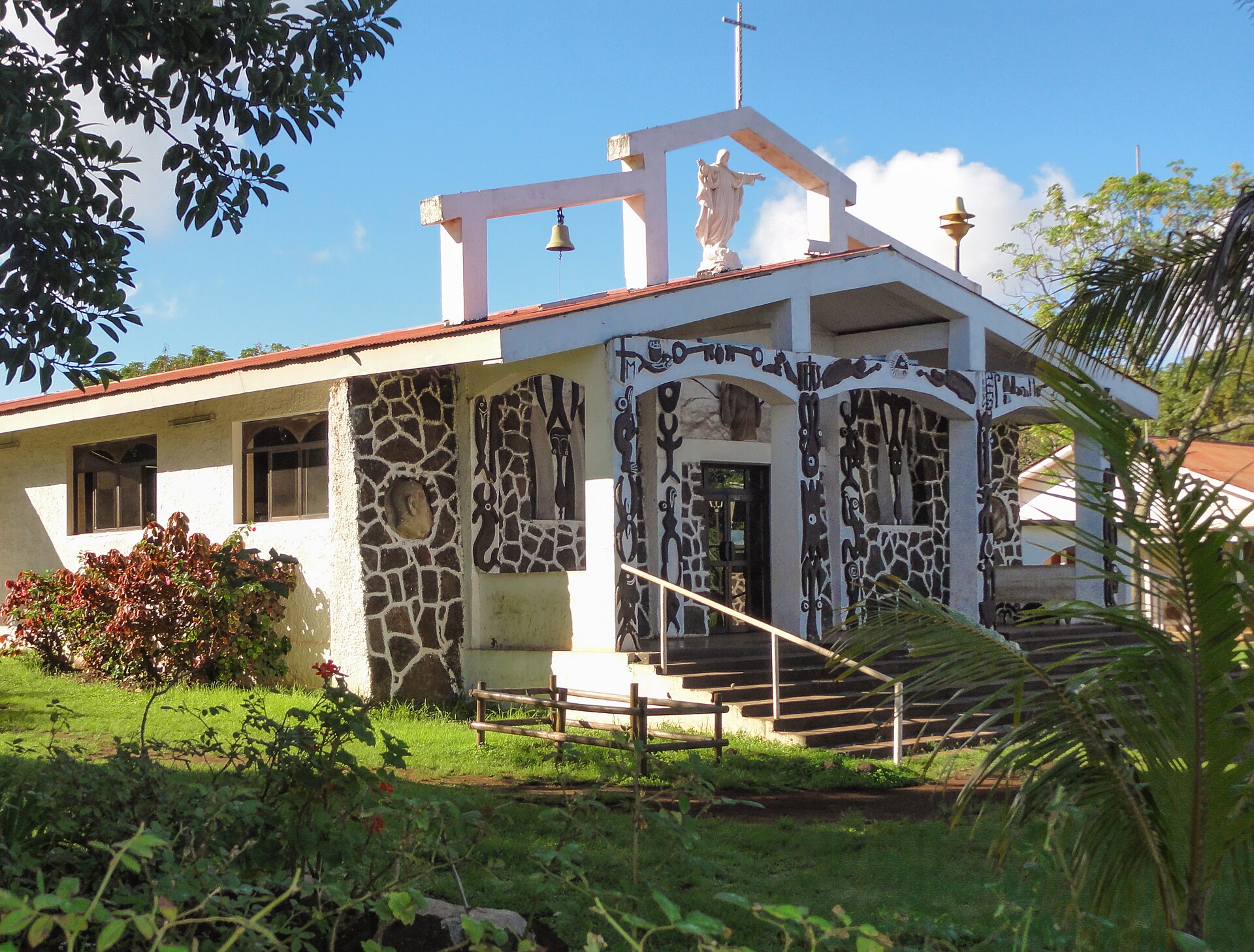
Perched on a gentle rise overlooking the Pacific, the Church of the Holy Cross in Hanga Roa feels like a quiet conversation between two worlds. It isn’t the oldest structure on Easter Island, nor the most dramatic, but it carries a weight that goes beyond its modest whitewashed walls. Built in the mid-20th century, when Catholicism had already woven itself into the fabric of Rapa Nui life, the church stands as a testament to how faith can adapt, absorb, and eventually belong to a place.
From the outside, it looks unassuming—simple lines, a small bell tower, wooden doors that have weathered decades of salt and wind. Yet there’s something deliberate in its design, a quiet nod to both its Latin American roots and the island it calls home. The carvings on the facade, subtle but unmistakable, echo traditional Rapa Nui patterns, while the interior holds wooden saints whose features seem to carry the warmth of local faces. It’s not grand, but it doesn’t need to be. The church feels like it was built with care, not to impress, but to serve.
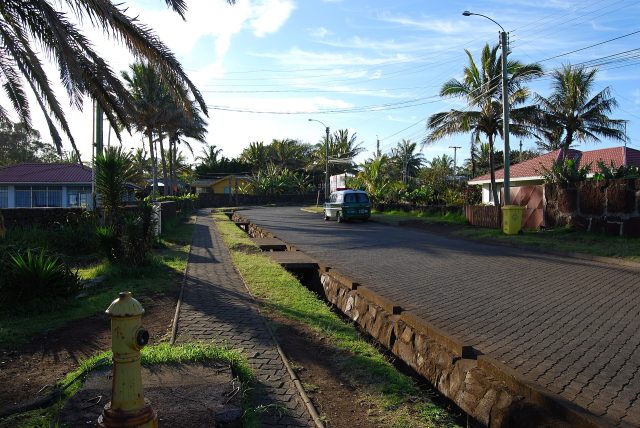
Hanga Roa is the only real settlement on Easter Island, a place where life moves at the pace of the ocean tides. The Church of the Holy Cross has become its heartbeat. On Sundays, the air fills with hymns sung in Rapa Nui, a language that once nearly vanished under the pressure of outside influence. Families gather, children chase each other across the square, and after mass, the conversations spill into the afternoon. For the people here, the church isn’t just a place of worship—it’s where births, marriages, and farewells are marked, where the community comes together in ways that feel both ancient and immediate.
Christianity arrived on Easter Island in the 19th century, not gently, but as part of a wave of change that reshaped the island’s culture. Missionaries sought to erase the old ways, but over time, the new faith became something else—something that Rapa Nui made their own. Today, the church is a place where Catholic traditions and local customs coexist. During festivals, dancers in traditional attire perform on the steps, and priests sometimes deliver sermons in Rapa Nui, a language that was once forbidden. It’s a quiet kind of resistance, a way of saying that faith, like the island itself, can bend without breaking.
Step inside, and the light filters through narrow windows, softening the wooden pews and the altar. The walls hold religious paintings, but among them are scenes that tell the island’s story—images of moai, of the ocean, of the people who have lived here for centuries. The statue of the Virgin Mary is particularly striking. Her features are unmistakably Rapa Nui, her robes adorned with patterns that wouldn’t look out of place on a traditional tapa cloth. It’s a small detail, but one that speaks volumes. This isn’t a church imposed from the outside; it’s one that has grown into the soil of the island.
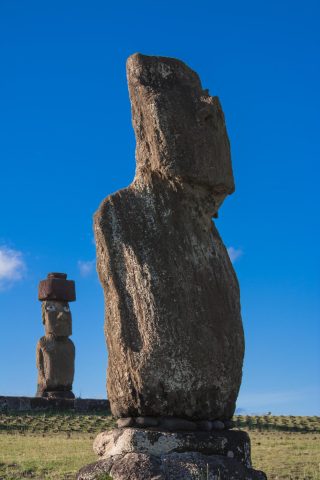
Unlike the moai, which draw crowds of visitors eager to capture the perfect photograph, the Church of the Holy Cross remains a place of quiet significance. There are no tour groups here, no guides pointing out historical facts. Instead, it offers something rarer—a sense of authenticity. This is where people come to pray, to celebrate, to mourn. It’s where the past and present meet, not as a performance, but as a lived experience.
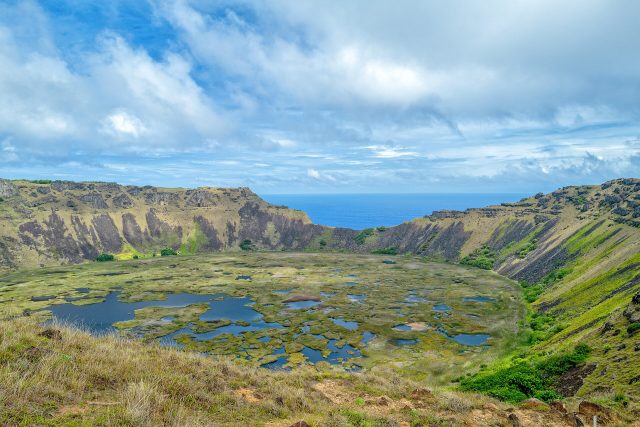
In the late afternoon, when the sun dips low and the air carries the scent of frangipani, the church feels even more like a part of the landscape. From its hilltop perch, you can see Hanga Roa sprawling toward the coast, the ocean stretching endlessly beyond. It’s a view that puts things in perspective. Easter Island is a place of isolation, of mystery, but it’s also a place where people have found ways to connect—to each other, to their history, to something greater. The Church of the Holy Cross doesn’t just stand on that hill; it holds all of that together, quietly, steadfastly, like the island itself.