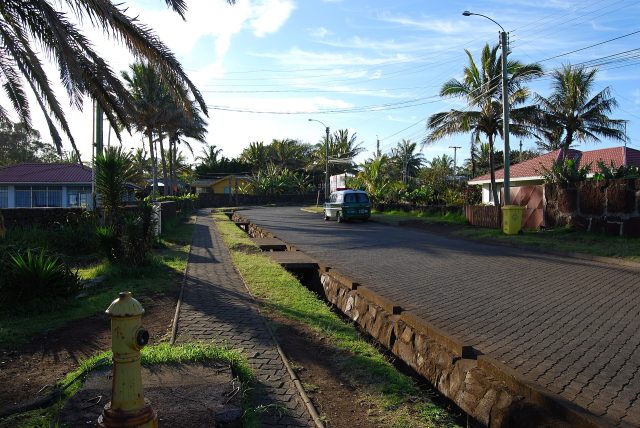
Ahu Tahai is one of those rare places where time seems to slow down, as if the island itself is holding its breath. Perched on a low rise just beyond the edge of Hanga Roa, the island’s only town, this archaeological site feels like a quiet threshold between the modern world and something far older. The moment you step away from the last scattered houses, the ocean comes into view, and with it, the towering figures of the moai. These stone sentinels stand in silent vigil, their backs to the sea, their gaze fixed on the horizon. The light here is different—softer, more golden—especially in the late afternoon, when the sun dips low and the statues cast long, shifting shadows across the grass.
The history of Ahu Tahai stretches back centuries, to a time when Rapa Nui culture was at its height. Built sometime between the 12th and 16th centuries, the complex is a ceremonial platform, or ahu, which served as both a sacred site and a symbol of power. Each ahu belonged to a specific clan, and its size and grandeur reflected the status of the family that built it. Tahai is not the largest of these platforms, but its location—right on the coast—gives it a unique significance. It’s believed that this was a burial place for chiefs and high-ranking individuals, with the moai acting as guardians, bridging the world of the living and the dead.
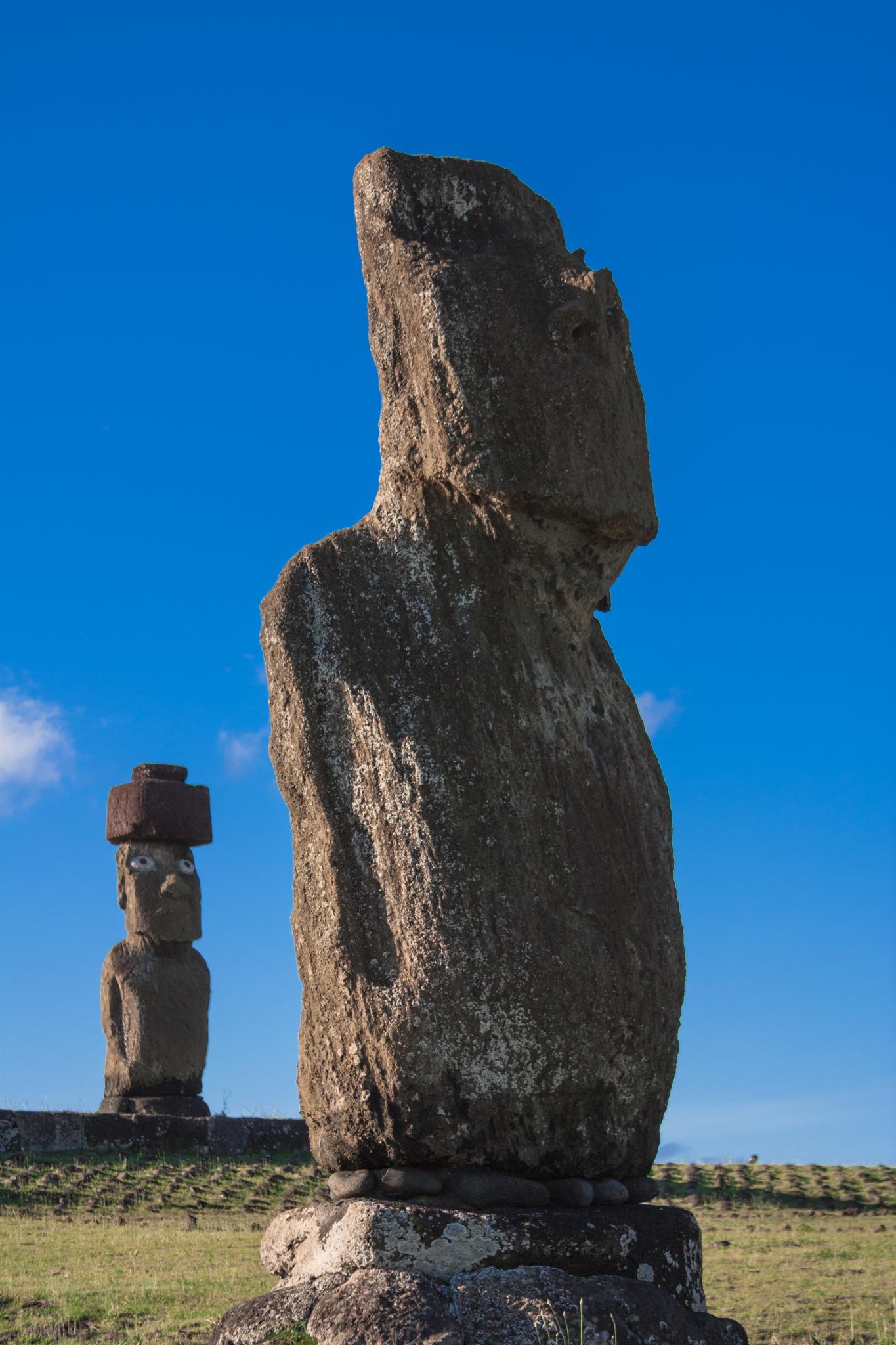
The architecture of Ahu Tahai follows the traditional Rapa Nui style, though it has its own distinct character. The platform is constructed from carefully fitted basalt blocks, held together not by mortar but by sheer weight and precision. Three moai stand on the ahu, each varying in size. The tallest reaches nearly five meters, its red scoria pukao—a topknot of volcanic stone—adding to its imposing presence. Not all of these statues were originally here; some were found nearby and restored in the mid-20th century. This gives the site a slightly reconstructed feel, but it also offers a glimpse of how it might have looked in its prime.
What makes Ahu Tahai unusual is the orientation of its moai. Unlike most statues on the island, which face inland as if protecting the villages, these figures look out toward the ocean. There’s something deliberate about it, as if they were meant to greet or farewell something coming from the sea. Perhaps this was because Tahai marked the boundary between a clan’s territory and the coastal fishing grounds, where the islanders spent much of their time. The ocean was central to Rapa Nui life—it provided food, materials for canoes, and inspiration for myths. Even today, the sound of waves crashing against the rocks adds a rhythmic backdrop to the site, a reminder of how deeply the islanders depended on the sea.
Visiting Ahu Tahai is a different experience from the more famous sites like Ahu Akivi or Rano Raraku. There are no crowds here, no rush of tourists snapping photos before moving on. Instead, there’s space to wander, to sit on the grass, and to listen to the wind and the waves. The best time to come is in the evening, when the light turns warm and the moai seem almost alive against the darkening sky. The statues take on a different quality in this light, their features softened by the glow of the setting sun. For a moment, it’s easy to imagine them as they once were—silent witnesses to ceremonies, rituals, and the daily lives of the people who built them.
Yet Ahu Tahai is not just a relic of the past; it’s also a place that carries the weight of history’s unanswered questions. The moai here, like all the statues on the island, are shrouded in mystery. How were they transported across the island? Why were they placed in this particular arrangement? What do their expressions and postures signify? Scholars have debated these questions for centuries, but no single answer has emerged. Perhaps that’s part of their enduring fascination—they don’t offer explanations, only possibilities. They invite you to wonder, to speculate, and to feel the presence of a culture that, despite its isolation, created something monumental.
The site also serves as a quiet reminder of the island’s turbulent history. The ahu was once a place of ceremony and community, where people gathered for rituals and celebrations. But over time, as resources dwindled and conflicts arose, the statues were toppled, and the platform fell into ruin. The restoration work that brought some of the moai back to their feet was an attempt to reclaim a piece of that past, but it’s impossible to fully erase the scars of time. The broken stones and uneven ground tell their own story, one of rise and fall, of a civilization that flourished and then faded.
For those who make the journey to Easter Island, Ahu Tahai is often overlooked in favor of more dramatic sites. But it’s worth lingering here, away from the crowds, to take in the quiet beauty of the place. The ocean stretches endlessly beyond the statues, its surface shimmering under the sun. The wind carries the scent of salt and earth, and the only sounds are the distant calls of seabirds and the steady rhythm of the waves. It’s a place where the boundaries between past and present blur, where the handiwork of ancient people feels strangely close.
There’s something humbling about standing in a place like Ahu Tahai. It’s a reminder that even in the most remote corners of the world, human history leaves its mark. The moai are more than just stone figures; they’re a testament to the ingenuity, ambition, and spirituality of the Rapa Nui people. And while the island’s mysteries may never be fully solved, places like this offer a chance to connect with something larger than ourselves. To sit on the grass, watch the light change, and feel the weight of centuries—it’s why we travel in the first place.