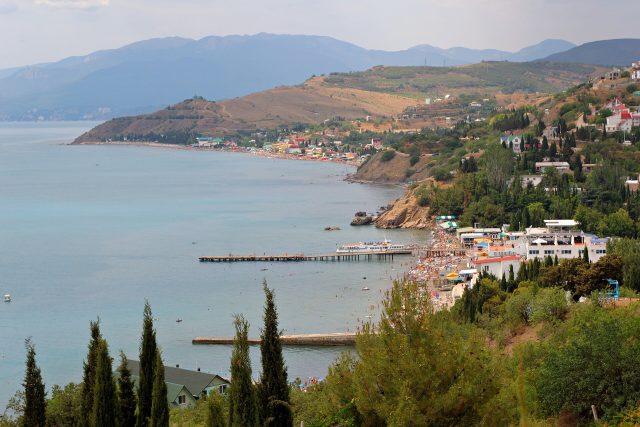
Nestled along the southern coast of Crimea, where the Black Sea meets the foothills of the Crimean Mountains, Malorechensky Beach feels like a place where nature has taken extra care to get everything just right. The shoreline curves gently here, between Alushta and Sudak, where the peninsula begins its slow arc toward the east. Unlike the crowded resorts further west, this stretch of coast remains quiet, untouched by high-rise hotels or tourist traps. Instead, low cliffs covered in juniper and pine slope down to a pebbled beach that shelves softly into the water. The only sounds are the rhythmic crash of waves and the occasional cry of gulls overhead.
The beach itself is small—just a couple of kilometers long—but that’s part of its charm. Even in peak season, it never feels overrun, unlike the packed shores of Yalta or Feodosia. The pebbles give way to patches of sand in places, and the water near the shore is clear, with a faint turquoise tint that deepens in the sunlight. In the distance, the silhouettes of mountains rise against the sky, and by evening, the cliffs take on golden and rose hues as the sun dips behind the ridges. This isn’t a place for those who want nothing more than a sunbed and a cocktail; it’s for travelers who come to feel the rhythm of the Crimean coast.
The history of Malorechensky Beach is woven into the story of the village it belongs to. Malorechenskoye is one of the oldest settlements on the southern coast, founded in the 19th century by Greeks who resettled here after the Crimean War. Back then, it was a small fishing and farming community, where locals grew grapes and tobacco and cast their nets into the sea. The beach remained wild for decades, a local secret accessed by steep paths. It wasn’t until the Soviet era, when Crimea became a popular holiday destination, that organized recreation areas began to appear. Even then, Malorechenskoye stayed off the radar of mass tourism, preserving its slow, almost rural way of life.
The architecture of the village tells its own quiet story. Most of the buildings are low-slung, many dating back to the mid-20th century when the area first began to develop as a resort. Among them are old Greek houses with their distinctive tiled roofs, alongside Soviet-era guesthouses designed to blend into the southern landscape. What unites them is their unobtrusiveness—they don’t compete with the scenery but complement it. Even newer private hotels and cafes are built to fit seamlessly into the surroundings, their presence felt rather than forced.
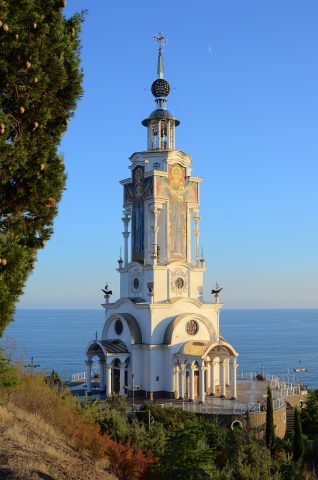
Beyond swimming, Malorechensky Beach is a great starting point for exploring the region. From here, it’s easy to reach nearby attractions like Mount Demerdzhi, famous for its mushroom-shaped rock formations, or the Khapkhal Gorge, where waterfalls tumble through ancient forests. Hikers often set off toward the village of Rybachye, where the coast grows wilder and trails lead to abandoned fishing coves. In Malorechenskoye itself, there’s plenty to see: a historic Greek church, a small market selling local fruit and wine, and a handful of cozy cafes serving fresh seafood.
The pace of life here is unhurried, almost provincial. In the mornings, you might see locals fishing off the rocks, while during the day, visitors lounge on the pebbles or wade into the water. As the sun begins to set, the beach comes alive with picnickers and strollers. The village has a few small shops for essentials and a couple of cafes with sea-view terraces, but there are no nightclubs or flashy entertainment. Instead, there’s a quiet that’s hard to find on more popular beaches, a sense of time slowing down.
The water at Malorechensky Beach is clean, though not always warm—the open sea keeps it refreshingly cool. On calm days, it’s so clear you can see the pebbles and seaweed beneath the surface, while a breeze brings small waves that lap against the shore. The beach isn’t equipped with sunbeds or umbrellas, but many visitors bring their own towels or foldable chairs. Locals often rent out umbrellas and loungers, so comfort isn’t an issue. The entry into the water is gradual, though scattered rocks mean water shoes are a good idea.
This isn’t a place for those seeking luxury or nonstop excitement. Instead, Malorechensky Beach offers something simpler: a chance to step away from the noise and crowds, to breathe in the scent of pine mixed with salt air, and to let the days unfold at their own pace. For some, it might feel too quiet, but for those tired of city life, it’s a revelation—a corner of Crimea where the sea, the mountains, and the sky still feel like the main attraction.