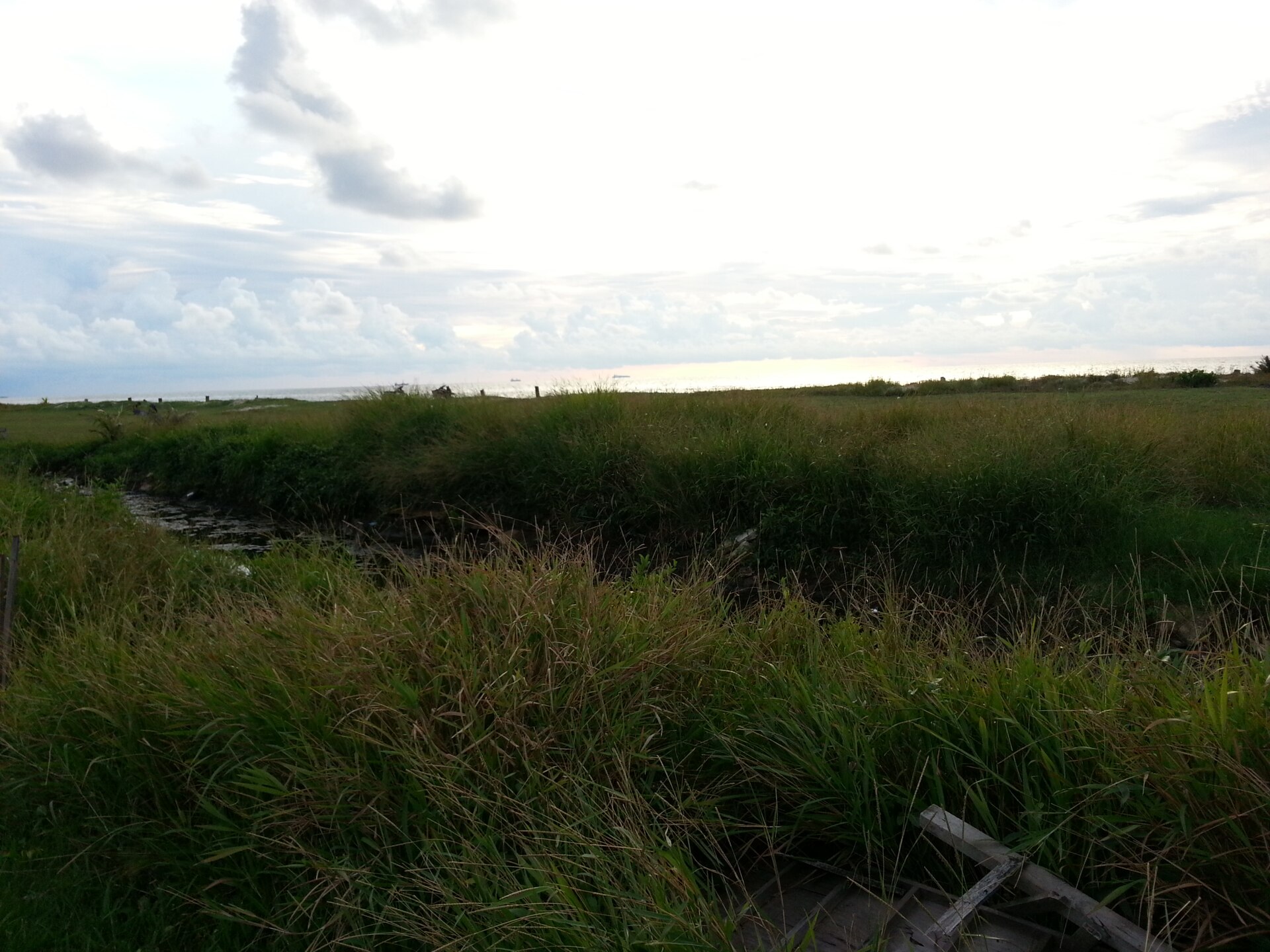
Lutong Beach is one of those quiet corners along Sarawak’s coast where the only crowds you’ll find are the occasional families spreading out picnic blankets under the coconut palms. The sand here isn’t the powdery white of postcard beaches—it’s a warm, golden hue, scattered with fine pebbles and the occasional drift of seaweed left behind by the tide. The waves roll in gently, persistent but never overwhelming, their rhythm broken only by the occasional fisherman hauling his boat onto shore at dawn. There are no high-rise hotels or infinity pools, just an unbroken stretch of shoreline where you can walk for miles without seeing another soul, especially on a weekday.
This wasn’t always just a beach. In the early 1900s, Lutong was part of a small fishing village that grew almost by accident when oil was discovered nearby. By 1910, Miri had become the heart of British Borneo’s oil industry, and the beach sat on the edge of a bustling settlement where engineers and roughnecks lived in simple wooden houses. The oil boom transformed the region, but Lutong remained untouched by the frenzy. Even now, decades later, it retains the same unhurried pace, a place where life moves to the sound of the waves rather than the hum of industry. The oil rigs still dot the horizon, their silhouettes a constant reminder of the wealth beneath the seabed, but here, they feel like part of the scenery rather than an intrusion.
There’s no grand architecture to speak of—just the occasional weathered shack selling cold drinks and grilled fish, and a handful of modest homes lining the road that leads to the shore. The beach itself is simple: a long, open space where the only structures are the driftwood logs and the makeshift shelters locals set up for shade. The oil platforms in the distance might seem out of place, but they’ve become as much a part of the landscape as the palm trees. Sometimes, a tanker will drift past on the horizon, a slow-moving shadow against the setting sun, a quiet nod to the industry that still drives the region.
The water isn’t the crystal-clear turquoise you’d find on islands like Sipadan, but it has its own appeal. Warm and silky, it laps at the shore in a way that makes wading in feel effortless. At low tide, the seabed emerges, revealing patches of seaweed and tiny crabs scuttling between the rocks. Small fish dart through the shallows, and if you’re lucky, you might spot a hermit crab making its way across the sand. Swimming is safe enough, but the currents can be deceptive, especially when the tide is turning. Locals know to stay close to shore, particularly during the monsoon season when the sea can turn rough without warning.
The best time to visit is between March and October, when the weather is dry and the waves are gentler. The skies are often clear, and the sunsets are particularly striking—long, slow affairs where the light bleeds into the water in shades of amber and rose. During the rainy season, from November to February, the beach can feel almost deserted, the sea churning under heavy skies. For some, the storms that roll in during these months are a spectacle worth seeing, waves crashing against the shore with a force that shakes the air. It’s not for everyone, but there’s something raw and powerful about watching the elements take over.
There’s almost no infrastructure here, and that’s part of the charm. No rows of sunbeds or beach umbrellas, no vendors hawking coconut water—just open space where you can lay out a towel wherever you please. On weekends, families arrive with coolers and grills, setting up under the trees for a day of barbecue and card games. Kids fly kites in the breeze, and the occasional group of fishermen mend their nets in the shade. Even at its busiest, the beach never feels crowded. The lack of amenities might frustrate some, but for those who come here, it’s a small price to pay for the freedom to claim a piece of the shore as their own.
Lutong isn’t trying to be the most beautiful beach in Malaysia, and that’s exactly why it works. There’s nothing polished or manicured about it—just sand, sea, and sky, existing much as they always have. It’s the kind of place that doesn’t demand anything from you, where you can sit for hours watching the tide come and go without feeling the need to fill the silence. If you want company, Miri is just a short drive away, with its bustling markets and museums, but the real draw is always the beach itself. After a day in the city, returning to Lutong feels like slipping back into a slower, simpler rhythm, where the only thing that matters is the sound of the waves and the weight of the sun on your skin.