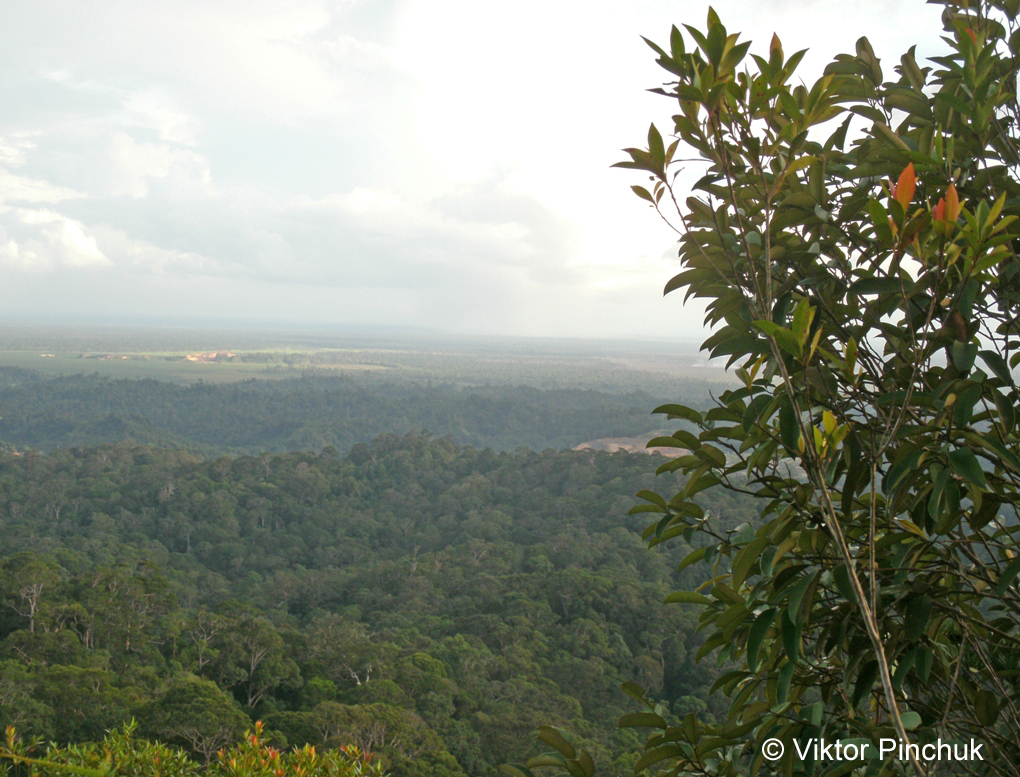
Lambir Hills is one of those places where Borneo’s wild beauty feels almost untouched, as if time has barely brushed against it. Just a half-hour drive from Miri, this small range of forested hills rises quietly from the landscape, offering a retreat from the noise of the city without the crowds or commercial trappings of more famous destinations. There are no guided tours here, no souvenir stalls, no carefully manicured paths—just the steady hum of the jungle, the occasional call of a hornbill, and the rustle of leaves underfoot. It’s the kind of place where you can walk for hours without seeing another soul, where the air is thick with the scent of damp earth and green things growing.
The hills have long been part of Sarawak’s story, though they’ve never been at its center. For generations, indigenous communities like the Iban and Melanau passed through these forests, hunting and gathering what they needed, but few settled here permanently. The land was too rugged, too dense, too alive with its own rhythms. When the British arrived in the late 1800s, they saw potential in the soil and tried to turn parts of Lambir into rubber and pepper plantations. But the terrain fought back—steep slopes, tangled roots, and relentless humidity made large-scale farming nearly impossible. In the end, the hills were left to themselves, and the jungle slowly reclaimed what little had been cleared.
Today, Lambir Hills is best known for its walking trails, which wind through the forest without demanding much in the way of skill or stamina. There’s nothing extreme about these paths—no sheer cliffs, no dizzying heights—but each one offers something different. The most popular route leads to a small waterfall, where a shallow pool collects rainwater trickling down moss-covered rocks. In the wet season, the cascade roars; in the dry months, it shrinks to a whisper, barely audible over the chorus of insects. Another trail climbs to a viewpoint where, on clear days, the horizon stretches endlessly—an unbroken sea of green, with the faintest hint of the South China Sea glinting in the distance.
The forest here is alive in ways that are hard to describe unless you’ve walked through it. Towering dipterocarp trees, some of the oldest in Borneo, dominate the canopy, their buttressed roots twisting like ancient sculptures. Below them, the understory is a tangle of ferns, orchids, and vines, some so delicate they seem almost translucent in the dappled light. Wildlife is abundant but often shy—proboscis monkeys, with their comically long noses, are the most visible, swinging through the branches or staring down with curious eyes. Birds flit between the trees, from tiny sunbirds sipping nectar to the unmistakable silhouette of a hornbill gliding overhead. At night, the forest takes on a different character, filled with the chirps of frogs and the occasional distant call of an orangutan, though sightings are rare.
What makes Lambir Hills special is its lack of pretension. There are no cafes, no gift shops, no designated campsites with fancy amenities—just a few cleared spots where you can pitch a tent if you’re inclined. Locals sometimes come for day trips, spreading out picnic blankets under the trees, but on weekdays, the place feels almost deserted. It’s easy to imagine you’ve stumbled into a world that exists outside of time, where the only schedule is the slow rise and fall of the sun. For those who want to stay longer, there are guesthouses in nearby villages, but most visitors come for just a few hours, bringing little more than water, a snack, and a camera.
Of course, the forest isn’t without its challenges. After rain, the trails can be slick with mud, and roots lurk underfoot like tripwires. The humidity is relentless, clinging to your skin even in the shade. And while dangerous encounters with wildlife are uncommon, it’s wise to keep a respectful distance—this is their home, after all. The locals know the land well, though, and if you lose your way, someone will usually appear to point you in the right direction.
Lambir Hills won’t dazzle you with dramatic landscapes or grand vistas. There are no towering peaks, no thunderous waterfalls, no postcard-perfect scenes. Instead, it offers something quieter: a chance to step into Borneo as it once was, before roads and cities carved their way through the jungle. For the people of Miri, these hills are a green escape, a place to breathe deeply and slow down. For travelers, they’re a reminder of what much of the island must have looked like before the modern world arrived. And perhaps that’s why, despite its simplicity, Lambir Hills lingers in the memory long after you’ve left—because it feels like a place that hasn’t quite decided to let you go.