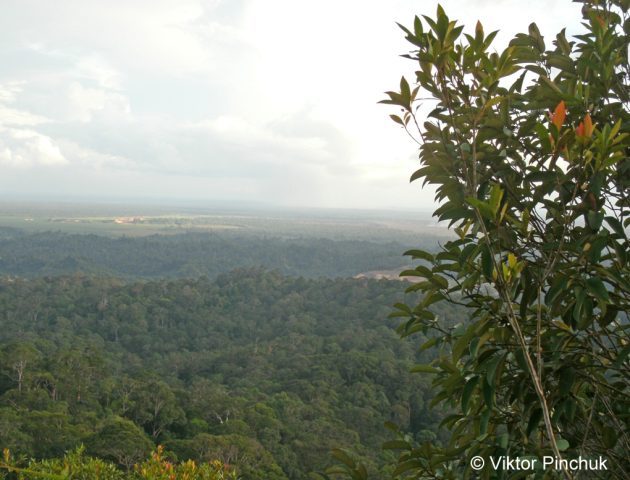
Taman Selayang Park is one of those quiet corners in Miri where people come not for grand adventures or tourist crowds, but for something far simpler—a moment of stillness in a city that never seems to slow down. Tucked in the heart of the urban sprawl, it’s a green refuge where the noise of traffic fades into the background, replaced by the rustle of leaves and the occasional call of a bird. There are no flashy attractions here, no manicured gardens demanding attention. Just trees, winding paths, and the kind of quiet that feels almost rare in a place like this.
The park has been part of Miri’s fabric since the city was still finding its feet. Back in the mid-20th century, when the oil industry began reshaping the region, Miri grew almost overnight from a small settlement into a bustling town. Taman Selayang was created as a public space where residents could escape the grind of daily life, a place to unwind without fanfare. Over the decades, it has remained exactly that—a patch of green where time moves at its own pace, untouched by the city’s relentless expansion.
There’s nothing elaborate about the park’s design. You won’t find towering fountains or elaborate sculptures, just well-kept lawns, shaded walkways, and a handful of simple pavilions where people can sit with a book or watch the world go by. The center of the park is dotted with flowerbeds filled with local blooms, their colors shifting with the seasons. In spring, bougainvillea and orchids burst into life, painting the air with a faint, sweet scent. It’s the kind of place where the beauty lies in the details—the way sunlight filters through the leaves, or how the shadows stretch across the grass in the late afternoon.
Beyond its role as a retreat, Taman Selayang is woven into the daily rhythm of the city. Mornings bring joggers and yoga enthusiasts, their movements unhurried against the backdrop of waking trees. By evening, families gather here, children chasing each other across the lawns while parents relax on benches. On weekends, the park comes alive with small festivals, craft fairs, or impromptu performances by local musicians. These events are modest, never overcrowded, but they give the space a sense of community, a reminder that it’s more than just a park—it’s a living part of the city.
What makes Taman Selayang special is its accessibility. There are no entry fees, no opening or closing hours. It’s open to everyone, at any time, which is why so many locals treat it as an extension of their own neighborhood. For some, it’s the starting point of a morning run; for others, a quiet spot to eat lunch away from the office. Some simply pass through on their way home, pausing for a moment to watch the sunset. The park doesn’t try to impress—it just exists, steady and unchanging, a constant in a city that’s always evolving.
Despite its unassuming nature, the park plays a quiet but vital role in Miri’s ecosystem. It acts as a green lung, filtering the air and softening the urban heat. Walk along its paths, and you might spot squirrels darting between branches, or lizards sunning themselves on warm stones. For many city dwellers, this is where they first encounter Borneo’s wildlife, not in some distant jungle, but right here, in the middle of town. It’s a small reminder that nature doesn’t always need grand gestures—sometimes, it just needs a little space to breathe.
Taman Selayang isn’t the kind of place that grabs your attention right away. There are no dramatic vistas or Instagram-worthy backdrops, just a quiet, understated charm that reveals itself slowly. Spend an hour here, and you might notice the way the light falls through the trees at a certain time of day, or stumble upon a hidden bench with the best view of the park. There’s nothing here that feels forced or overly designed—just the simple pleasure of being outside, surrounded by greenery in the middle of a city.
For travelers, the park might seem too ordinary at first glance, especially when compared to Borneo’s famous rainforests or pristine beaches. But that’s precisely what makes it worth visiting. Here, you see the city as it really is—no performances, no curated experiences, just the everyday life of its people. It’s a place where locals come to escape, to think, or to simply be, without worrying about who’s watching. If you find yourself in Miri, it’s worth stopping by, even just for a little while. Not for the sights, but for the chance to see how the city breathes when no one’s looking.