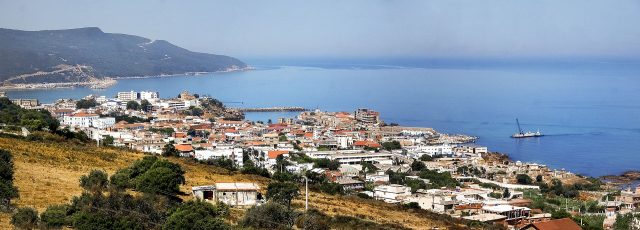
El Tarf’s Corniche Beach is one of those quiet corners along Algeria’s Mediterranean coast where the landscape feels deliberately designed for peace. The sand stretches in a long, gentle curve toward the water, framed by low hills dotted with sparse trees and shrubs. The sea here carries the familiar turquoise hue of the Mediterranean, especially vivid under the midday sun. The waves are usually calm, making the water inviting for a swim or a slow walk along the shore. There are no crowded resorts or tourist crowds—just the natural rhythm of the place, where the land meets the sea without fanfare.
The town of El Tarf sits in Algeria’s northeastern corner, close to the Tunisian border, giving it a quiet, almost forgotten feel. It’s not a major tourist destination, and that’s part of its appeal. The Corniche Beach lies on the outskirts, accessible by a coastal road that winds past small settlements and patches of untouched shoreline. Locals often come here on weekends, setting up picnics or simply enjoying the stillness. The beach doesn’t demand anything from its visitors—no schedules, no expectations, just the open space and the sound of the waves.
El Tarf has always been a modest place, its history tied to fishing and farming rather than grand events. During the colonial era, the French saw potential in the region, but large-scale development never took hold. After Algeria gained independence, El Tarf remained on the sidelines of economic growth, preserving its unhurried way of life. The Corniche Beach, like much of the Algerian coast, was never transformed into a tourist hotspot. It has stayed as it always was—unspoiled, with no high-rises or commercial sprawl.
There’s no grand architecture here, no luxury hotels or beachfront restaurants. A few small cafés and stalls sell cold drinks and simple snacks, but that’s about it. Fishermen still set out in small boats, and if you’re lucky, you might see them return with the day’s catch. Along the shore, old wooden piers stand as quiet reminders of the sea’s role in everyday life. The beach doesn’t try to impress; it simply exists, shaped by the people who have relied on it for generations.
The atmosphere is one of quiet ease. Mornings are nearly empty, the only sounds the waves and the occasional cry of a gull. By midday, families arrive—children playing in the shallows, groups of teenagers lounging on towels, older couples sitting under umbrellas. Some bring picnics, others just a blanket and a book. As the sun dips toward the horizon, the beach empties again, leaving only those who’ve come to watch the light fade over the water.
For those who prefer something more active, there are still ways to pass the time. You can rent a small boat and drift along the coast, taking in the shoreline from the water. Nearby trails lead to secluded coves or viewpoints where the sea stretches endlessly. Early mornings are best for fishing, when the water is calm and the fish come closer to shore. But even if you do nothing at all, the beach doesn’t mind. It’s a place where time slows down, where the simplest moments—sand between your toes, the salt in the air—feel like enough.
This isn’t a destination for those seeking excitement or luxury. It’s for people who appreciate the unadorned beauty of a place that hasn’t changed much over the years. The Corniche Beach offers something rare: a chance to step away from the noise of modern life and simply be. There are no distractions, no grand attractions—just the quiet persistence of the sea, the sand, and the sky.