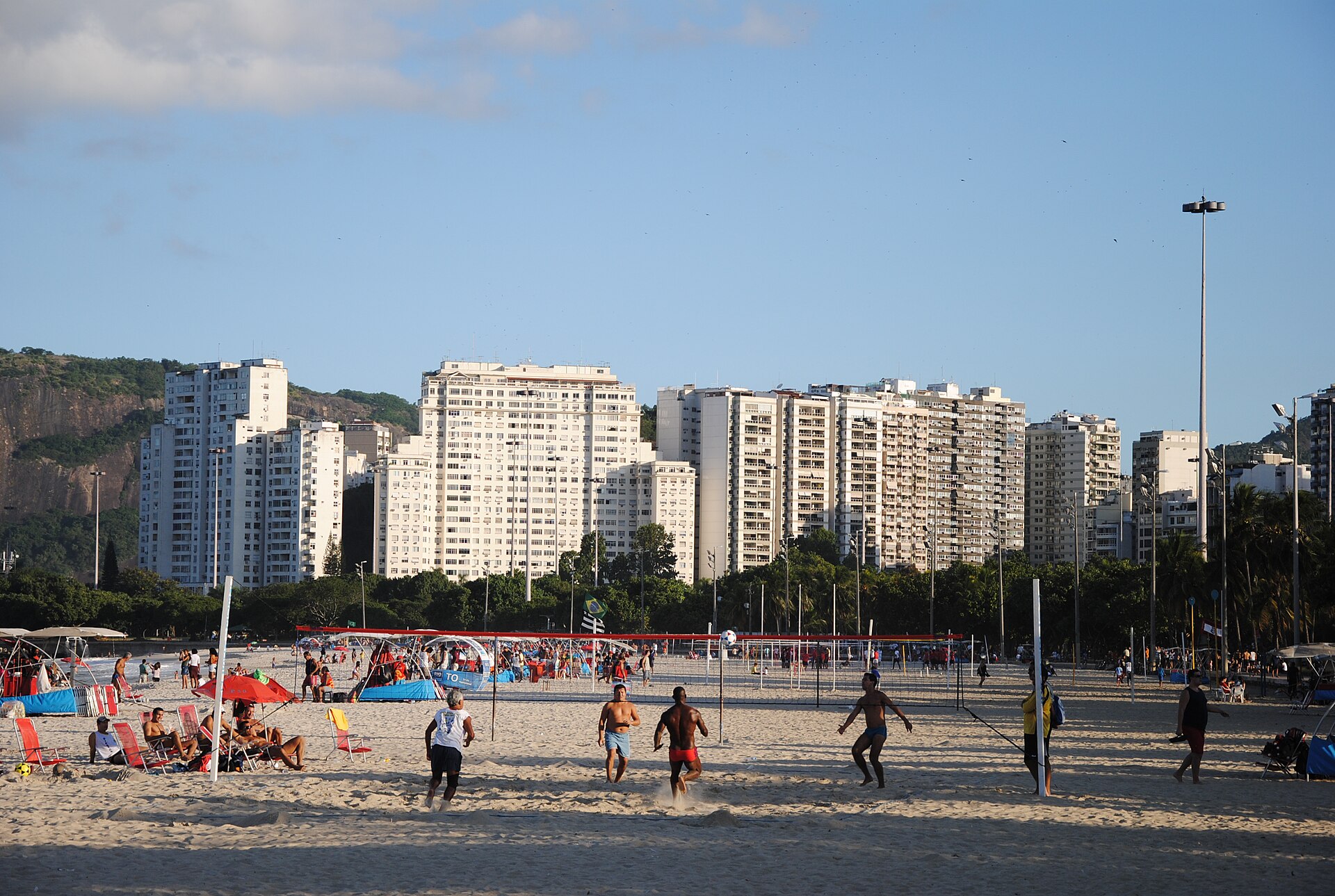
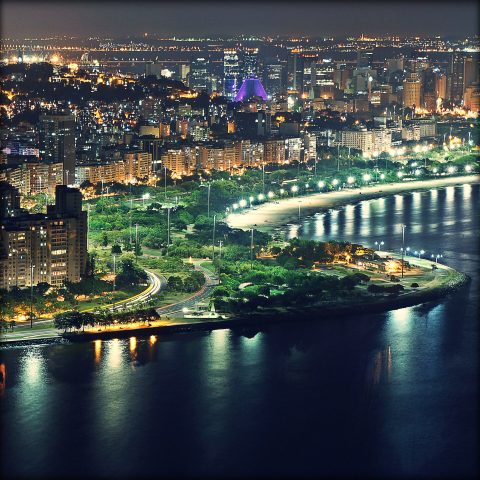
Flamengo Beach stretches along the edge of Rio de Janeiro’s namesake neighborhood, a place where the quiet rhythm of the city meets the pulse of the ocean. Unlike the crowded shores of Copacabana or Ipanema, this stretch of coastline offers space to breathe—whether you’re taking a morning run, a leisurely stroll, or watching the sun dip below the horizon. The beach curves gently around Guanabara Bay, its shoreline broken up by small parks, sports courts, and cafés where locals pause for coffee or a cold caipirinha. There’s no pressure here, no sense of being swept up in the tourist current. Just the steady hum of the city blending with the sound of waves.
The name Flamengo carries a piece of history. It comes from a Dutch admiral who, in the 17th century, attempted to establish a colony in the area. Back then, this part of Rio was little more than marshland, gradually drained and reclaimed as the city expanded. Over time, Flamengo grew into one of Rio’s greenest districts, where modern apartment blocks stand alongside leafy parks and historic buildings. The beach itself became a natural extension of the neighborhood, a place where people come not just for the sea but for the feeling of being part of the city’s daily life.
The waterfront took its current shape in the mid-20th century, when a vast park was designed along the shore. The man behind it was Roberto Burle Marx, a landscape architect whose work became synonymous with Brazilian modernism. Flamengo Park isn’t just a green space—it’s a carefully crafted environment where every path, plant, and fountain feels intentional. Rare palm species, vibrant flowerbeds, and small ponds create pockets of tranquility amid the urban sprawl. Walking through it, you get the sense that nature and city were meant to coexist like this.
The water at Flamengo Beach isn’t as clear as the ocean waves further south, but that doesn’t stop people from swimming. The bay is calmer here, with gentle waves that make it a good spot for families. That said, Guanabara Bay has its issues—pollution means swimming is only recommended in designated areas where the water is treated. Still, the trade-off is worth it for the sunsets. As evening falls, the sky turns shades of orange and pink, reflecting off the water while ships glide past and the distant mountains frame the view. It’s the kind of scene that lingers in your memory long after you’ve left.
Beyond its role as a place to relax, Flamengo Beach is woven into the city’s infrastructure. Bike paths run along the waterfront, connecting different neighborhoods, and on weekends, the area buzzes with events—cycling races, marathons, and community gatherings. Locals come here for morning workouts or evening walks with their dogs, while visitors use it as a way to experience Rio without the tourist crowds. There are no souvenir vendors shouting over each other, no loud music blaring from beach bars. Just the steady rhythm of waves, the occasional laughter of a group passing by, and the quiet sense of being in a place where the city breathes.
Nearby, a few landmarks offer reasons to explore further. The Museum of Modern Art houses works by Brazilian and international artists, its galleries a short walk from the shore. On a hill overlooking the bay stands the Monument to the Dead of World War II, a solemn reminder of history with a view that stretches across the water. And for football fans, the legendary Maracanã Stadium is close enough to visit, its energy palpable even from a distance. But you don’t need to seek out these places to appreciate Flamengo. Sometimes, just walking along the waterfront is enough to understand why this part of Rio feels like home to so many.
The atmosphere shifts with the time of day. Mornings are quiet, the air filled with the cries of seagulls and the sound of the tide. By midday, the beach fills with people—joggers, families, groups of friends sprawled on the sand. As evening approaches, the promenade comes alive. Couples stroll hand in hand, children chase each other along the paths, and musicians sometimes set up near the water, playing samba or bossa nova for whoever stops to listen. At night, the beach doesn’t close, though swimming after dark isn’t advised. Instead, people come to watch the city lights flicker across the bay or simply to stand by the water and listen to the waves.
Flamengo isn’t the kind of place you visit for luxury or spectacle. There are no five-star resorts or high-end restaurants lining the shore. What you’ll find instead are small cafés serving crispy pastéis, kiosks selling ice-cold drinks, and a sense of everyday life that feels authentic. This is where Rio’s history, its natural beauty, and its modern energy intersect. It’s not the postcard version of the city, but it might be the one that stays with you—the quiet moments, the unscripted conversations, the way the light hits the water at dusk. Flamengo Beach doesn’t demand your attention. It simply offers a place to be, and that’s enough.