The plane tree grove in Gurzuf is one of those places that feels like a gift from nature, though its story runs far deeper than chance. These trees, with their sprawling canopies shading the seaside promenade, are more than just a picturesque feature of this resort town—they are living witnesses to its past. Planted in the 19th century, when Gurzuf was first becoming a fashionable retreat for Russia’s aristocracy, they were part of an effort to bring a touch of the Mediterranean to the Crimean coast. Over time, the trees grew into towering giants, their thick trunks and dense foliage offering respite from the summer heat.
Stretching along the waterfront, the grove is a natural gathering spot for both locals and visitors. The branches of the plane trees intertwine overhead, forming a leafy canopy that softens the sunlight and muffles the noise of the town. In summer, the shade becomes a refuge—people sit on benches with books, children play in the cool air, and couples stroll beneath the rustling leaves. Winter transforms the grove, stripping the trees of their foliage but leaving their skeletal branches reaching toward the sky, still striking in their own way.
These trees are more than just part of the landscape; they are woven into the cultural fabric of Crimea. They appear in the memoirs of those who visited Gurzuf across different eras—Silver Age poets seeking inspiration, Soviet writers drawn to the southern coast, and countless others who found something memorable in their shade. The grove has been the backdrop for countless stories, from quiet moments of reflection to romantic walks along the shore. Even as the town around it has changed, the plane trees remain a constant, a quiet symbol of Gurzuf’s enduring charm.
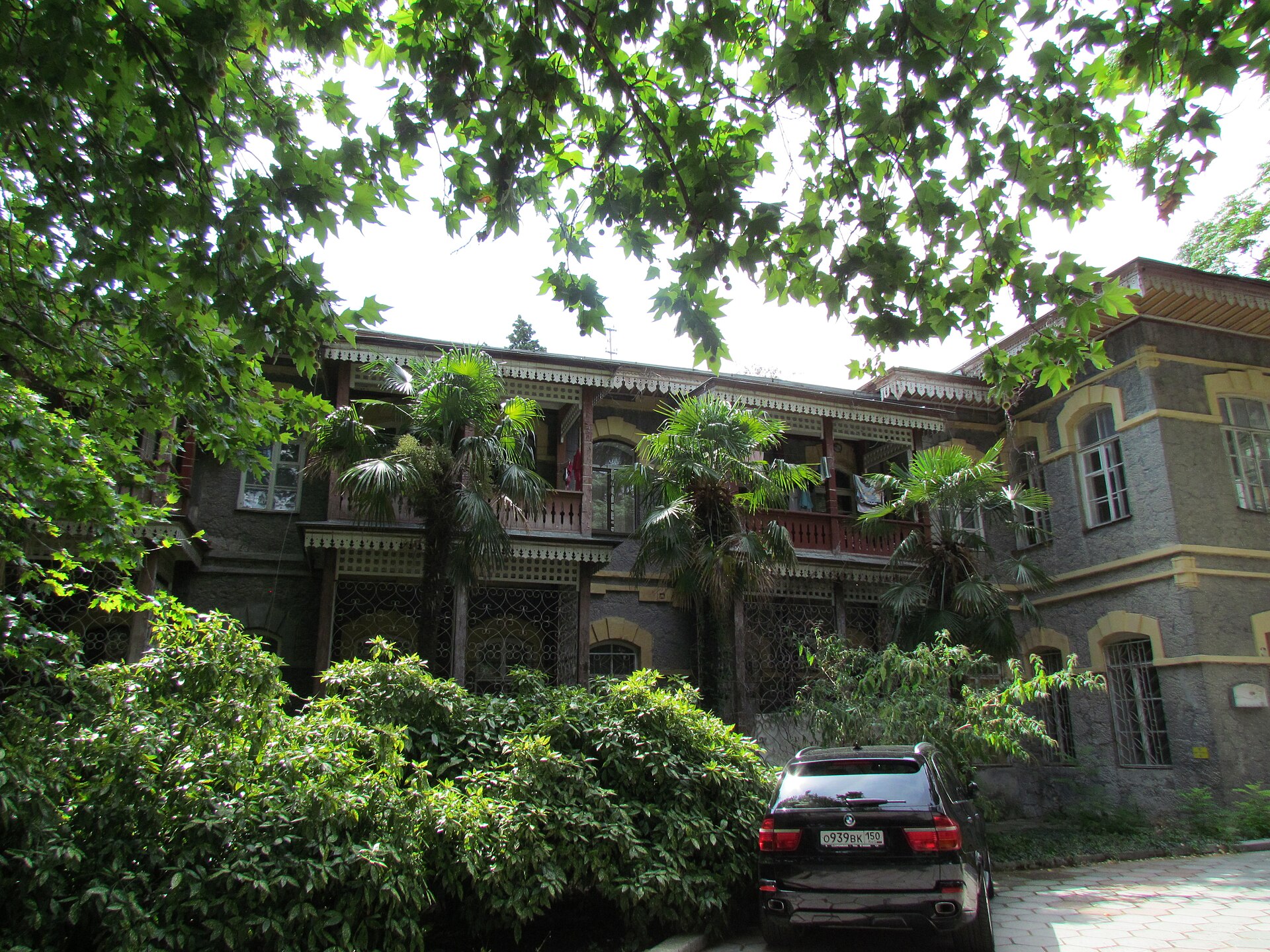
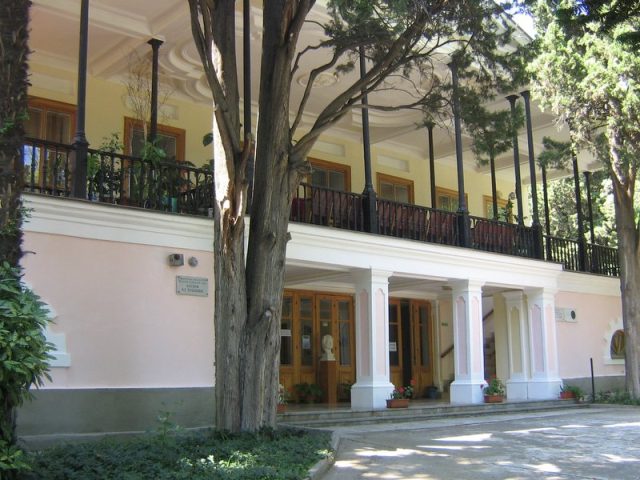
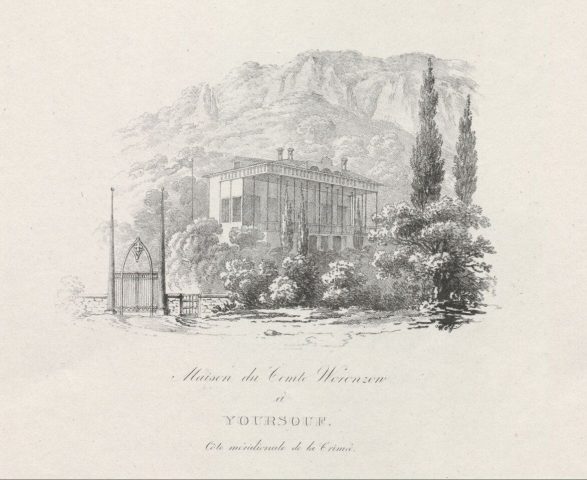
The architecture surrounding the grove tells its own story. Nearby stand buildings from the early 20th century, when Gurzuf was an exclusive retreat for the elite. Some resemble the villas of the Italian Riviera, with their arched windows and terracotta roofs, while others are classic Russian dachas, complete with verandas and intricate shutters. Together, they create a sense of timelessness, where the past and present coexist. Walking here, it’s easy to imagine the town as it once was—gentlemen in bowler hats and ladies in long dresses strolling along the same promenade, the plane trees already offering their shade.
Evenings in the grove are particularly magical. As the sun sets, the streetlights cast a warm glow on the rough bark of the trees, highlighting their texture against the darkening sea. The air carries the scent of salt and leaves, and the sound of waves blends with the murmur of voices. Sometimes, music drifts through the air—an impromptu street performance or a playlist from an open window—adding to the atmosphere. It’s a place where time seems to slow, where you can stand and listen to the rhythm of the sea and lose yourself in thought.
The plane tree grove isn’t a museum, nor is it just another park. It’s a living space that evolves with the town yet retains its own character. There are no strict rules here—no signs telling you what to do or where to sit. You can bring a picnic, meet friends, or simply pass through, glancing up at the towering branches. That informality is part of its appeal; it doesn’t demand anything, only asks for respect for what it already is.
What’s remarkable about these trees is their resilience. They’ve weathered wars, political upheavals, and the ebb and flow of tourism, yet they remain rooted in the same spot. Their deep roots and sturdy trunks withstand the salty winds and scorching sun, a testament to their endurance. Perhaps that’s why they feel so compelling—they remind us that some things can outlast even the most turbulent changes.
Today, the grove is part of everyday life in Gurzuf. Locals walk their dogs here, meet friends, or unwind after work. For visitors, it’s one of those places that feels worth photographing, though its essence is hard to capture in an image. There’s nothing extraordinary about it—just trees, the sea, and people—but together, they create a sense of comfort and tranquility that draws people to the coast.
Maybe the grove’s secret lies in its ability to bridge different eras and moods. It’s as suited to a romantic evening as it is to a family outing or a solitary walk. There’s something nostalgic about it, like an old postcard of Crimea, yet it also feels contemporary, a quiet corner of modern resort life. Gurzuf has changed in countless ways since the trees were first planted, but the plane trees remain, a reminder that some things endure.