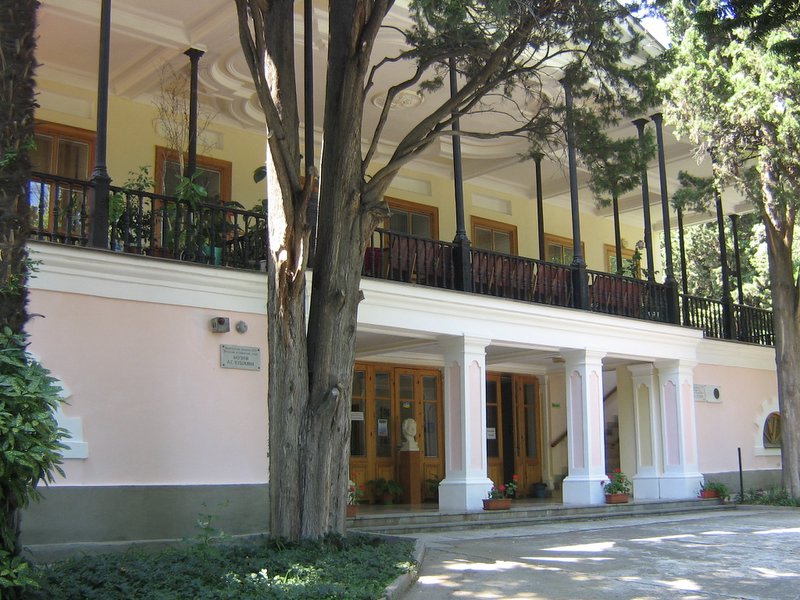
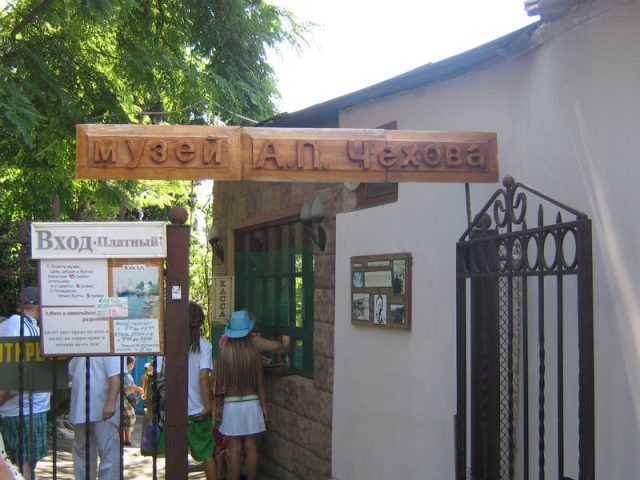
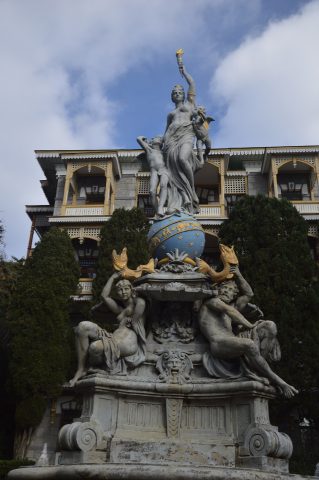
The Pushkin Museum in Gurzuf sits in a 19th-century mansion that once belonged to the Duke of Richelieu. The building has whitewashed walls, tall windows, and classical columns—features typical of the era when Russian nobility first explored the Black Sea coast. In autumn 1820, Alexander Pushkin spent three weeks here as a guest of the Raevsky family. That visit shaped his work and influenced how Russians later viewed Crimea.
The house keeps its original character. Rooms have high ceilings with plasterwork and floors laid in parquet. Some furniture and household items date to Pushkin’s time. The museum doesn’t recreate a period interior but traces the poet’s connection to the place. The air inside feels still, as if holding echoes of past conversations about literature, politics, and the southern landscape.
Pushkin arrived in Gurzuf in September 1820, uncertain about his future after exile from St. Petersburg. The Raevsky family’s invitation offered respite. Here, he walked the shore, swam in the sea, and wandered the hills. He began work on *The Fountain of Bakhchisaray*, a poem inspired by local legends and landscapes. The museum shows how these surroundings influenced his writing—how light, sea, and pine scents shaped verses now part of Russia’s literary canon.
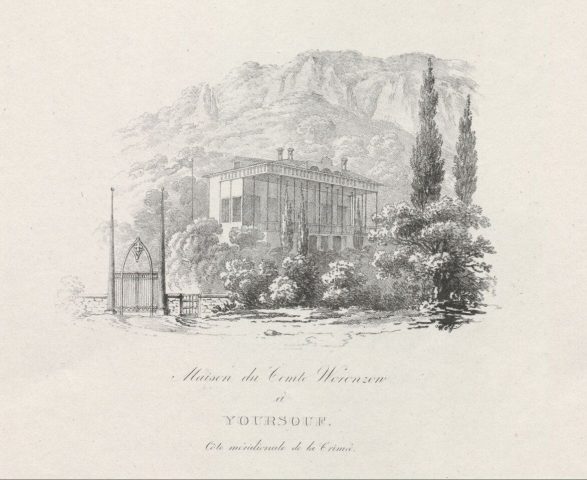
Exhibits blend biographical details with the cultural significance of Pushkin’s Crimean stay. Manuscripts, early editions of his works, and portraits of the poet and his contemporaries fill the rooms. Illustrations depict places he visited. Maps and engravings from the 19th century show Crimea as Pushkin saw it—a wild, exotic land just beginning to be explored by Russian writers. Rare books on the peninsula’s history and folklore mention his name, marking the start of a longer story.
A section focuses on Crimea’s literary legacy after Pushkin. Lermontov, Chekhov, Bunin, and Voloshin followed his path, each leaving their own impressions. The museum doesn’t just celebrate Pushkin’s influence; it shows how Crimea became a muse for generations of Russian literature—a place of refuge and inspiration. Pushkin captured its essence first, but others continued the tradition.
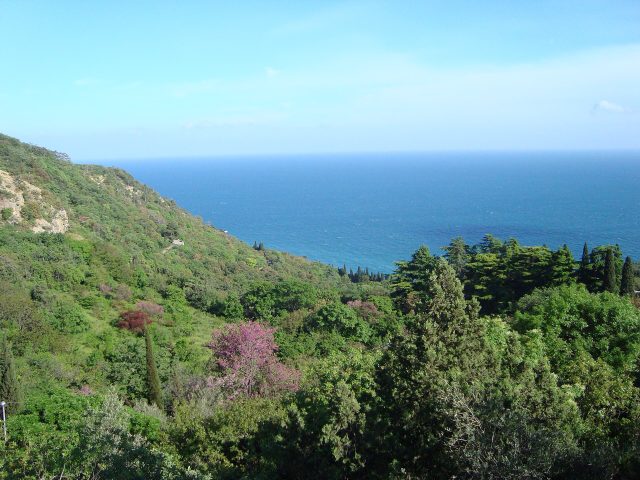
The grounds let you step into Pushkin’s world. A small park surrounds the house, its paths lined with ancient trees. From benches, you see the sea and mountains, a view little changed since his time. A bronze bust of the poet stands near the entrance, gazing toward the water. In summer, the park hosts literary evenings and concerts where visitors hear his verses read aloud under the sky.
This museum feels different. No grandiosity, no opulence—just intimacy. The past isn’t preserved; it breathes. The sea drifts through open windows, mingling with pine scent and rustling leaves. You can imagine Pushkin at a desk by the window or strolling the garden, lost in thought. The museum doesn’t dictate feelings; it offers space to experience what he might have felt.
For those familiar with Pushkin’s work, it’s a pilgrimage. For others, a surprise—a quiet corner where history and poetry meet. Less famous than Livadia Palace or Vorontsov Park, it has no crowds, no rush. Time to linger, read a poem, or watch light play on the water.
The Pushkin Museum in Gurzuf blurs past and present. A long-dead poet’s words still seem to hang in the air. For a few hours, you step into a slower time—when a young man stood on this shore and found beauty that outlasted him.