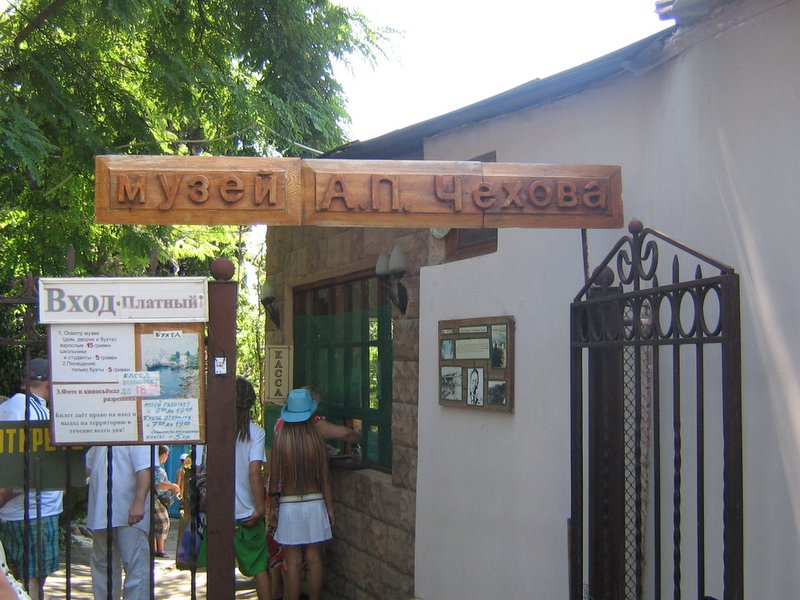
Anton Chekhov’s dacha in Gurzuf is one of those rare places where time seems to pause, as if the world outside has momentarily forgotten to move forward. Perched on the southern coast of Crimea, this unassuming house was where the writer spent several weeks in the summer of 1900, a period that turned out to be far more than just a retreat. Though Chekhov had come for his health, the quiet rhythms of Gurzuf soon became a source of creative energy. It was here, in this modest home, that he worked on *The Cherry Orchard* and other stories, finding in the Crimean landscape a kind of clarity that eluded him elsewhere.
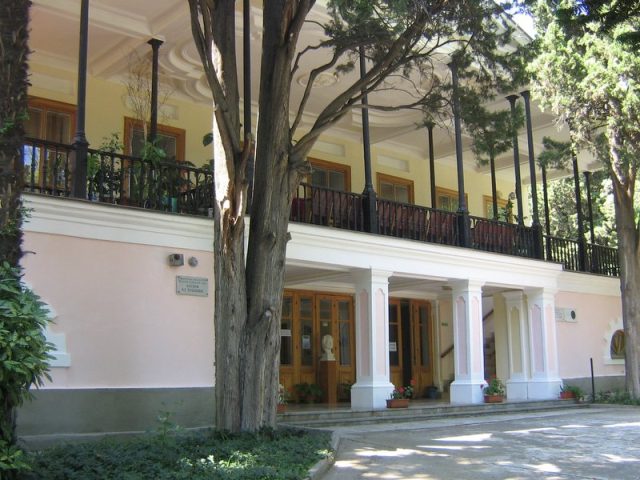
The house itself is simple, built in the late 19th century with the practicality of a home meant for living rather than impressing. Constructed from local stone and wood, it has the sturdy, unpretentious charm of a place designed to weather the elements. A wide veranda faces the sea, its large windows framing the shifting colors of the water at different times of day. Inside, the layout remains much as it was when Chekhov lived here—his study, the sitting room, the bedrooms—all arranged with an almost deliberate lack of fuss. The furniture, books, and personal belongings still feel lived-in, as if the writer might return at any moment to resume his work or pour himself a cup of tea.
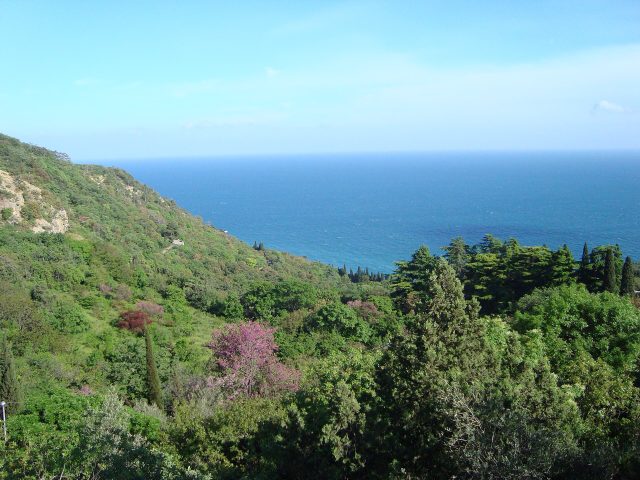
Gurzuf in those years was little more than a quiet seaside village, a refuge for artists, writers, and those seeking respite from the noise of Moscow and St. Petersburg. Chekhov had arrived on his doctor’s advice, hoping the mild climate would ease his tuberculosis, but he soon discovered that the place offered something deeper. In his letters, he wrote of the Crimean landscape with quiet awe—the jagged cliffs draped in pine trees, the sea that shifted from turquoise to indigo as the sun moved across the sky, the stillness of evenings broken only by the sound of waves. Today, those same views remain largely unchanged. Walking the paths around the dacha, it’s easy to imagine Chekhov strolling along them, turning over ideas in his mind, the scent of salt and pine in the air.
The house didn’t become a museum right away. After Chekhov’s death, it passed through different owners, and it wasn’t until the mid-20th century that efforts were made to preserve it as a literary landmark. Restoration brought the building back to its original state, while the exhibits inside tell the story of Chekhov’s time in Gurzuf and beyond. Manuscripts, photographs, and personal letters offer glimpses into his daily life, while household items—his desk, his walking stick, the teacups he used—paint a picture of a man who valued simplicity. The museum also highlights his broader connection to Crimea, from his stays in Yalta, where he later built a house, to his travels along the coast.
What makes the dacha special isn’t just its historical significance, but the way it feels alive. Visitors often remark on the quiet that settles over the place, broken only by the rustle of leaves or the distant cry of a gull. The air carries the scent of pine and salt, and the light filtering through the windows has a soft, golden quality, as if time itself has mellowed here. It’s easy to imagine the conversations that once filled these rooms, the scratch of a pen on paper, the clink of glasses during an evening with friends. For many, the dacha is a chance to see Chekhov not just as a literary giant, but as a man who found joy in small things—a cup of tea on the veranda, a walk along the shore, the company of those he loved.
The surroundings are just as much a part of the experience. Gurzuf Park, a short walk from the dacha, is one of the most beautiful spots on the southern coast of Crimea. Ancient pines tower over winding paths, and rocky outcrops offer sweeping views of the sea. The park is dotted with remnants of older settlements, as well as monuments to other figures who left their mark on the region. Nearby, the twin rocks of Adalary rise from the water like silent sentinels, their jagged forms a familiar sight in postcards and paintings of Gurzuf.
Visiting Chekhov’s dacha is more than a nod to literary history—it’s a way to see Crimea as it once was. Unlike the crowded resorts that now dominate parts of the coast, Gurzuf has retained a quieter, more intimate feel. The dacha is one of those rare places where the past doesn’t feel distant, where the boundaries between then and now blur just enough to let you step into another time. There are no crowds here, no rush—just the sea, the mountains, and the kind of stillness that invites reflection.
Today, the dacha is more than a museum. It’s a living space where literature, art, and music still find a home. Writers, poets, and musicians often gather here for readings and performances, drawn by the same quiet inspiration that once moved Chekhov. For many, a visit feels like a pilgrimage, a chance to connect with the legacy of Russian literature in a place where the words of the past still resonate. In the end, the dacha reminds us that great art isn’t just born from talent—it grows from a deep, abiding love for the world and all its small, imperfect beauties.