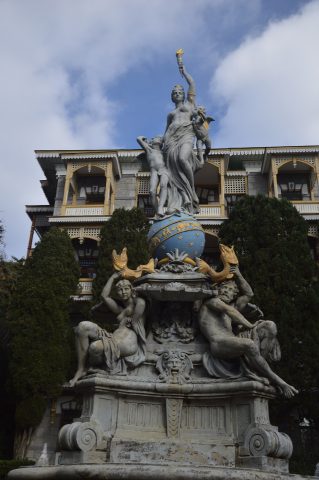
Perched on a gentle rise above the Black Sea, the Suuk-Su Palace in Gurzuf is one of those rare places where time seems to have paused, leaving behind the quiet elegance of a bygone era. Built in the early 20th century, it was conceived as a retreat for the wealthy and cultured, a place where the Russian aristocracy could escape the bustle of city life and indulge in the refined pleasures of the Crimean coast. Today, the palace wears its age with a certain dignity—its weathered façade and faded interiors only deepen its charm, offering a tangible connection to the past. The grand staircases, intricate balconies, and high ceilings with delicate stucco work still whisper of the opulence that once defined this place.
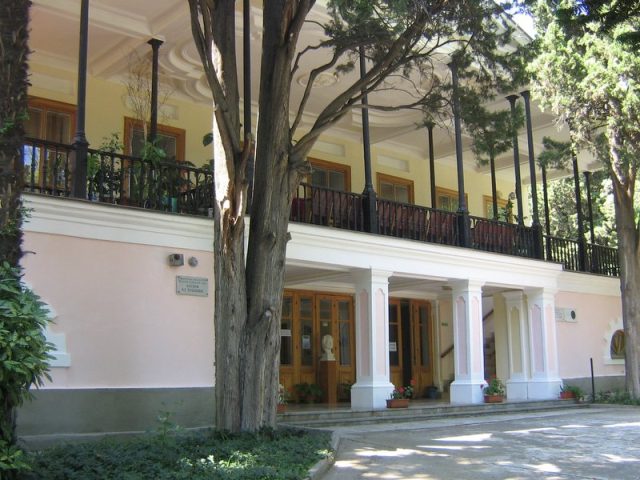
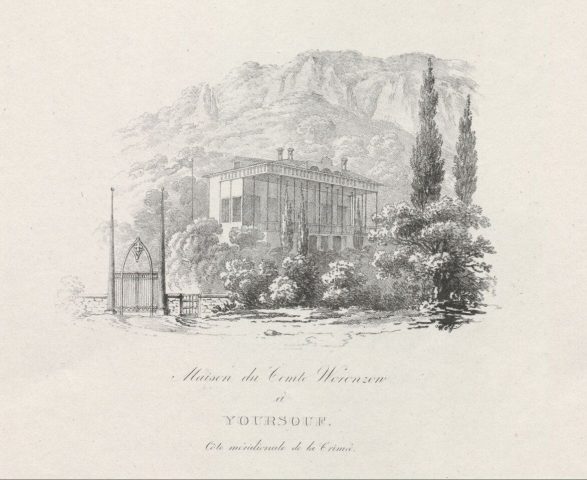
The architecture of Suuk-Su is a striking blend of Art Nouveau and Moorish influences, a style that was particularly fashionable among Russia’s elite at the turn of the century. The exterior is adorned with lacy ironwork, arched windows, and decorative motifs that evoke the romance of the East. Inside, the palace once boasted vast halls with marble floors, stained-glass windows, and grand fireplaces, all designed to impress. Much of the original interior has been lost to time, but the fragments that remain—ornate moldings, remnants of frescoes, and the occasional preserved detail—hint at the splendor that once filled these rooms. It’s easy to imagine the gatherings that took place here, where guests sipped tea in the shade of the veranda or lingered in the candlelit halls long into the evening.
The palace was commissioned by Pyotr Gubonin, a wealthy industrialist and philanthropist who played a key role in transforming Gurzuf into a premier resort destination. For Gubonin, Suuk-Su was more than a private residence; it was a cultural hub where artists, writers, and musicians could gather, exchange ideas, and draw inspiration from the stunning surroundings. The guest list reads like a who’s who of Russian cultural life: Anton Chekhov, Maxim Gorky, and Fyodor Shalyapin were among those who walked these halls. In those days, Gurzuf was a place where the elite came not just for the sea air, but for the company of like-minded souls—intellectuals, bohemians, and patrons of the arts who shaped the cultural landscape of the time.
After the revolution, the palace underwent a series of transformations. It served as a sanatorium, a rest home, and later, a government facility. Each new chapter left its mark—some rooms were repurposed, others altered—but the essence of the place endured. Today, Suuk-Su is privately owned, and access to the interior is restricted, though the exterior continues to draw visitors. The building’s current state, with its peeling paint and overgrown gardens, only adds to its mystique, as if it’s patiently waiting for the next chapter in its long and storied history.
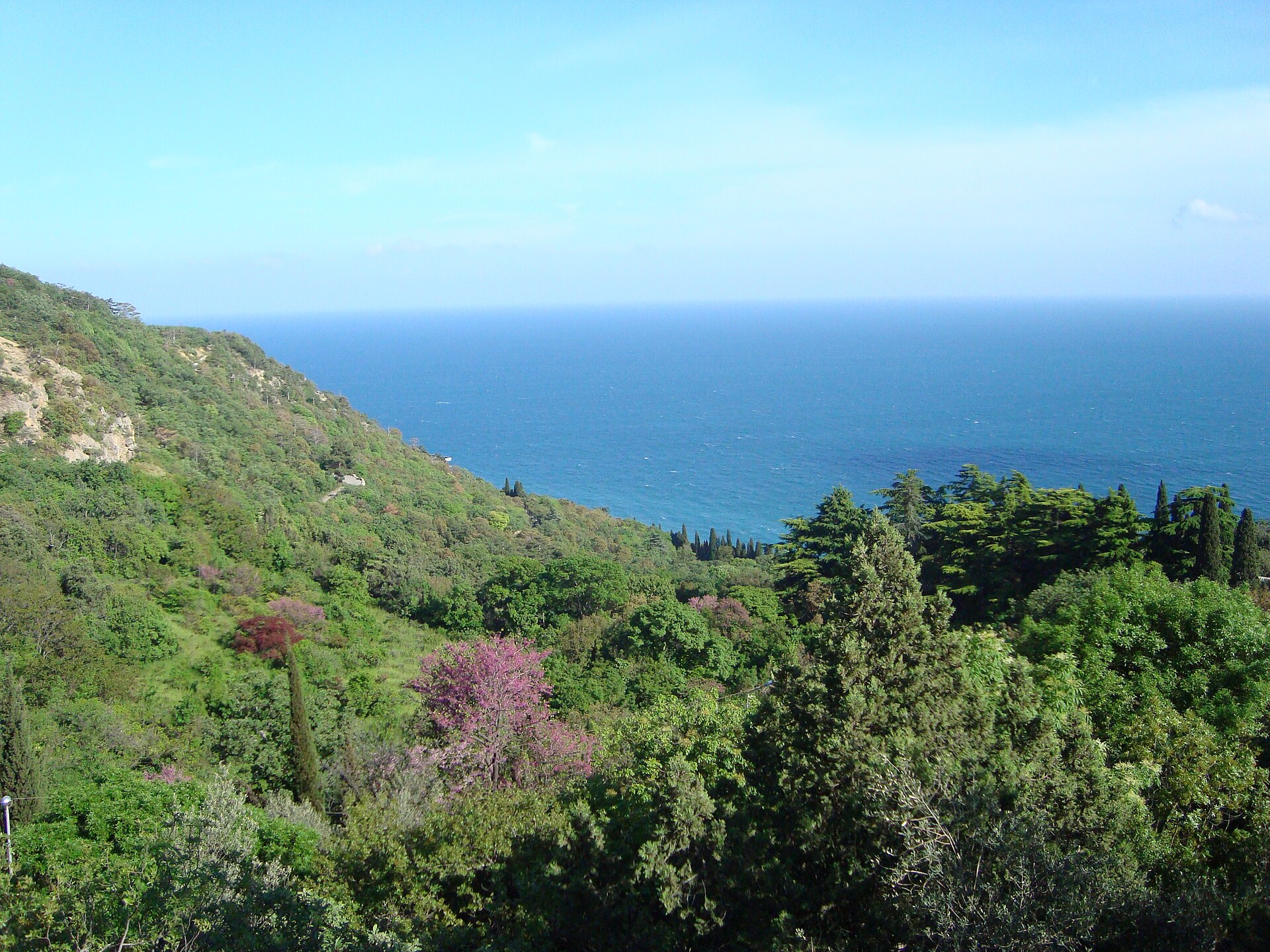
Gurzuf itself is a town that feels suspended between the mountains and the sea, where narrow streets wind past old villas and lush parks. The palace sits on a hillside, offering sweeping views of the coastline and the iconic Bear Mountain (Ayu-Dag) rising from the water. The surrounding park, with its ancient trees, winding paths, and secluded gazebos, is the perfect place to wander, lost in thought or simply soaking in the quiet beauty of the place. It’s easy to picture the guests of a century ago strolling these same paths, debating literature or pausing to admire the sunset over the sea.
Though Suuk-Su no longer serves its original purpose, it remains a vital piece of Crimea’s cultural heritage. Its walls hold the echoes of conversations, laughter, and music from a time when Gurzuf was one of the most sought-after destinations in the Russian Empire. The palace is in need of restoration, but even in its current state, it stands as a testament to the vision of those who built it and the lives that unfolded within its walls. For those who take the time to visit, it offers a rare glimpse into a world that has largely faded from memory.
What makes Suuk-Su special is its understated atmosphere. Unlike more famous landmarks, it doesn’t attract crowds, which means you can explore it at your own pace, free from the usual tourist hustle. You can stand by the gates, tracing the details of the façade with your eyes, or wander through the park, imagining the conversations that once filled the air. There’s a sense of timelessness here, a feeling that the past isn’t as distant as it seems. It’s the kind of place where history doesn’t just live in books—it lingers in the very stones, in the rustle of the leaves, in the salt-tinged breeze that drifts up from the sea.
In many ways, Suuk-Su is a reminder that history isn’t always about grand events or famous names. Sometimes, it’s found in the quiet corners of the world, in places that have witnessed the everyday lives of ordinary and extraordinary people alike. Gurzuf, with its winding streets, sea-scented air, and dramatic landscapes, is the perfect setting for such a place. It invites you to slow down, to look beyond the surface, and to appreciate the layers of time that have shaped this small but remarkable corner of Crimea. Whether you’re a history enthusiast, an architecture lover, or simply someone in search of beauty, Suuk-Su offers something rare: a chance to step into the past and feel it breathe.