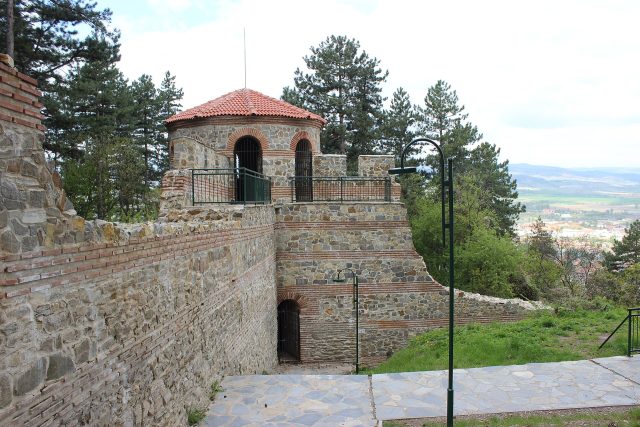
Pirogov Tower stands quietly on a hill overlooking Kyustendil, a town in southwestern Bulgaria with roots stretching back to antiquity. The tower is one of the few remaining structures from a time when this region was a crossroads of empires, trade routes, and shifting borders. Built in the 14th century, it was part of a larger fortress complex that once guarded the approaches to the town, though little else from that era has survived the centuries. The tower itself is modest in size but sturdy, constructed from rough-hewn stone that has weathered the elements with a kind of quiet resilience. Its rectangular shape and thick walls suggest a purely defensive purpose, though over time it has become something more—a silent witness to the layers of history that have unfolded around it.
The name Pirogov Tower is relatively recent, added in the 20th century as a nod to Nikolai Pirogov, the renowned Russian surgeon who worked in the area during the Russo-Turkish War of 1877–1878. Pirogov set up a field hospital nearby, and his efforts to treat wounded soldiers left a lasting mark on the town. The tower, however, predates him by centuries, and its original name has been lost to time. For locals, it has simply been the old tower on the hill, a landmark that has stood through Ottoman rule, Bulgarian independence, and the slow march of modernity. There’s something fitting about the way it has absorbed these different identities, as if the stones themselves carry the weight of the stories that have passed through Kyustendil.
Architecturally, the tower is unadorned, a far cry from the ornate churches and palaces that often draw visitors to Bulgaria. Its walls are thick, with narrow slits for archers and small windows that offer glimpses of the surrounding landscape. Inside, the space is sparse, with a single room on each of its three levels, connected by a steep stone staircase. The uppermost floor opens onto what was likely a lookout platform, though the wooden elements that once supported it have long since rotted away. The simplicity of the design is part of its charm—there’s no grand narrative here, just the straightforward functionality of a structure built to endure. Yet that very austerity makes it feel more authentic, as if it has always been exactly what it is: a relic of a time when survival depended on solid walls and a clear view of the horizon.
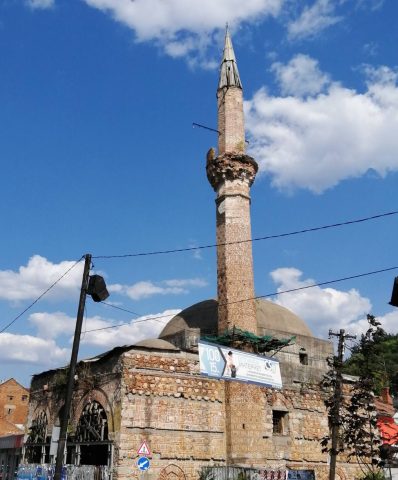
Kyustendil itself is a town that has grown up around its past, though it wears its history lightly. Unlike some of Bulgaria’s more tourist-heavy destinations, it doesn’t feel like a museum piece. The streets are a mix of Ottoman-era houses, communist-era apartment blocks, and modern shops, all coexisting without much fanfare. The tower sits on the edge of this urban fabric, separated from the bustle of the town center by a short walk uphill. From its vantage point, you can see the sprawl of Kyustendil stretching toward the mountains, a patchwork of rooftops and greenery that softens the lines between the old and the new. The view is particularly striking in the late afternoon, when the setting sun casts long shadows over the valley and the distant peaks of the Osogovo Mountains take on a golden hue.
The area around the tower is peaceful, almost sleepy. There’s a small park nearby, with benches where locals sometimes sit to enjoy the view or escape the summer heat. In the warmer months, the scent of linden trees fills the air, and the sound of children playing in the distance drifts up the hill. The tower isn’t a major attraction in the way that, say, the Rila Monastery or Plovdiv’s old town are, but that’s part of its appeal. There are no crowds here, no vendors hawking souvenirs, no guided tours rushing through with rehearsed facts. It’s just a place where you can stand for a moment and imagine what it might have been like to keep watch from these walls centuries ago—to scan the horizon for approaching armies, to listen for the distant clatter of hooves, or to simply take in the same view that has been seen by generations of people who called this land home.
The tower’s significance isn’t just historical; it’s also deeply personal for many in Kyustendil. For some, it’s a reminder of the town’s resilience, a symbol of the way life here has persisted through wars, occupations, and economic upheavals. For others, it’s a place of quiet reflection, a spot to escape the noise of daily life and reconnect with something older and more enduring. There’s a sense of continuity here, a feeling that the past isn’t just something to be studied in books but something that lingers in the stones and the soil. That might sound sentimental, but it’s hard not to feel it when you stand inside the tower, running your fingers over the rough surface of the walls and thinking about all the hands that have done the same over the centuries.
Visiting Pirogov Tower doesn’t require much planning. There’s no entrance fee, no set hours, and no one to tell you what to see or how to feel about it. You simply walk up the hill, push open the heavy wooden door (if it’s unlocked), and step inside. The interior is dimly lit, with sunlight filtering through the narrow windows, casting long, angular shadows across the floor. The air is cool, even on the hottest days, and the silence is almost tangible. It’s the kind of place where you might find yourself speaking in a whisper, not out of reverence, but because it feels like the natural thing to do. There’s no plaque with a detailed history, no interactive display—just the tower itself, standing as it has for hundreds of years.
If you’re passing through Kyustendil, the tower is worth a visit, not because it’s grand or spectacular, but because it offers something rare: a moment of stillness in a world that often feels too loud and too fast. It’s a reminder that history isn’t always about the big events or the famous names; sometimes, it’s about the quiet, unassuming places that have seen it all and yet remain. The tower doesn’t demand your attention, but if you give it a little time, it might just give you something in return—a sense of connection to the past, a glimpse of the landscape as it once was, or simply the chance to stand somewhere that has been standing long before you arrived and will continue to stand long after you’ve gone.