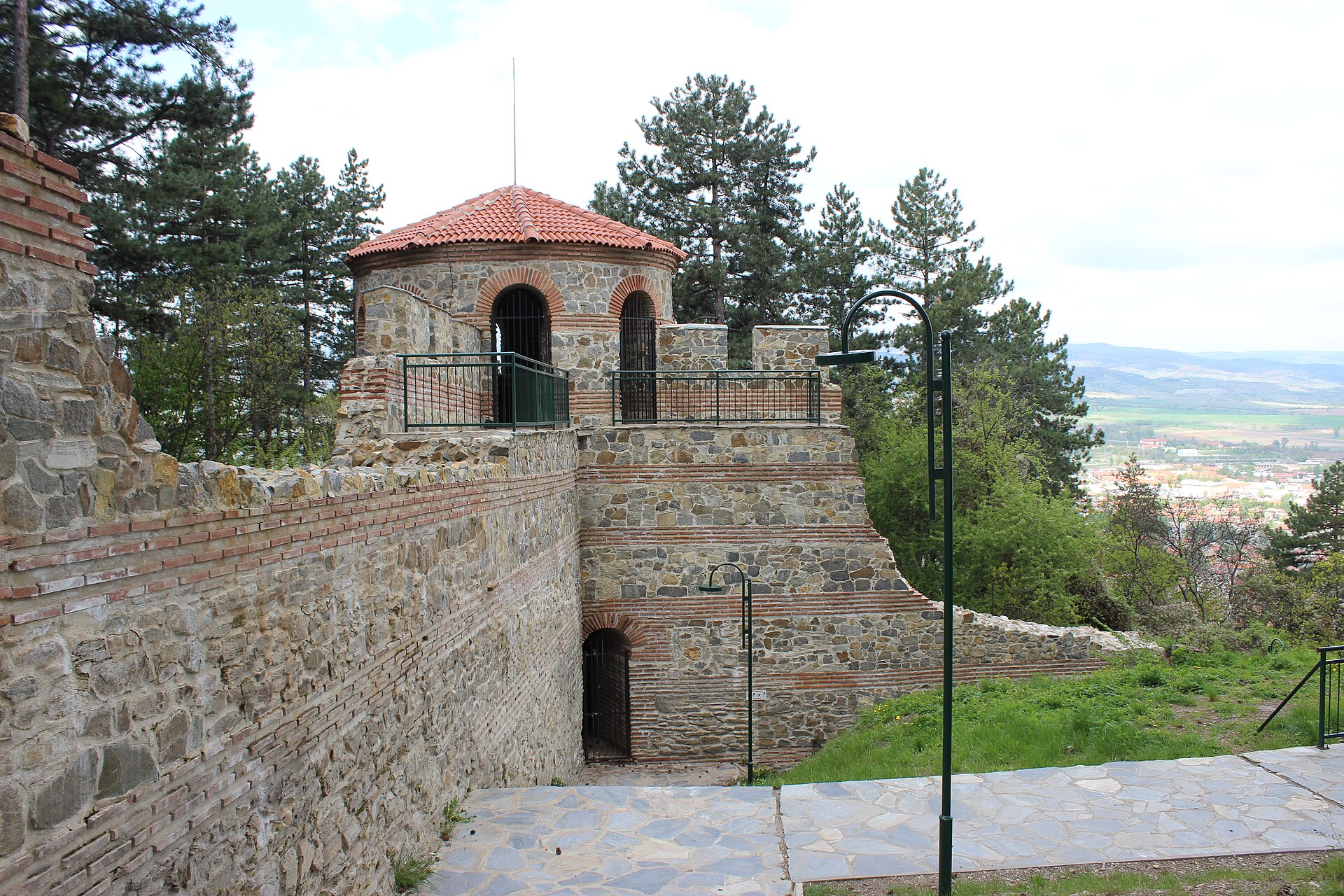
Perched on a gentle hill overlooking Kyustendil, Hisarlaka Park feels like a quiet guardian of the town’s layered past. The name itself hints at its origins—Hisarlaka comes from the Turkish word for fortress, and though little remains of the old walls today, the park still carries the weight of centuries. This was once a strategic vantage point, where Roman legions, medieval Bulgarian rulers, and Ottoman governors all left their mark in one way or another. Now, it’s a place where locals come to escape the summer heat under the shade of ancient trees, where children chase each other along winding paths, and where the past lingers in the stones beneath your feet.
The park’s most striking feature is the remains of the medieval fortress that once stood here. Built in the 10th century, it was part of a network of strongholds defending the region during the time of the First Bulgarian Empire. Over the centuries, it was expanded, destroyed, and rebuilt, only to be gradually reclaimed by nature. Today, you can still trace the outline of its foundations, particularly the eastern wall, which rises just high enough to imagine how imposing it must have been. The stones are worn smooth by time, their edges softened by moss and wildflowers that sprout between them in spring. It’s not the kind of ruin that demands awe—rather, it invites quiet reflection, a reminder of how fleeting even the mightiest structures can be.
Beyond the fortress, the park unfolds in a series of terraces that descend toward the town. Each level offers a different perspective, whether it’s the red-tiled roofs of Kyustendil below or the distant peaks of the Osogovo Mountains to the west. The paths are lined with chestnut and linden trees, their leaves rustling in the breeze, and in late spring, the air is thick with the scent of blossoms. Benches are scattered along the way, many of them occupied by elderly men playing backgammon or young couples stealing a moment away from the bustle of the town. There’s a sense of timelessness here, as if the park has always been this way—a place where life moves at its own unhurried pace.
One of the most interesting spots in Hisarlaka is the small open-air theater tucked into the hillside. Built in the mid-20th century, it’s a modest structure, with stone steps carved into the slope and a simple stage framed by trees. During the summer, it hosts occasional performances—folk concerts, poetry readings, or local theater productions—but even when it’s empty, it feels like a natural part of the landscape. The acoustics are surprisingly good, and if you sit on the steps on a quiet evening, you can almost hear the echoes of past performances carried on the wind. It’s the kind of place where culture feels organic, not forced, as if the land itself has always been a stage.
For those who prefer a more active visit, the park offers several walking trails that loop around the hill. The most popular is the path that circles the fortress ruins, which takes about twenty minutes at a leisurely pace. Along the way, you’ll pass a few small clearings where wild thyme and lavender grow, their fragrance mixing with the earthy scent of the forest. In autumn, the ground is carpeted with fallen leaves, and the air takes on a crisp, smoky edge. The trails aren’t strenuous, but they do require sturdy shoes—some sections are uneven, and after rain, the clay soil can be slippery. Still, the effort is worth it for the views alone, especially at sunset, when the light turns the town below into a patchwork of gold and shadow.
Hisarlaka isn’t just a park; it’s a living part of Kyustendil’s identity. The town has long been known for its thermal springs and lush gardens, and this hill has always been its green heart. In the 19th century, it was a favorite spot for the local intelligentsia, who would gather here to discuss politics and literature under the trees. Later, during the socialist era, it became a symbol of communal leisure, with families picnicking on the grass and children flying kites on the slopes. Even now, it’s where Kyustendil comes to breathe—whether that means a morning jog, an afternoon nap in the shade, or an evening stroll with friends.
What makes Hisarlaka special is its lack of pretension. There are no grand monuments or flashy attractions, just a quiet hill where history and nature coexist. The fortress ruins aren’t meticulously restored, the paths aren’t perfectly manicured, and the park doesn’t try to impress. Instead, it offers something far more valuable: a sense of place. It’s the kind of spot where you can sit on a bench, watch the town below, and feel like you’ve slipped into the rhythm of life here, if only for a little while. For travelers passing through Kyustendil, it’s a reminder that sometimes the most memorable places aren’t the ones that shout for attention, but the ones that whisper.