The Bamiyan Caves are a quiet testament to the layers of history that have shaped this remote valley in central Afghanistan. Carved into the sandstone cliffs that rise abruptly from the Bamiyan plain, these caves once formed part of a vast Buddhist monastic complex, a place where monks lived, prayed, and created some of the most striking art of their time. The cliffs stretch for over a kilometer, their honey-colored rock pocked with openings—some small and unassuming, others grand and ornate, framed by the remnants of ancient facades. For centuries, this was a crossroads of cultures, where travelers along the Silk Road paused to rest, trade, and reflect, leaving behind traces of their beliefs in the form of statues, murals, and inscriptions.
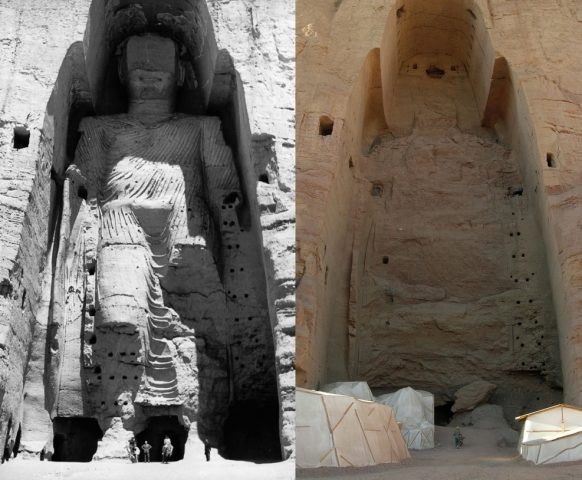
The most famous relics of this place were the two colossal Buddha statues that once stood in niches carved into the cliffside. The larger of the two, known as the Eastern Buddha, reached nearly 38 meters in height, while the Western Buddha stood at 55 meters, making them among the tallest standing Buddhas in the world. For over a thousand years, they watched over the valley, their stone forms weathered by wind and time, their faces turned toward the rising and setting sun. The statues were not just religious icons but also symbols of the region’s prosperity during the heyday of the Silk Road, when Bamiyan was a thriving center of Buddhist learning and art. Pilgrims and merchants from as far as China and India would have passed by these figures, their presence a reminder of the spiritual and commercial connections that once bound distant lands.
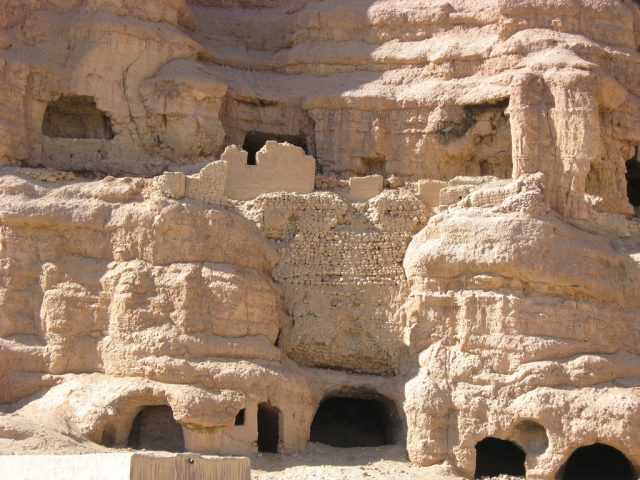
The caves themselves vary in size and purpose. Some were simple living quarters, little more than hollowed-out chambers with rough walls and low ceilings, where monks would have slept and meditated. Others were more elaborate, with vaulted ceilings, decorative arches, and remnants of frescoes that once covered the walls in vibrant hues. The murals depicted scenes from Buddhist mythology, their colors—reds, blues, and golds—faded but still visible in places where the plaster has survived. In a few of the caves, you can still see the outlines of seated Buddhas, their forms sketched in red pigment, or the delicate patterns of floral motifs that once adorned the ceilings. The craftsmanship speaks to a time when this was a place of devotion and creativity, where every detail was meant to inspire contemplation.
The decline of Buddhism in the region began in the 9th century, as Islam spread across Central Asia. By the time Genghis Khan’s armies swept through Bamiyan in the 13th century, the monasteries were already in ruins, and the statues stood as silent witnesses to a fading era. The Mongols, known for their destructive campaigns, left their mark here as well, though the exact extent of the damage they caused is unclear. Over the centuries, the caves were repurposed—some became shelters for shepherds, others were used as storage for grain or tools. The statues, though no longer objects of worship, remained a part of the landscape, their presence so ingrained in the valley’s identity that they were simply called *Salsal* and *Shamama* by the local Hazara people, names that meant "light shines through the universe" and "queen mother."
In 2001, the world learned of the statues’ destruction when the Taliban, then in control of Afghanistan, declared them un-Islamic and demolished them with explosives. The act was met with international outrage, but for those who had known the Buddhas all their lives, the loss was deeply personal. The empty niches where the statues once stood are now a stark reminder of how quickly history can be erased. Yet the caves themselves endured, their walls still bearing the traces of the people who once called this place home. Today, the niches are filled with scaffolding and protective coverings as part of ongoing efforts to preserve what remains, though the work is slow and fraught with challenges.
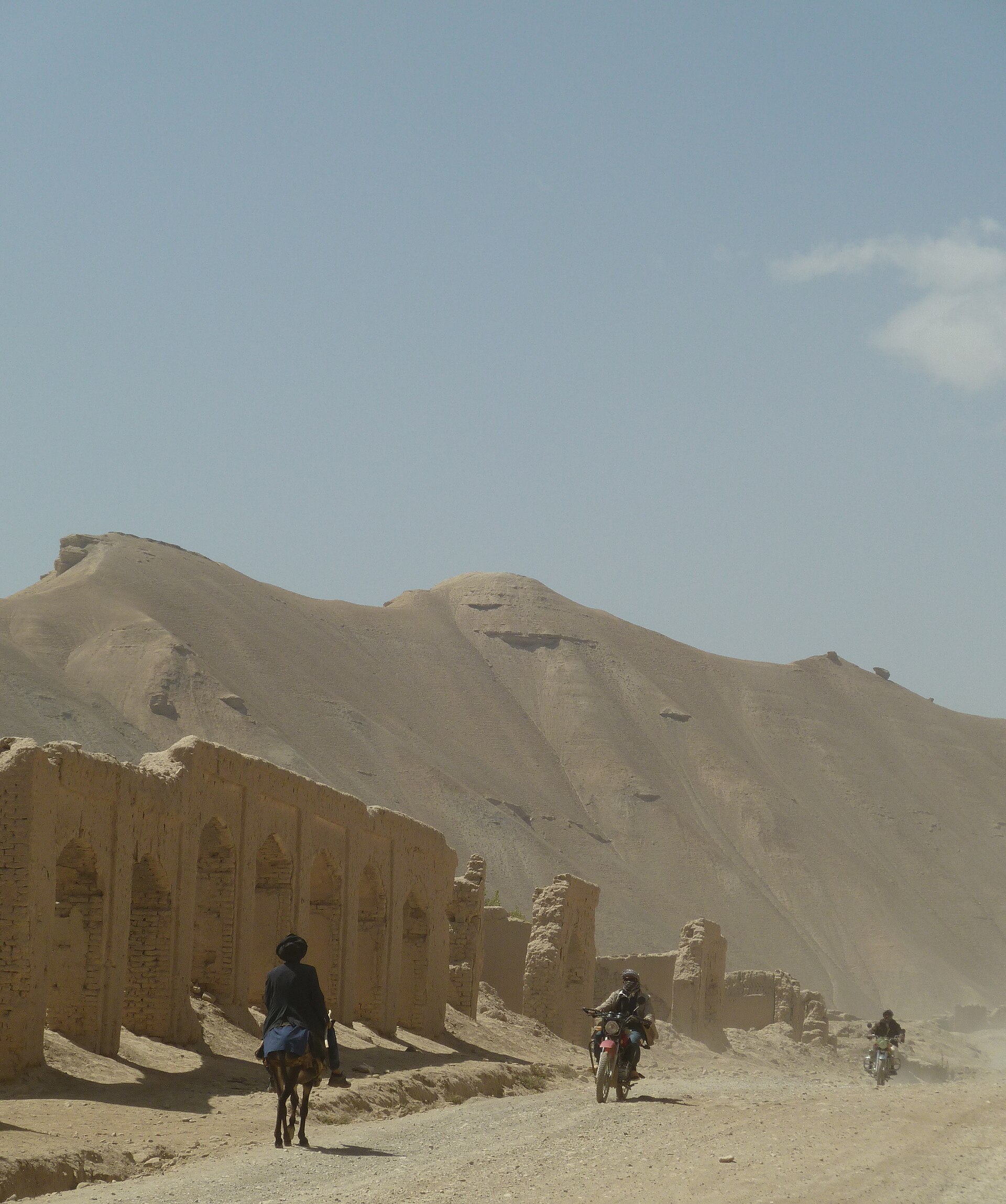
Visiting the Bamiyan Caves today is a study in contrasts. The valley itself is breathtakingly beautiful, surrounded by the rugged peaks of the Hindu Kush, with the turquoise waters of the Bamiyan River winding through the plain below. The air is thin and crisp, carrying the scent of wild thyme and the distant sound of sheep bells. The caves, though empty of their most famous inhabitants, still hold a sense of quiet dignity. Walking along the base of the cliffs, you can peer into the openings, some of which are now sealed off for safety, while others remain accessible, their interiors dark and cool. The murals that survive are fragile, their colors muted by time, but their presence is a reminder of the artistic skill that once flourished here.
The local Hazara community, who have lived in the valley for centuries, have a deep connection to this place. For them, the caves are not just relics of the past but part of their living history. Some families still use the smaller caves as storage or shelter, and the cliffs are dotted with modern graffiti alongside ancient inscriptions. The Hazara people, who are predominantly Shia Muslims, have faced their own struggles in Afghanistan’s turbulent history, and their resilience is reflected in the way they have adapted to life in this remote corner of the country. Their stories are woven into the fabric of the valley, adding another layer to its complex identity.
Bamiyan is not an easy place to reach. The journey from Kabul takes you through some of the most dramatic landscapes in Afghanistan, with winding mountain roads that cling to the sides of sheer cliffs. The valley itself is isolated, its remoteness both a blessing and a curse. It has preserved the caves from the kind of mass tourism that might have further eroded their fragile structures, but it has also made conservation efforts difficult. The winters here are harsh, with heavy snowfall cutting off the valley from the outside world for months at a time. Yet for those who make the journey, Bamiyan offers a rare glimpse into a past that feels both distant and strangely immediate.
The future of the Bamiyan Caves is uncertain. Efforts to document and preserve what remains are ongoing, but the challenges are immense. The political instability in Afghanistan has made international collaboration difficult, and the lack of resources means that much of the work is done on a shoestring budget. There have been discussions about reconstructing the Buddhas, though opinions on this are divided. Some argue that rebuilding them would be a way to restore a piece of the valley’s heritage, while others believe that the empty niches should remain as they are—a powerful symbol of loss and resilience. Whatever happens, the caves will continue to stand as a silent witness to the passage of time, their walls holding stories that have yet to be fully told.