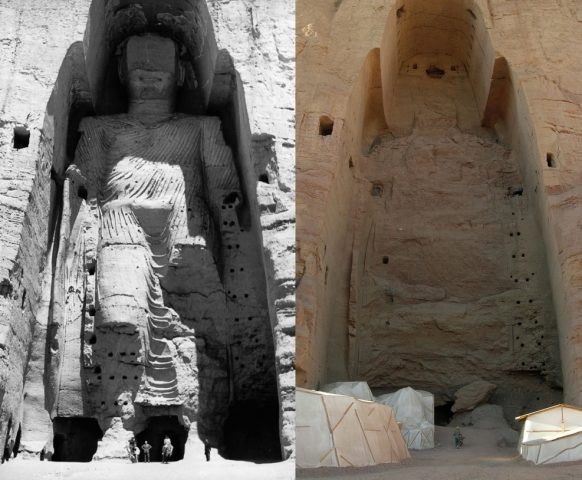
The Bamiyan Valley stretches across a high plateau in central Afghanistan, framed by the rugged peaks of the Hindu Kush. For centuries, it was a crossroads of cultures, where trade routes from China, India, and Persia intersected, leaving behind layers of history etched into the cliffs and the land itself. The valley’s most famous legacy once stood as two colossal Buddha statues, carved directly into the sandstone cliffs during the 6th century. These towering figures, one reaching 53 meters and the other 35, were not just religious icons but symbols of the region’s role as a meeting point between East and West. Their destruction in 2001 shocked the world, yet the empty niches they left behind remain a powerful reminder of the valley’s past.
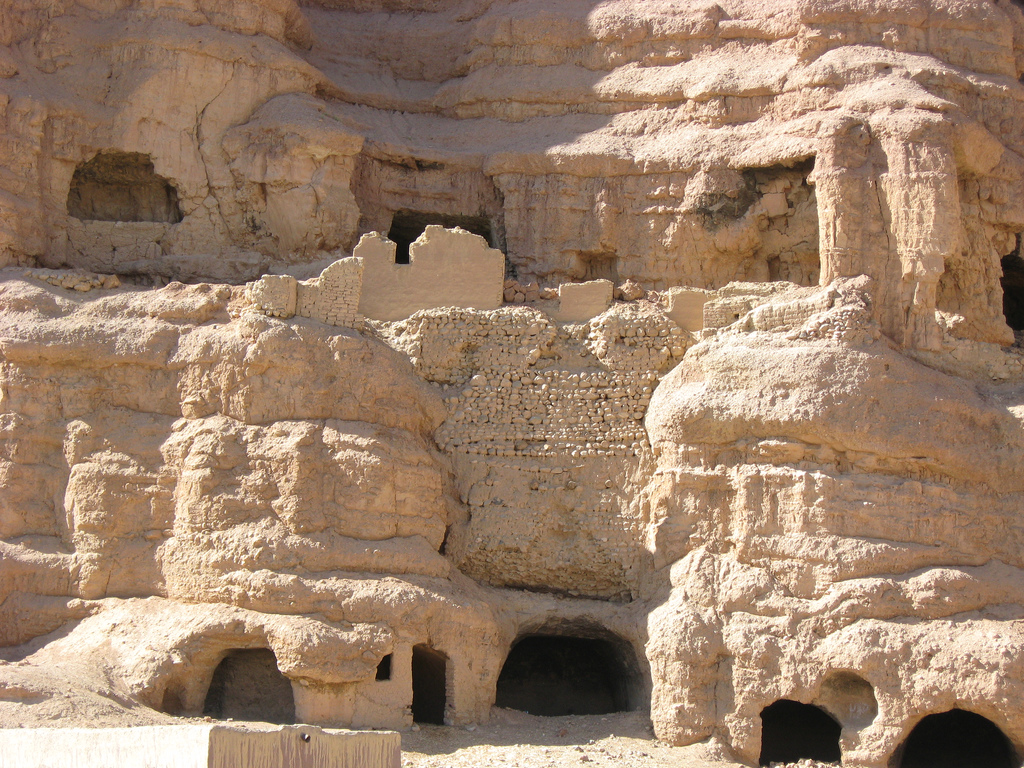
The landscape here feels timeless, with its wide, dusty plains and the slow rhythm of life in the villages that dot the valley floor. The Bamiyan River cuts through the land, its waters feeding fields of wheat and barley, while shepherds guide their flocks along the hillsides. The air is thin and crisp, especially in the early mornings when the light slants across the cliffs, casting long shadows over the ruins of ancient monasteries and the caves where Buddhist monks once lived and prayed. These caves, some still bearing faint traces of frescoes, were part of a vast complex that made Bamiyan one of the most important centers of Buddhist learning and pilgrimage in Central Asia.
Before the Buddhas, before the monks, the valley was already a place of significance. Archaeological evidence suggests that the area was inhabited as early as the Bronze Age, with later influences from the Achaemenid and Hellenistic periods. The statues themselves were carved during the Hephthalite rule, a time when Bamiyan thrived as a cosmopolitan hub. The larger Buddha, known as Salsal, was said to represent the masculine aspect of enlightenment, while the smaller, Shamama, embodied the feminine. Pilgrims and travelers would gather here, bringing with them not just devotion but also goods, ideas, and stories from distant lands.
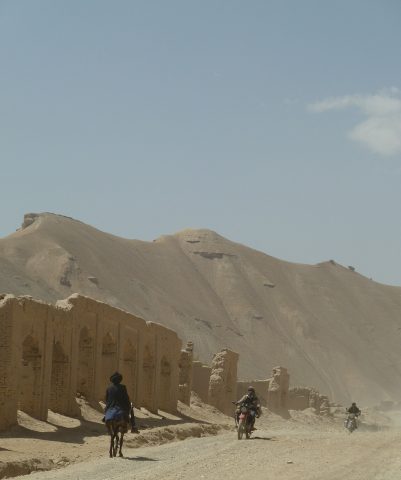
The valley’s decline began with the rise of Islam in the region, though it remained a place of cultural exchange for centuries. By the time Genghis Khan’s armies swept through in the 13th century, Bamiyan was already a shadow of its former self. The Mongols, however, left their own mark, and the ruins of Shahr-e Gholghola—a fortress city perched on a hill—bear witness to the violence of that era. The name, which translates to "City of Screams," hints at the fate of its inhabitants. Yet even after this devastation, the valley endured, its people adapting to new realities while the land retained its quiet dignity.
Today, Bamiyan is a place of contrasts. The empty Buddha niches, now a UNESCO World Heritage Site, draw visitors who come to reflect on what was lost and what remains. The caves, though fragile, still hold fragments of the past, their walls whispering stories of devotion and artistry. Nearby, the modern town of Bamiyan serves as a base for those exploring the valley, its bazaars offering a glimpse into daily life—spices, handwoven textiles, and the occasional piece of lapis lazuli, a stone once prized by ancient civilizations. The people here are predominantly Hazara, an ethnic group with deep ties to the land, and their hospitality is as much a part of the valley’s character as its history.
Beyond the historical sites, the Bamiyan Valley offers a landscape that feels untouched by time. The Band-e-Amir National Park, a few hours to the west, is home to a series of stunning blue lakes, their waters so clear they seem almost unreal. Closer to town, the red cliffs of the Foladi Valley provide a striking backdrop, their colors shifting with the light. In winter, the valley is blanketed in snow, transforming it into a quiet, almost otherworldly place. Even in summer, the heat is tempered by the altitude, making it a place where time moves at its own pace.
For those who venture here, Bamiyan is more than just a collection of ruins or a footnote in history. It is a place where the past is still palpable, where the land itself tells a story of resilience and change. The empty niches of the Buddhas are not just a void but a space for contemplation, a reminder of how civilizations rise and fall, and how even in destruction, something enduring remains. The valley’s beauty lies in its ability to hold these contradictions—between faith and conflict, between preservation and loss, between the weight of history and the quiet persistence of life. It is a place that lingers in the memory long after you’ve left.