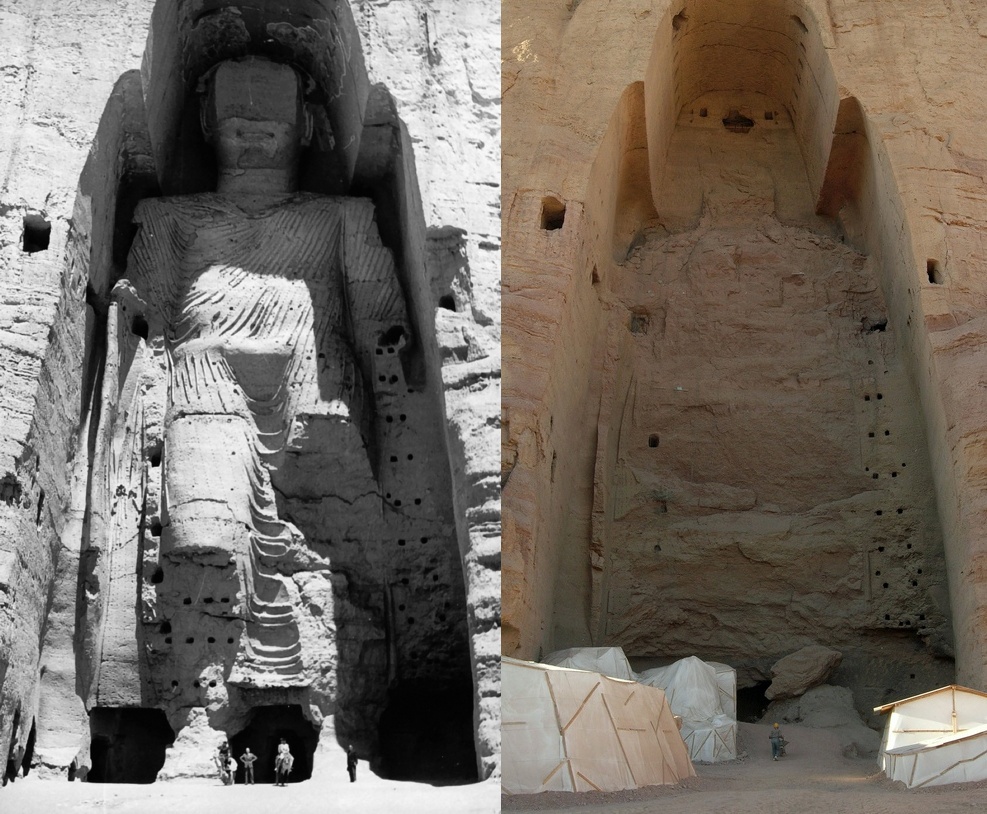
The Bamiyan Buddhas once stood as some of the most awe-inspiring monuments in Central Asia, carved directly into the cliffs of the Bamiyan Valley. These colossal figures, known as the Great and Small Buddhas, were created in the sixth century and for centuries captivated travelers with their sheer scale and presence. At 53 and 35 meters tall, they were the largest standing Buddha statues in the world, their surfaces once gilded and adorned with precious stones that reflected the wealth and spiritual significance of the region. The valley itself was a crossroads of civilizations, where Buddhism, Zoroastrianism, and later Islam intersected, making Bamiyan a vital stop on the Silk Road.
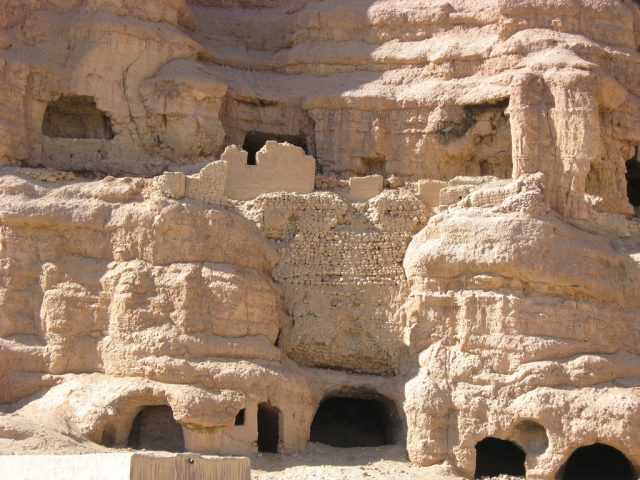
The statues were more than just sculptures—they were a testament to the valley’s role as a center of faith and trade. Merchants traveling between China, Persia, and India passed through Bamiyan, bringing not only goods but also ideas, beliefs, and artistic influences. The Buddhas overlooked a city that thrived as both a religious sanctuary and a bustling marketplace, drawing pilgrims, scholars, and traders from across Asia. The surrounding cliffs were honeycombed with caves and monasteries, where monks lived and worshipped, their walls covered in intricate frescoes depicting scenes from the life of the Buddha. These paintings, blending Indo-Persian styles, were among the finest examples of Buddhist art of their time.
The craftsmanship of the statues was remarkable. Carved from the living rock, their faces and robes were once coated in clay and pigment, giving them a lifelike quality that must have been striking to those who saw them. The caves around them served as living spaces, meditation chambers, and places of worship, their interiors decorated with murals that told stories of enlightenment and devotion. For centuries, the Buddhas stood as silent witnesses to the ebb and flow of empires, religions, and cultures in the valley.
Their destruction in 2001 was a devastating loss, not just for Afghanistan but for the world. The Taliban, declaring the statues idolatrous, demolished them with explosives, leaving behind only empty niches in the cliffs. The blasts erased a piece of history that had endured for over a thousand years, a reminder of how fragile cultural heritage can be. Today, the gaping voids where the Buddhas once stood serve as a stark memorial, a place where visitors can reflect on what was lost and why.
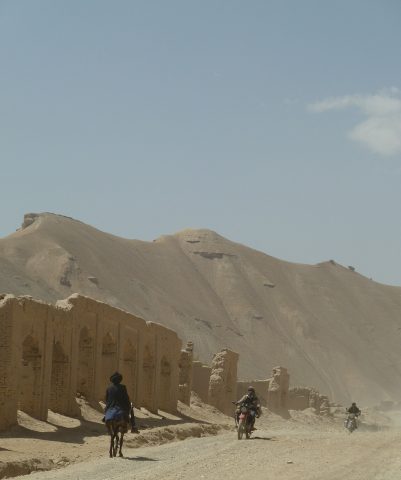
Yet Bamiyan is not just a place of absence. The valley still holds traces of its past, and archaeologists continue to uncover fragments of its history. Some of the cave murals survive, offering glimpses of the artistry that once adorned the statues. Nearby, other historical sites—like the fortress of Shahr-i-Ghulghula and the remains of Buddhist monasteries—help piece together the story of the region. These ruins, scattered across the landscape, speak of a time when Bamiyan was a thriving hub of learning and spirituality.
The valley itself remains a quiet, almost timeless place. Surrounded by rugged mountains, it feels remote, as if the modern world has barely touched it. The people who live here, mostly Hazara, carry on traditions that have endured for generations, farming the land and tending livestock much as their ancestors did. There are no crowds of tourists, no grand restorations—just the wind sweeping through the cliffs and the occasional sound of a distant village. It’s a place where history lingers in the air, where the past is never far from the present.
For those who visit, Bamiyan offers a chance to confront history in all its complexity. The destruction of the Buddhas was a moment of profound loss, but it was also part of a longer story—one of conquest, faith, and resilience. The valley has seen empires rise and fall, religions take root and fade, and yet it endures. The empty niches in the cliffs are a reminder of what was taken, but they are also a testament to what remains: the land itself, the people who call it home, and the echoes of a past that refuses to be forgotten.
Standing in the shadow of those empty spaces, it’s impossible not to think about the countless lives that have passed through this valley. Merchants, pilgrims, soldiers, and monks—all left their mark here, shaping the land in ways both visible and invisible. Today, Bamiyan is a place of quiet reflection, a spot where the weight of history is palpable. It’s not just a destination; it’s a journey through time, a chance to walk in the footsteps of those who came before and to wonder what stories the cliffs might still hold.