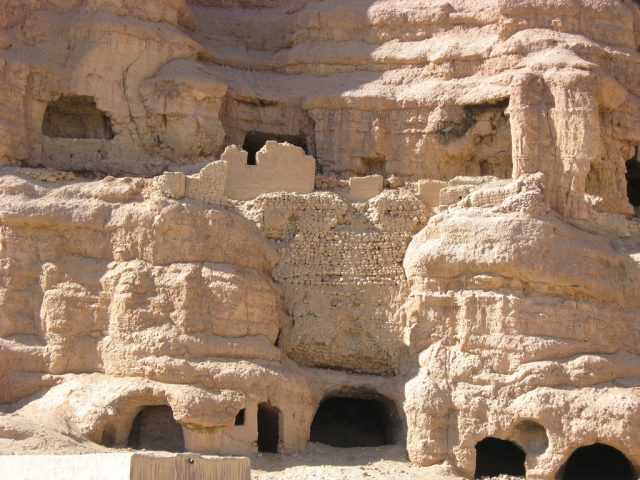
Ajdar Valley lies just beyond the edges of Bamyan, a quiet stretch of land where the past feels closer than anywhere else in the region. The valley is best known for its ancient caves, carved into the soft sandstone cliffs that rise gently from the earth. These were not just shelters but homes, places of worship, and waystations for travelers and monks who once moved along the Silk Road. The caves are older than the famous Buddhas of Bamyan, though they share the same history—one of devotion, trade, and the slow passage of time.
The earliest caves date back to the early centuries of the Common Era, when Bamyan was a thriving center of Buddhism. Monks hollowed out the rock to create small cells, prayer halls, and even miniature monasteries. Some of the caves still bear faint traces of frescoes—figures in flowing robes, lotus flowers, and scenes from Buddhist lore—though most have faded or been worn away by centuries of wind, rain, and human hands. In a few, you can still make out the niches where statues once stood, their shapes long since lost to time.
The valley has seen many lives. After the decline of Buddhism, it did not empty but changed. Invaders passed through, traders stopped to rest, and local families took refuge in the caves during times of conflict. Some of the dwellings were abandoned, while others were repurposed as storage spaces or even homes. Even now, a few families live in the caves, adapting them with modern touches—plastic sheeting for doors, solar panels for light—while the rock walls remain as they have for centuries.
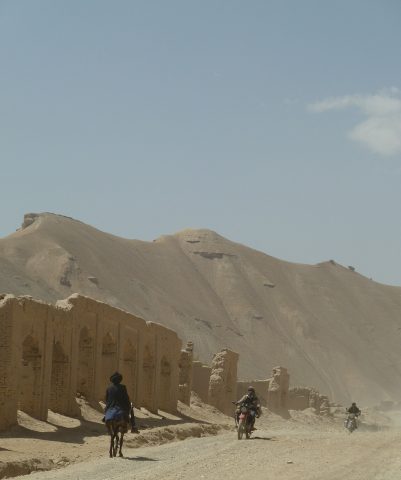
Beyond its history, Ajdar Valley is a place of quiet beauty. The surrounding hills are low and rolling, their slopes dotted with sparse vegetation that turns lush in spring and golden in autumn. A small river winds through the valley floor, feeding the fields where farmers grow wheat, barley, and vegetables. Shepherds graze their flocks on the higher pastures, and the air carries the scent of wild herbs and damp earth. The landscape is unassuming, but there is a stillness here that makes it feel timeless.
Visiting the valley is less about ticking off sights and more about stepping into a rhythm that has barely changed. There are no crowds, no guided tours, no signs pointing the way. The caves are open to anyone willing to climb the rocky paths, and you can explore them at your own pace. Some still show the blackened marks of old fires, remnants of the people who once cooked and slept within these walls. The silence inside is heavy, broken only by the sound of your own footsteps.
What remains in Ajdar Valley is fragile. Many of the paintings are gone, the statues reduced to dust, and the stories behind them forgotten. But the caves themselves endure, carved by hands long turned to dust, surviving empires, religions, and wars. They do not demand admiration or reverence—only attention. They stand as they always have, waiting for those who come to see them.
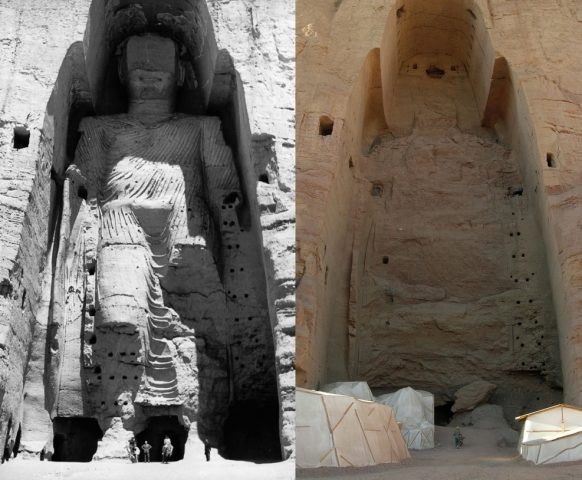
For travelers in Bamyan, the valley offers a different kind of history. After seeing the empty niches where the Buddhas once stood, Ajdar Valley fills in the gaps. It shows not the grand monuments but the everyday lives of the people who built them. The caves are modest, unpolished, and all the more compelling for it. They tell their story without words, in the language of stone and silence.