Yellow Dragon Cave is one of those places where nature seems to have set aside all restraint, crafting a world beneath the earth that feels almost deliberate in its strangeness. Tucked away in the hills near Zhangjiajie, this karst cavern is less about grand statistics—though it stretches for dozens of kilometers and boasts chambers tall enough to swallow a skyscraper—and more about the quiet drama of stone and water shaping something extraordinary over millennia. The cave doesn’t announce itself with fanfare; it waits, half-hidden among the greenery, its entrance a gaping maw of rock that locals say resembles the open jaws of a dragon. The name isn’t just poetic fancy—it’s rooted in old stories of a yellow-scaled guardian that once dwelled here, hoarding secrets in the dark.
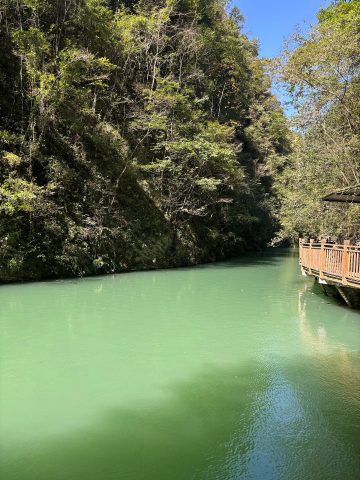
The first steps inside feel like crossing a threshold into another realm. The air is cool and still, the kind of quiet that makes your own breathing sound loud. Artificial lights cut through the gloom, picking out the jagged edges of stalactites and the smooth curves of flowstone, their shapes so organic they could be mistaken for frozen creatures mid-movement. The cave’s most famous chamber holds a still, glassy lake, its surface so clear it mirrors the vaulted ceiling above, doubling the illusion of space. There’s no chill here, despite the icicle-like formations—just a steady, comfortable temperature that makes the cave feel like a natural refuge, untouched by the seasons outside.
What makes Yellow Dragon Cave remarkable isn’t just its size, but the way it reveals the slow, patient work of water. Over hundreds of millions of years, rain and underground rivers dissolved the limestone, carving out tunnels and chambers with a sculptor’s precision. Some of the stalagmites rise like ancient tree trunks, their surfaces pitted and grooved by time, while narrow passages between them force visitors to duck or turn sideways, as if navigating a forest of stone. The cave isn’t static; even now, water drips from the ceiling, each drop adding another microscopic layer to the formations. It’s a reminder that this place is still being shaped, even if the changes are too gradual for human eyes to witness.
Beyond its geological wonders, the cave carries a weight of human history. For generations, locals have treated it as a sacred space, a place where the veil between the living and the spirit world feels thin. Some chambers bear faint traces of old rituals—carvings in the rock, the remnants of altars—though today, these details are often overlooked in favor of the cave’s more dramatic features. Still, there’s a sense of reverence in the air, amplified by the near-silence broken only by the occasional echo of footsteps or the distant plink of water. The lighting, too, plays a part, casting shifting shadows that make the walls seem to breathe.
Exploring the cave is a mix of wonder and mild exertion. The tourist route winds along metal walkways and staircases, guiding visitors through the most striking chambers, but even this curated path can’t capture the cave’s full scale. Some sections narrow to tight squeezes where you might brush against damp rock, while others open into vast halls where the ceiling vanishes into darkness. The most memorable moments often come when the path suddenly reveals a new vista—a cavern so large it swallows the light, or a formation so intricate it looks like coral. There’s no rush here; the cave sets its own pace, and visitors quickly adjust to the rhythm of slow, deliberate steps.
What lingers after a visit isn’t just the memory of the cave’s beauty, but the feeling of having glimpsed something timeless. Unlike the crowded viewpoints of Zhangjiajie’s national parks, Yellow Dragon Cave offers a different kind of solitude, one that feels earned. The crowds thin out in the deeper chambers, and even when they don’t, the cave’s sheer scale makes it easy to find a quiet corner. There’s no grand narrative here, no over-the-top spectacle—just the quiet persistence of nature, shaping and reshaping itself over eons. It’s a place that doesn’t demand admiration so much as invite contemplation, a reminder of how much of the world remains unseen beneath our feet.
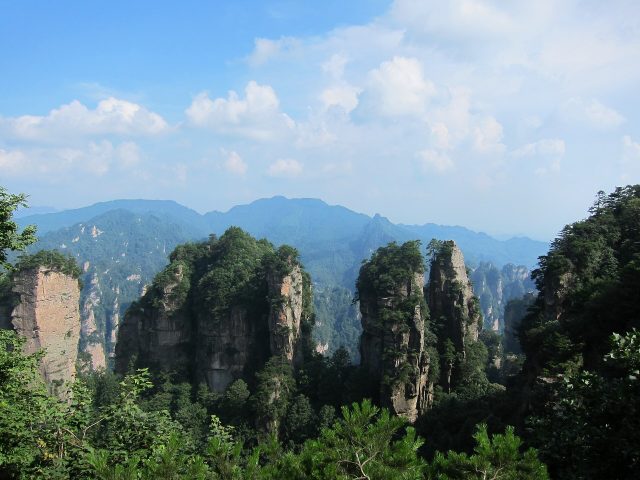
For travelers who come to Zhangjiajie expecting the towering sandstone pillars of Wulingyuan, the cave offers a counterpoint—a world of shadows and stillness where the drama is intimate rather than sweeping. There are no sweeping vistas here, no panoramic overlooks, just the slow reveal of another kind of beauty. It’s not a place for those seeking thrills or Instagram moments, but for those who find wonder in the way water can hollow out a mountain or how a single beam of light can transform a wall of rock into something alive. The cave doesn’t try to impress; it simply exists, as it has for millions of years, indifferent to the fleeting visits of humans.
That indifference is part of its charm. Yellow Dragon Cave doesn’t cater to expectations. It doesn’t need to. The formations don’t arrange themselves for the best photo, the lighting isn’t designed to flatter, and the path doesn’t shy away from the cave’s rougher edges. It’s a place that feels untamed, even though it’s been open to tourists for decades. In an era where so many natural wonders are packaged and polished for easy consumption, the cave remains stubbornly itself—a labyrinth of stone and water, shaped by forces far older than human history. To walk through it is to step briefly into a world that operates on a different timescale, where a single drop of water is a tiny but essential part of something vast.