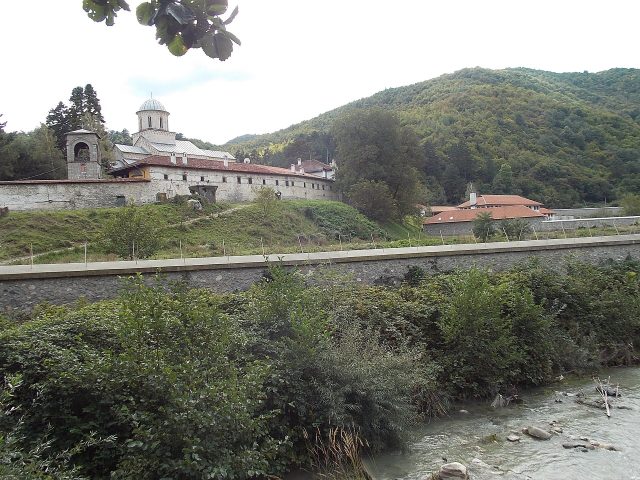
Perched at the foot of the Prokletije mountains on the outskirts of Pécs, the Patriarchate of Peć feels less like a historical site and more like a place where time has settled into a slower, deeper rhythm. This cluster of medieval churches and monasteries has stood for centuries as both a spiritual anchor and a symbol of Serbian identity, its weathered stones bearing witness to the rise and fall of empires, the resilience of faith, and the quiet persistence of tradition. Unlike many religious landmarks that have become polished tourist attractions, the Patriarchate retains an air of unassuming authenticity—its courtyards are still, its frescoes faded but unretouched, and the only sounds breaking the silence are the rustle of leaves in the monastery garden or the distant toll of a bell.
The architecture here tells a story of gradual evolution, each layer revealing a different chapter in its history. The centerpiece, the Cathedral of the Holy Apostles, dates back to the 13th century and embodies the stark, enduring beauty of medieval Serbian design. Built from roughly hewn stone, its exterior appears almost austere, yet inside, the space unfolds with a sense of quiet grandeur. Three naves are divided by sturdy columns, their capitals adorned with frescoes that have survived since the 14th century. The iconostasis, a masterpiece of woodcarving gilded with gold leaf, draws the eye upward, its icons spanning centuries yet united by a shared reverence. The craftsmanship is understated but deliberate, as if every detail was meant to endure rather than impress.
Adjacent to the cathedral stand three smaller churches, each dedicated to a different saint and each with its own character. The Church of St. Demetrius, the oldest of the three, was built in the late 13th century and feels almost intimate in scale. Its frescoes, though worn by time, still convey a striking intensity—particularly the scenes of the Last Judgment, where the artists captured the raw emotion of the biblical narrative with remarkable precision. The Church of the Holy Virgin, constructed slightly later, introduces a more refined touch with its dome and delicate murals, while the Church of St. Nicholas, the youngest of the group, rounds out the complex with a sense of completeness. Together, they form a harmonious whole, their differences in style and scale complementing rather than competing with one another.
The Patriarchate’s history is inseparable from the broader story of Serbia, particularly during the centuries of Ottoman rule. In the 14th century, as the Serbian Empire began to decline, the Patriarchate emerged as a vital center of both spiritual and political life. It was here that decisions shaping the fate of the nation were made, and the monasteries provided refuge for those fleeing the advancing Ottoman forces. When Serbia fell under Ottoman control in the 16th century, the Patriarchate’s influence waned, but it was never abandoned. Its revival in the 17th century, when Serbs gained a measure of autonomy, transformed it into a symbol of resistance and hope—a place where faith and national identity could endure even under foreign domination.
For nearly three centuries, from the 16th to the 18th, the Patriarchate served as the seat of the Serbian patriarchs. This was a period of both growth and hardship: new buildings were added, frescoes were restored, and the complex expanded, yet it also suffered devastating fires that destroyed parts of the site. Each time, however, the Patriarchate was rebuilt, not just as a physical structure but as a testament to the determination of those who saw it as sacred ground. The restorations were never about erasing the past but about preserving it—even the scars of fire and time were left visible, as if to remind visitors that endurance is part of the story.
What makes the Patriarchate of Peć truly special is its atmosphere. There are no crowds here, no hurried tourists snapping photos before moving on to the next attraction. Instead, there is a profound stillness, broken only by the occasional whisper of wind through the trees or the soft chime of a bell. The air carries the scent of herbs from the monastery garden and the faint aroma of beeswax from the candles burning inside the churches. Light filters through narrow windows, casting a warm glow on the ancient frescoes, making them appear almost alive. During services, the chanting of the choir and the murmur of prayers create a sense of timelessness, as if the centuries between now and the days when these walls were first raised have dissolved entirely.
For Serbs, the Patriarchate is far more than a historical monument—it is a sacred place, steeped in layers of meaning. This is where Serbian kings were crowned, where critical decisions were made, and where relics and manuscripts were safeguarded through turbulent times. Even today, long after the patriarchs moved their seat elsewhere, the site remains a destination for pilgrims. People come not just to pray but to connect with the past, to honor the generations who preserved this corner of faith and culture against all odds. The Patriarchate’s remote location, away from the bustle of cities, only adds to its allure, making it a place where one can step outside the rush of modern life and into a slower, more contemplative rhythm.
Visiting the Patriarchate is less about sightseeing and more about immersion. Walking through the monastery courtyards, it’s easy to imagine the daily lives of the monks who once lived here—their prayers echoing through the halls, their hands copying manuscripts in the scriptorium, or tending to the gardens that still bloom today. Every stone, every faded fresco, every icon is a fragment of a larger narrative that has unfolded over seven centuries. The relative lack of tourists only enhances the experience, allowing visitors to engage with the site on its own terms, without the distractions of guided tours or souvenir stands.
If you find yourself in Pécs, take the time to linger. Spend an afternoon wandering the quiet streets of the town, stopping at a café to try local cheeses and wine, then return to the Patriarchate as the sun begins to set. In the golden light of late afternoon, the monastery walls take on a warm, almost luminous quality, and the shadows stretch long across the courtyards. It’s in these moments that the true essence of the place reveals itself—not as a relic of the past, but as a living part of Serbia’s soul, waiting for those who are willing to listen.