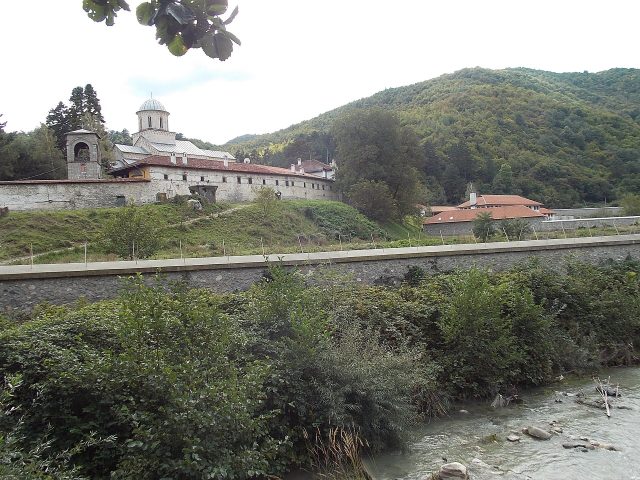
The Patriarchate of Peć is one of those rare places where history isn’t just preserved behind glass—it lingers in the very stones, in the quiet corners where centuries of faith and struggle have left their mark. Tucked away on the edge of the city of Pécs in western Serbia, this complex has stood for generations as the spiritual heart of Serbian Orthodoxy. The low hills and narrow streets around it feel untouched by time, as if the modern world has only brushed past without disturbing the stillness. Here, among the four medieval churches that make up the patriarchate, the past isn’t just remembered; it’s alive, breathing through the faded frescoes and the worn thresholds where countless pilgrims and worshippers have passed.
The oldest of the churches, the Church of the Holy Apostles, dates back to the 13th century, a time when Serbia was still forging its identity as a nation. Its architecture reflects that era of transition, blending Byzantine elegance with the sturdy lines of Romanesque style. The walls are covered in frescoes that have somehow defied the centuries, their colors still vivid, their faces still expressive. You’ll find saints with solemn eyes, biblical scenes unfolding in rich detail, and portraits of Serbian rulers who once knelt in prayer beneath these same arches. The craftsmanship is remarkable, not just for its artistry but for what it represents—a moment when Serbian culture was finding its voice, caught between the influences of East and West.
Beside it stands the Church of Saint Demetrius, built in the 14th century, smaller in scale but no less significant. This was where the Serbian patriarchs once held their seat, and the simplicity of its interior feels deliberate, almost austere. The frescoes here are more restrained, their lines cleaner, as if to remind visitors that faith doesn’t need grandeur to be profound. The iconostasis, carved in the traditional Serbian style, is a masterpiece of symbolism, each figure and motif layered with meaning. It’s easy to imagine the hushed voices of clergy echoing through the space, the weight of history pressing down on every prayer.
The Church of the Holy Virgin came later, in the 16th century, a time when Serbia was under Ottoman rule. The era was one of hardship for the Orthodox Church, and the church’s architecture reflects that—its lines are starker, its presence more subdued, as if bearing the weight of the struggles its people endured. Yet inside, the frescoes remain, though their colors are softer, their scenes more intimate. The depictions of Christ’s life feel almost tender, as if the artists sought to offer comfort in a time of uncertainty. There’s a quiet resilience in these walls, a refusal to let faith fade even when the world outside was hostile.
The youngest of the four, the Church of Saint Nicholas, was built in the 17th century and stands in contrast to its older siblings. Its decorations are more elaborate, its frescoes more intricate, as if reclaiming some of the vibrancy that had been lost in earlier, darker times. The craftsmanship here is extraordinary, with every detail rendered with precision. The most striking work is the depiction of the Last Judgment, a sprawling composition where figures seem to move and breathe, their expressions so vivid they feel almost alive. It’s a reminder that even in periods of oppression, art and faith found ways to flourish.
The museum within the patriarchate complex isn’t just a collection of artifacts—it’s an extension of the story told by the churches themselves. Here, ancient manuscripts lie preserved, their pages brittle with age, their ink still legible. There are vestments worn by patriarchs long gone, chalices that have held wine for centuries of communion, and icons that have witnessed prayers and tears. Among the most revered items are the relics of Saint Arsenije Sremac, one of the first Serbian patriarchs, whose presence seems to anchor the entire complex in a deeper, almost tangible spirituality. For many visitors, the museum isn’t just a place to observe history—it’s a chance to step into it, to feel the continuity of a tradition that has endured through war, occupation, and time.
The atmosphere of the patriarchate is one of profound stillness. There are no crowds here, no hurried footsteps or chatter—just the occasional crunch of gravel underfoot and the rustle of leaves in the old garden that surrounds the churches. The air is thick with the scent of roses in summer, and the walls of the churches cast long reflections in the small pond nearby, creating a sense of harmony between the man-made and the natural. It’s a place where you can sit on a bench and let the quiet settle over you, where the weight of centuries feels less like a burden and more like a presence.
What makes the Patriarchate of Peć special isn’t just its age or its beauty—it’s the way it embodies the soul of Serbia. You don’t need to be Orthodox, or even religious, to feel its significance. There’s no pomp here, no grand declarations of importance. Instead, there’s an authenticity that seeps from the stones, from the faded pigments of the frescoes, from the very air. It’s a place that doesn’t need to shout to be heard. Its silence speaks volumes, not just about the history of Serbian Orthodoxy, but about the resilience of a people who have carried their faith through fire and shadow. In that quiet, there’s a lesson—not just about the past, but about what it means to endure.