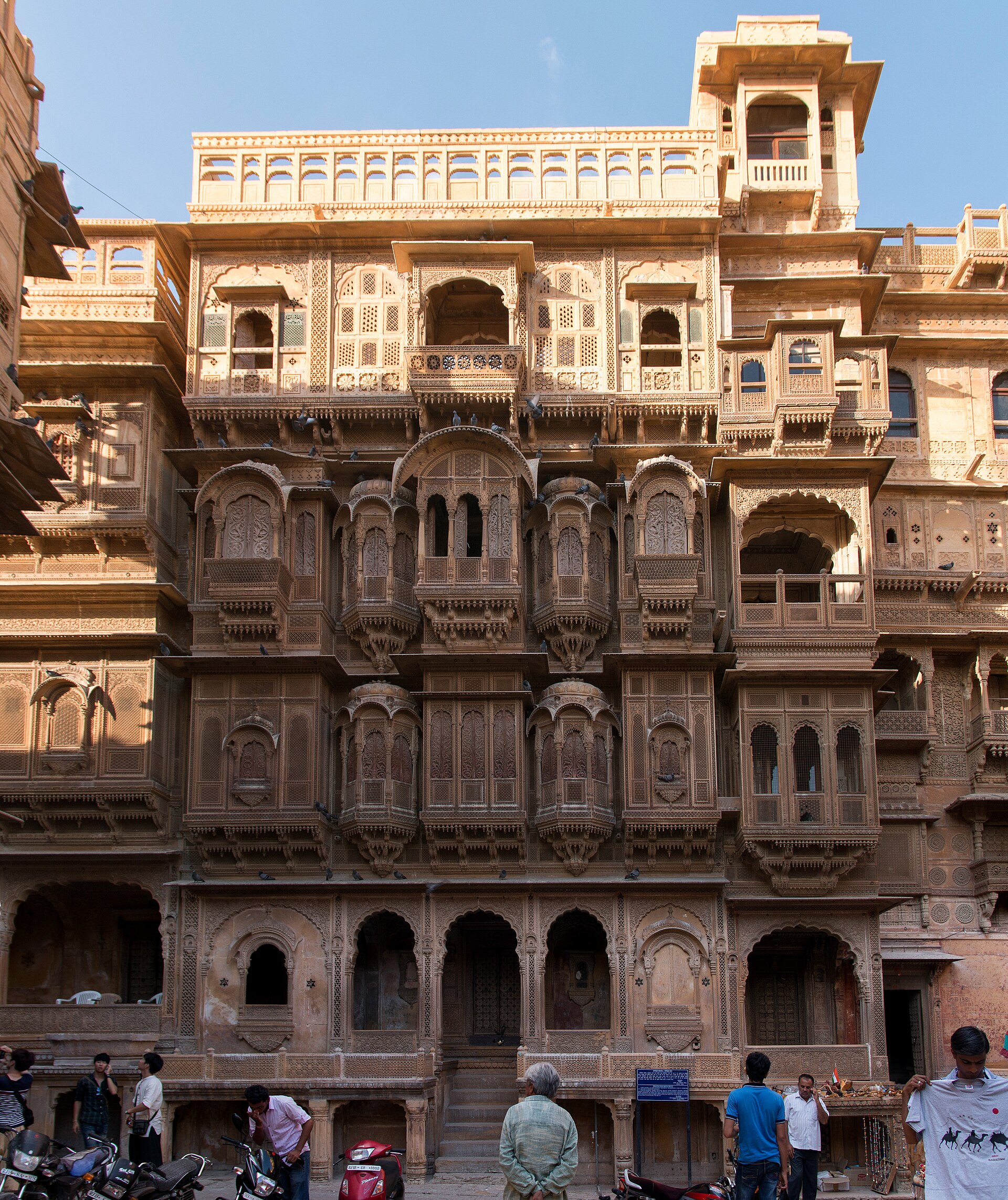
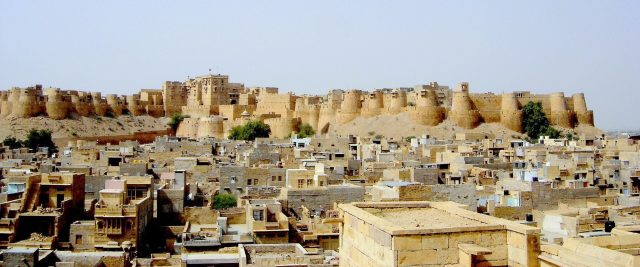
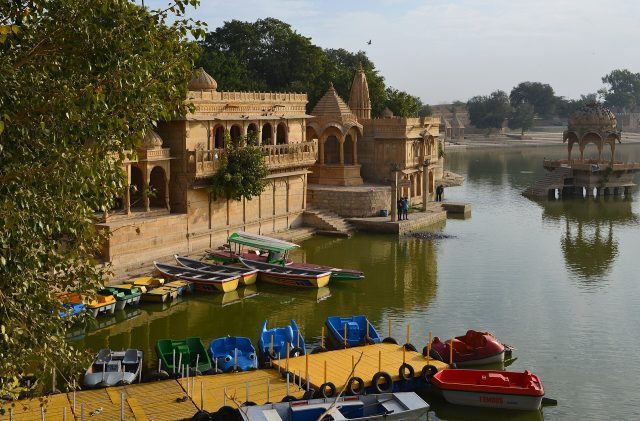
Jaisalmer’s Patwon Ki Haveli is one of those rare places where time seems to soften, as if the weight of history has gently slowed the hours. Built in the early 19th century, these five grand mansions were commissioned by the Patwa family, merchants who grew wealthy trading gold, brocades, and opulent fabrics along the Silk Road. Their prosperity was etched into stone—literally—with each haveli standing as a testament to the craftsmanship and ambition of an era when Jaisalmer was a thriving hub of commerce. The buildings still line the narrow street in a quiet row, their golden sandstone facades glowing under the desert sun, as if the wealth of the past has been preserved in their very walls.
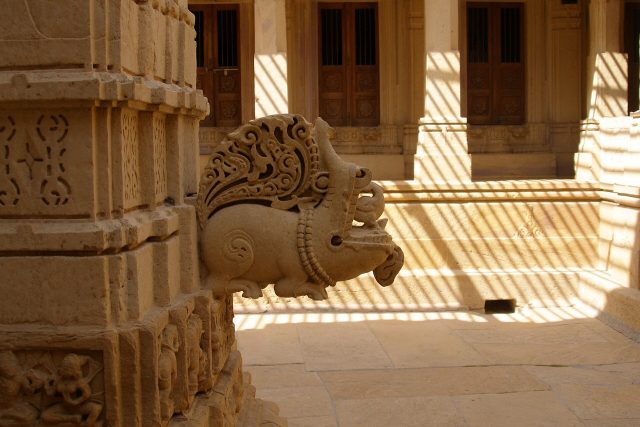
The architecture here is nothing short of breathtaking, even by the standards of Rajasthan’s lavish palaces. The havelis were designed not just as homes but as statements of prestige, where every detail was meant to impress. The exteriors are covered in intricate carvings—floral motifs, mythological scenes, and geometric patterns so delicate they seem to dance in the light. The windows, framed by latticed screens, cast shifting shadows across the stone, while the balconies, supported by slender columns, overlook the street like silent sentinels. The doorways alone are masterpieces, each one unique, adorned with figures of gods, animals, and symbols of fortune. It’s easy to imagine the Patwa family stepping through them, their robes whispering against the stone as they returned from another successful trade negotiation.
Inside, the havelis offer a glimpse into the lives of Jaisalmer’s merchant elite. The interiors are a maze of narrow staircases, intimate courtyards, and chambers that once buzzed with activity. Some rooms now house small museums, displaying everything from antique furniture to handwritten ledgers, their pages filled with the meticulous records of a bygone trade empire. One haveli preserves a collection of traditional Rajput attire, the fabrics still vibrant despite the passage of time, while another showcases jewelry so intricate it’s hard to believe it was worn daily. But the real magic lies in the atmosphere—the way the light filters through the latticework, the faint echo of footsteps on the stone floors, the sense that the past is still lingering just out of sight.
The havelis were more than just homes; they were symbols of power and influence. In 19th-century Jaisalmer, a merchant’s status was measured not only by his wealth but by the craftsmanship of his haveli. The more elaborate the carvings, the more respected the family. These buildings were also places of business, where deals were struck over cups of spiced tea and the fate of camel caravans was decided. The Patwas weren’t just traders; they were part of a network that connected India to Central Asia and the Middle East, their fortunes rising and falling with the shifting sands of the Thar Desert. Today, the havelis stand as silent witnesses to that era, their walls holding stories of ambition, rivalry, and the relentless pursuit of prosperity.
The best time to visit is early morning or late afternoon, when the sun is low and the sandstone takes on a warm, honeyed glow. The light softens the edges of the carvings, bringing out details that might otherwise go unnoticed—the way a flower’s petals curl at the edges, or how a mythological figure’s expression changes with the angle of the sun. At these hours, the havelis are quieter, the crowds thinner, and it’s easier to imagine what life here must have been like two centuries ago. If you’re lucky, you might hear the distant strains of a sarangi or the rhythmic clatter of a weaver’s loom, sounds that have been part of Jaisalmer’s rhythm for generations.
Not all of the havelis are in the same condition. Some have been carefully restored, their interiors polished and preserved, while others bear the marks of time—peeling paint, crumbling plaster, and the occasional stray goat wandering through an empty courtyard. Yet even the neglected ones have a certain charm. In one, the mirrors still catch the light just right, turning a simple room into a dazzling chamber of reflected gold. In another, the ceiling frescoes depict scenes from the life of Krishna, their colors faded but still vivid enough to tell their stories. Each haveli has its own character, its own secrets waiting to be discovered.
What makes Patwon Ki Haveli so special is the way it bridges the past and present. Unlike the grand forts and palaces that dominate Rajasthan’s tourist trail, these buildings feel lived-in, even if the people who once called them home are long gone. There’s no grand narrative here, no sweeping historical drama—just the quiet accumulation of everyday life, the small details that make a place feel real. The way the wind carries the scent of desert blooms through the courtyards. The way the stone floors cool underfoot after the heat of the day. The way the shadows lengthen as the sun sets, turning the havelis into silhouettes against the sky.
If you visit, take your time. Sit in one of the courtyards and watch the light play across the walls. Listen to the sounds of the old city—the distant call of a vendor, the creak of a wooden cart, the murmur of voices in the street below. Jaisalmer has a way of making you slow down, of making you pay attention to the small things. And in a place like Patwon Ki Haveli, those small things are what make the past feel alive. It’s not just a monument to history; it’s a reminder that the stories of ordinary people, their triumphs and their quiet moments, are what truly shape a place.