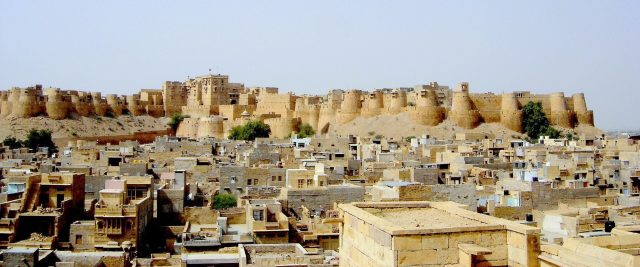
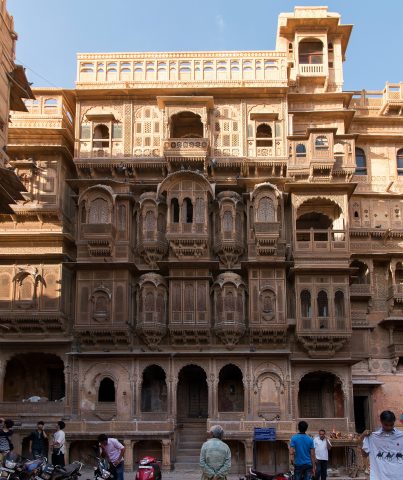
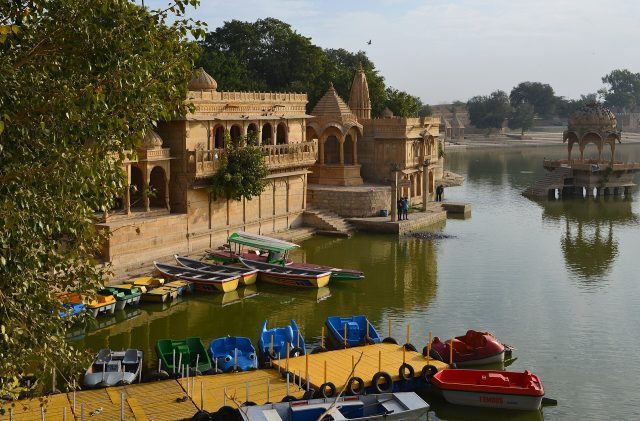
Jaisalmer Fort is one of those rare places where time seems to slow, as if the desert itself has paused to breathe. Rising from the golden sands of the Thar, its walls glow with the warm hues of local sandstone, blending seamlessly into the landscape. Built in the 12th century by the Rajput ruler Rawal Jaisal, the fort is more than just a fortress—it’s a living city, where narrow lanes wind past homes, shops, and hidden courtyards. Tucked within its ancient walls lies another treasure: a cluster of Jain temples, quiet and unassuming, yet holding within them the soul of medieval India. Unlike the grand temples of Delhi or Varanasi, these sanctuaries feel intimate, as if faith, art, and daily life were once woven together here without distinction.
The temples are dedicated to the tirthankaras, the spiritual teachers of Jainism, and their history stretches back centuries. The oldest among them date to the 15th century, a time when Jaisalmer flourished as a key stop on the Silk Road. Merchants arriving with their caravans didn’t just bring wealth—they invested in these sacred spaces, drawn to Jainism’s emphasis on non-violence and asceticism. The temples became more than places of worship; they were hubs of cultural exchange, where ideas, art, and devotion flowed as freely as the trade goods passing through the city.
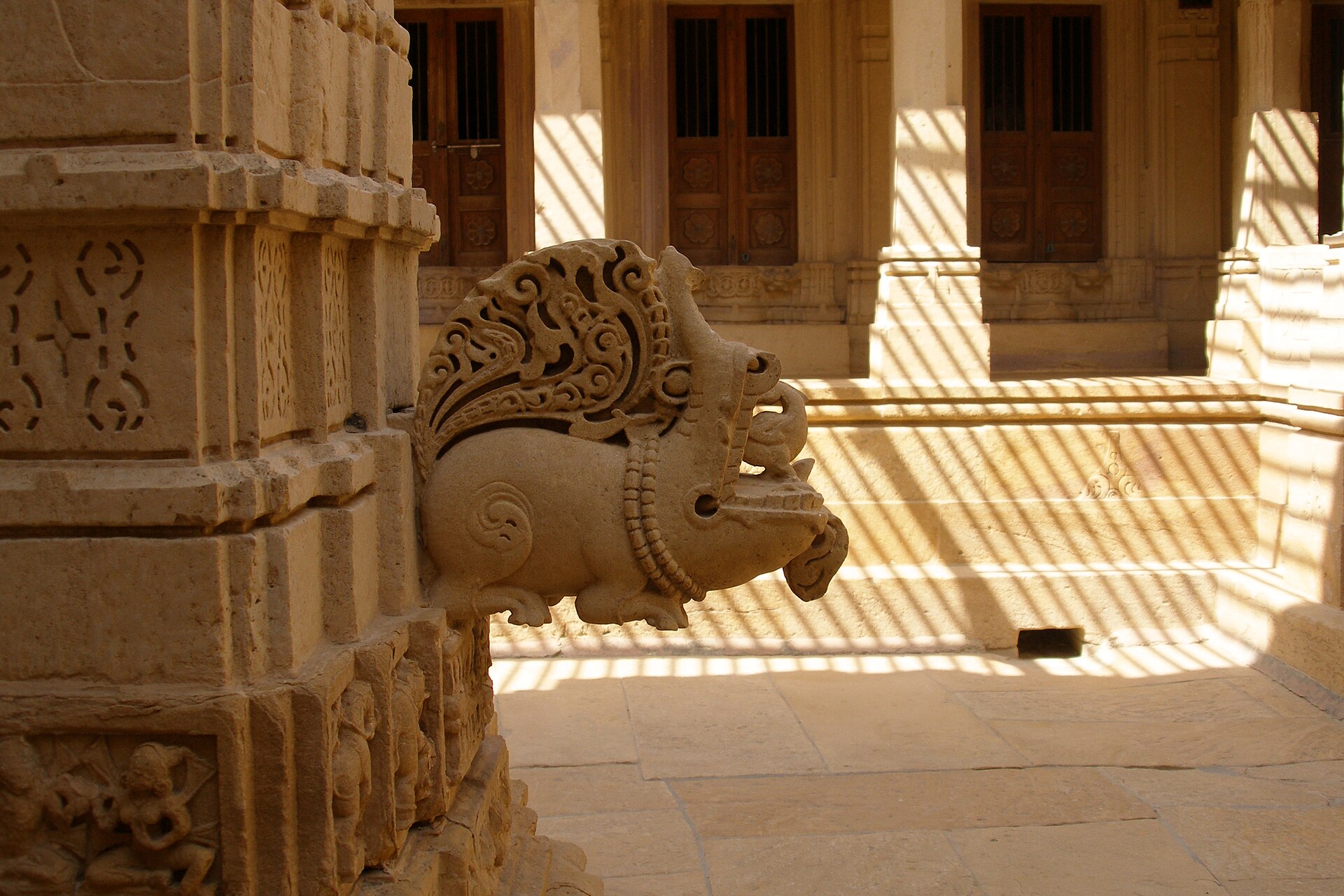
What makes these temples extraordinary is their architecture. Carved from the same golden sandstone as the fort, they seem to glow from within when sunlight touches their surfaces. The facades are covered in intricate stonework—mythological scenes, delicate floral patterns, and figures of celestial dancers, each detail so fine it feels like the work of a jeweler rather than a stonemason. Inside, the air is cool and dim, with light filtering through narrow windows to illuminate the ceilings, where every inch is adorned with elaborate carvings. The columns are particularly striking; no two are alike, each one a masterpiece of craftsmanship, their surfaces alive with twisting vines and sacred symbols.
The heart of the complex is the temple dedicated to Parshvanatha, the 23rd tirthankara, whose serene figure sits in meditation atop the central altar. Around it, smaller shrines each tell their own story. One houses an ancient manuscript written on palm leaves, its fragile pages preserving centuries of wisdom. Another holds a collection of old texts, their verses whispering of Jain philosophy and the pursuit of enlightenment. Few visitors come here, so it’s easy to linger, to trace the carvings with your eyes as pilgrims have done for generations, undisturbed by the rush of modern life.
These temples are more than just architectural marvels—they’re a testament to the spirit of tolerance that once defined Jaisalmer. In a city where Hindus, Muslims, and Jains lived side by side, the sanctuaries stood as symbols of coexistence. Even now, as the fort buzzes with tourists, the temples remain a place of quiet reflection. There are no crowds here, no raised voices—just the soft echo of footsteps on stone and the faint scent of sandalwood lingering in the air.
The best time to visit is early morning or late afternoon, when the heat eases and the light softens, casting the carvings in a warm, golden glow. There’s a small fee to enter, a symbolic contribution to the upkeep of these ancient walls. Shoes must be left at the entrance, a rule observed without question, a sign of respect for the sacred space. Guides are available, but many prefer to wander alone, letting the labyrinth of corridors and halls unfold at their own pace.
What makes these temples special isn’t just their beauty—it’s the sense of timelessness they carry. There’s no rush here, no sense of the outside world intruding. Instead, there’s a feeling that history is still alive in these stones, that the stories of the merchants, artisans, and devotees who once walked these halls are somehow still present. For the people of Jaisalmer, the temples remain a place of quiet devotion, a link to their ancestors. For travelers, they offer something rare: a glimpse of an India that has endured, unchanged, through the centuries.