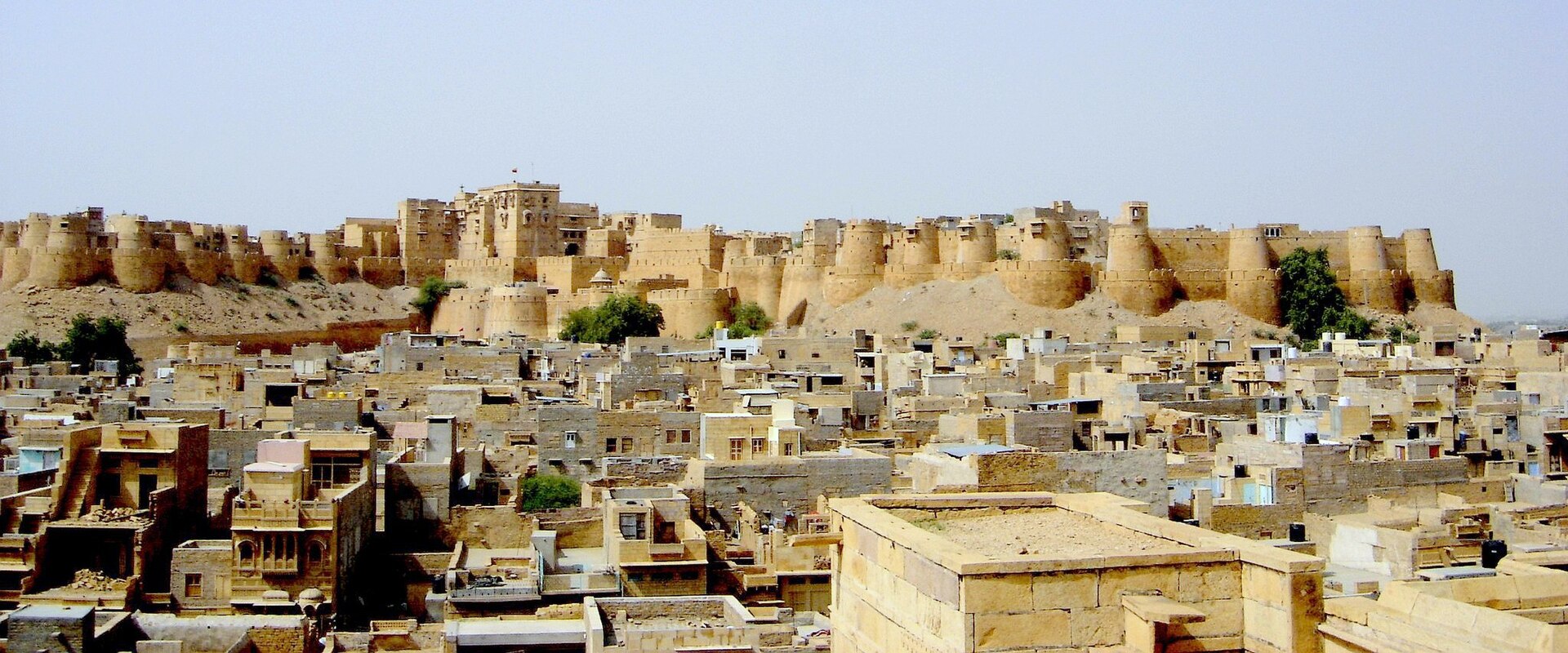
Jaisalmer Fort stands like a golden sentinel over the Thar Desert, a place where time seems to have paused centuries ago. Built in 1156 by Rawal Jaisal, a Rajput ruler of the Bhatti clan, it was never just a fortress—it became the living heart of a city that still breathes within its walls. Unlike many other Indian forts left to crumble or turned into sterile monuments, Jaisalmer remains a thriving community. Narrow lanes wind between sandstone houses where families have lived for generations, shops sell spices and silver jewelry, and temples echo with prayers. The fort is not a relic; it is a home.
The architecture here is a masterful balance of beauty and practicality, shaped by the harsh desert environment. The thick walls, made from local yellow sandstone, glow golden at sunset, a natural defense against both invaders and the relentless sun. Four massive bastions anchor the corners, once used as lookout points, while an intricate system of wells and reservoirs ensured survival during long sieges. The main gates—Suraj Pol, Hawa Pol, and Ganesha Pol—are adorned with delicate carvings, yet their imposing structure serves as a reminder that this was first and foremost a military stronghold. Every detail, from the sloping walls to the narrow streets, was designed to keep the desert at bay.
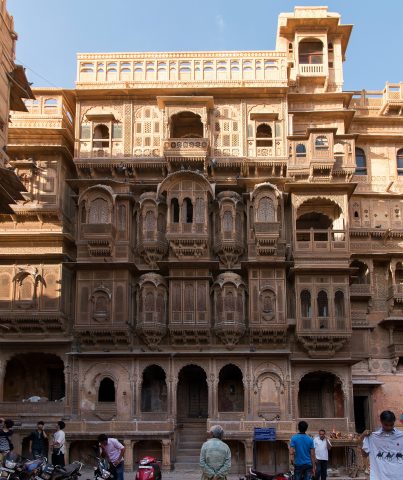
Life inside the fort moves at its own unhurried pace. The streets are too narrow for cars, forcing visitors to walk, just as people have for centuries. Overhanging balconies cast cool shadows, and the air carries the scent of spices and incense from open-fronted shops. Merchants sit quietly, sipping tea, their stalls offering everything from embroidered textiles to handcrafted leather goods. There’s no rush here—time is measured in sunsets, not hours. The rhythm of daily life feels unchanged, as if the modern world outside these walls barely exists.
At the heart of the fort lies the Maharaja’s Palace, a striking example of Rajput architecture. Its facade is adorned with intricately carved jharokhas—lattice windows that filter sunlight while shielding interiors from prying eyes. Today, the palace houses a museum where visitors can see royal artifacts: weapons, ancient manuscripts, and portraits of past rulers. The most impressive space is the durbar hall, with its painted ceiling and marble throne, where kings once held court. Unlike many palaces that feel like empty shells, this one retains a sense of life, as if the echoes of past decisions still linger in the air.
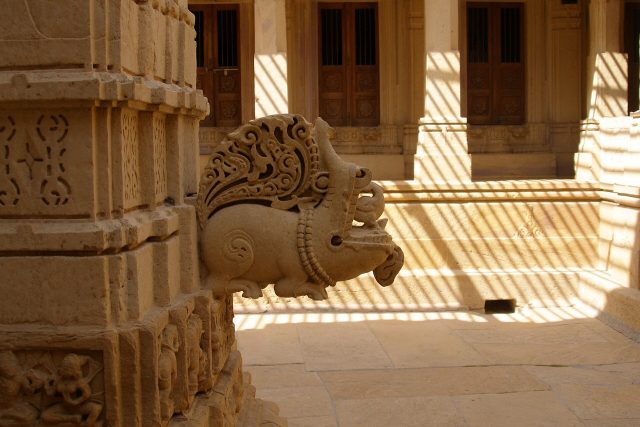
Religion has always been woven into the fabric of Jaisalmer, and the fort is no exception. Several Jain temples, built between the 12th and 16th centuries, stand within its walls. Their white marble interiors are covered in exquisite carvings depicting gods, mythological scenes, and intricate floral patterns. The Parsvanatha Temple is particularly renowned for its delicate columns and domes, every surface adorned with fine detail. For centuries, Jaisalmer was a key stop on trade routes, and the Jain community, which flourished here, poured their wealth and devotion into these temples. Today, they remain some of the most serene and well-preserved spaces in the fort.
As night falls, the fort transforms. The sandstone walls, bathed in the warm glow of floodlights, seem to radiate their own light. The streets grow quiet as tourists retreat to their guesthouses, and locals gather on rooftops for dinner, their voices drifting through the cool evening air. Occasionally, the sound of a flute or drum breaks the silence—musicians playing traditional tunes, a custom that has endured for generations. In these moments, the fort feels like a world apart, a place where the past is not just remembered but still alive.
What makes Jaisalmer Fort unique is its refusal to be confined to history. There are no clear boundaries between museum and reality here. A shopkeeper might be the descendant of a noble family, and a centuries-old house could still serve as someone’s home. Visitors who spend more than a day within its walls often find themselves lingering, as if the fort has a way of drawing people in. Perhaps it’s because it doesn’t reveal itself all at once. To truly understand it, you have to wander its streets at dawn, when the first light touches the sandstone, or sit on a rooftop at dusk, watching the desert fade into darkness. Time moves differently here, and those who visit leave with more than just photographs—they carry the sense of having stepped into a place where the past and present exist side by side.