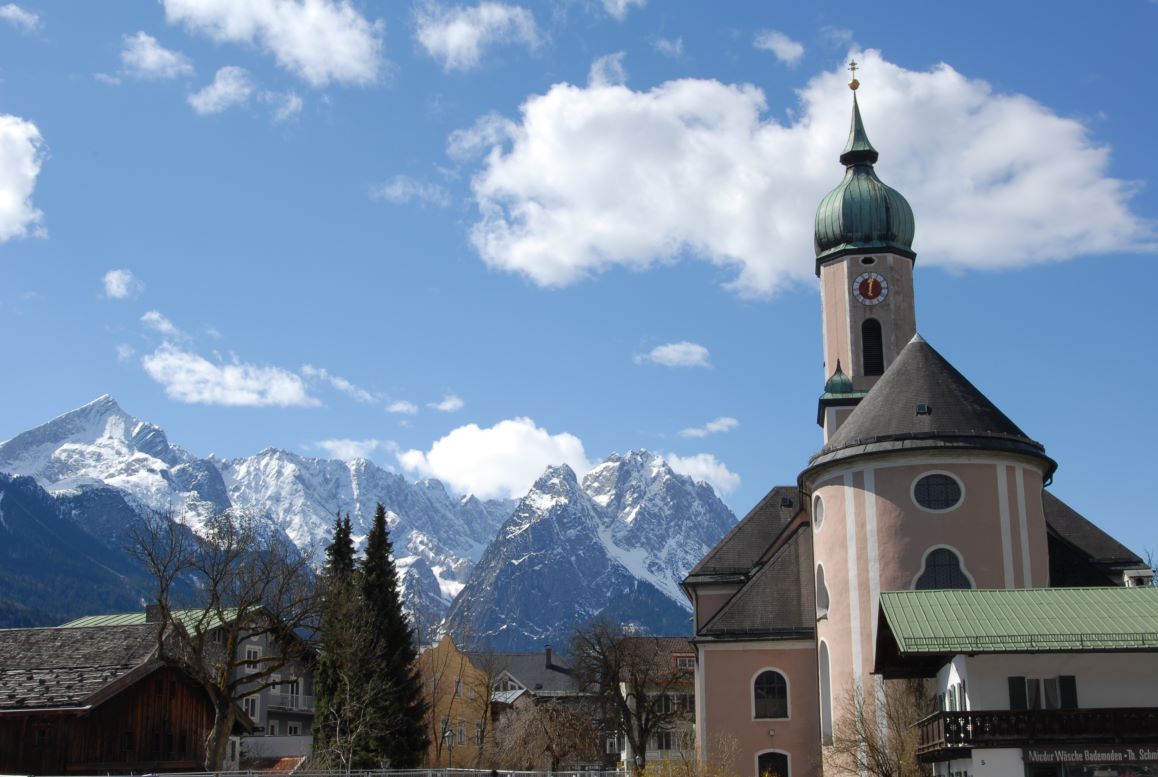
Nestled in the heart of Garmisch-Partenkirchen’s old town, the Pfarrkirche St. Martin stands as a quiet witness to centuries of local life. Its whitewashed walls and steeply pitched roof rise above the surrounding buildings, their silhouette sharp against the sky, especially in winter when snow dusts the dark tiles. From a distance, the church looks almost like a sketch—clean lines, unadorned except for the delicate tracery of its windows. Up close, it feels lived-in, not just preserved. The worn stone steps, the faint scent of candle wax lingering in the air, the way voices carry under the vaulted ceiling—all of it suggests a place that has seen generations come and go.
The church’s origins stretch back to the 14th century, though the exact date of its founding is lost to time. Back then, Garmisch and Partenkirchen were still separate villages, and this building served as more than just a house of worship. It was a gathering place where disputes were settled, news was shared, and the rhythms of daily life were marked by the tolling of its bells. Over the centuries, the structure was altered and expanded, but its core remained unchanged. The most striking feature inside is the late Gothic altar, its intricate woodcarvings depicting scenes from the lives of saints. The craftsmanship is astonishing—every fold of fabric, every expression on a saint’s face, rendered with a precision that belies the tools of the era.
Inside, the church is simple but striking. Narrow, pointed windows filter light in thin shafts, casting a soft glow over the stone walls. The vaulted ceiling is adorned with frescoes that have somehow retained their color despite the passage of time. The paintings tell biblical stories in a style that feels both earnest and slightly naive—figures with elongated limbs and expressive faces, their gestures exaggerated as if to make the stories clearer. One of the most vivid scenes is the Last Judgment, where angels and demons seem locked in a silent contest of wills. These images weren’t just decoration; they were lessons, a way to make the divine tangible for people who couldn’t read.
The church has weathered its share of upheavals. During the Thirty Years’ War, it was looted, and in the 18th century, a fire nearly destroyed it. Each time, the building was restored, with care taken to preserve its original character. When Garmisch and Partenkirchen merged in the 19th century, the church became a symbol of their union, a physical reminder of the past even as the town moved forward. Today, it remains an active parish, and on Sundays, the congregation still includes descendants of the families who once built and decorated it.
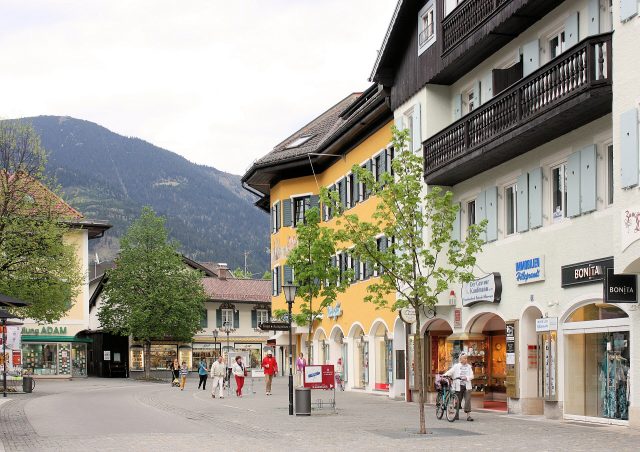
The area around the church is just as steeped in history. Partenkirchen’s old quarter is a maze of cobblestone streets and half-timbered houses, their balconies adorned with carved details. In summer, the square in front of the church hosts small markets where vendors sell local honey, cheese, and handmade crafts. In winter, when Garmisch-Partenkirchen transforms into a bustling ski resort, the church offers a quiet counterpoint to the energy outside. Tourists drawn by the mountains and slopes often step inside, if only for a moment, to escape the noise and feel the weight of the past around them.
What makes the Pfarrkirche St. Martin special isn’t just its age or its architecture, but the way it has remained part of the town’s daily life. It has seen wars, fires, and the slow march of progress, yet it still stands as it always has—unassuming but enduring. When the organ plays during services or the bells ring on a holiday, the sound carries over the rooftops, a thread connecting the present to the generations who came before. For a town now known for its alpine resorts and outdoor adventures, the church is a reminder of deeper roots, of a time when life revolved around simpler, quieter rhythms. It doesn’t demand attention, but for those who pause to look, it offers something rare: a sense of continuity in a world that’s always changing.