Perched on a small hill in the heart of Phnom Penh, Wat Phnom is one of the city’s most recognizable landmarks and a place where history, legend, and daily life intersect. The park surrounding the temple is a quiet retreat from the bustle of the streets below, offering shade under its old trees and a sense of timelessness that feels far removed from the modern capital. Unlike the sprawling temple complexes of Angkor, Wat Phnom is modest in scale but rich in meaning, serving as both a spiritual site and a gathering place for locals and visitors alike.
The origins of Wat Phnom trace back to the 14th century, when, according to local lore, a wealthy widow named Penh discovered four Buddha statues washed ashore by the Mekong River. She placed them on a nearby hill and built a small shrine to house them, giving the city its name—Phnom Penh, or "Penh’s Hill." Over the centuries, the shrine expanded into a temple, and the hill became a focal point for religious ceremonies and community events. While the current structures date mostly from the 19th and 20th centuries, the site retains a sense of continuity, as if the layers of history are still present in its worn stone steps and weathered statues.
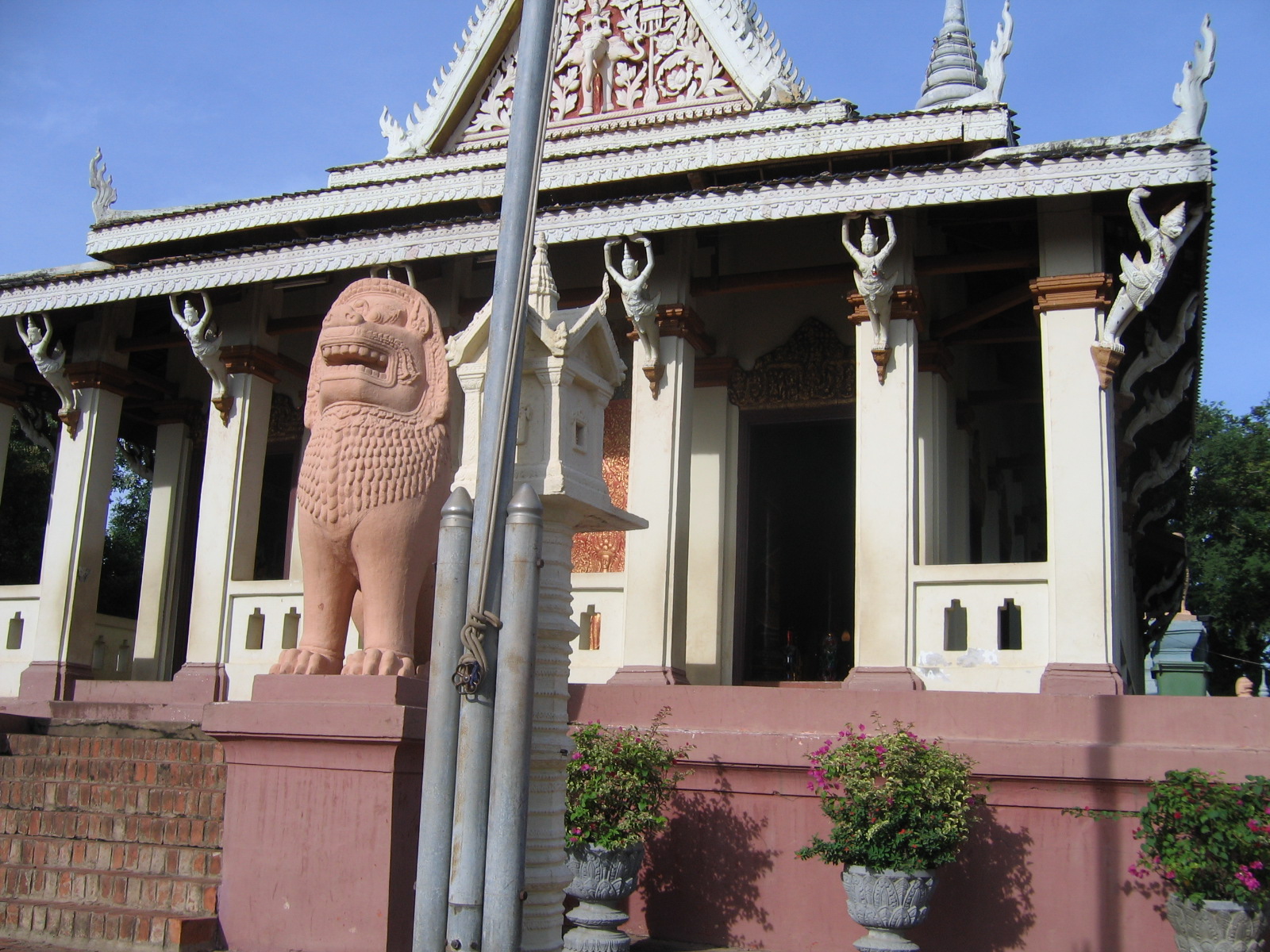
The temple itself is a blend of traditional Khmer architecture and more recent additions, with a central stupa rising above the surrounding buildings. The stupa, painted in soft pastels, houses relics and serves as a place of pilgrimage, particularly during religious festivals. Inside the temple, the air is thick with the scent of incense, and the walls are adorned with murals depicting scenes from the Buddha’s life. Visitors often leave offerings of flowers, fruit, or small trinkets, a practice that adds to the temple’s lived-in, devotional atmosphere.
Beyond the temple, the park is a place of contrasts. In the early morning, elderly locals gather to exercise, their movements slow and deliberate under the dappled sunlight. By midday, the hill is dotted with students on lunch breaks, families picnicking on the grass, and vendors selling everything from fresh coconuts to handmade crafts. The park’s pathways wind past small shrines, each with its own story, and benches where people sit to chat or simply watch the world go by. It’s a space that feels both sacred and ordinary, where the sacred and the mundane coexist without tension.
One of the most striking features of Wat Phnom is its resident population of monkeys. The mischievous creatures are a constant presence, darting between the trees or perching on the temple’s eaves. They’ve become part of the park’s charm, though visitors are often warned to keep an eye on their belongings—these primates have a knack for snatching food or small items left unattended. Their antics provide a lighthearted counterpoint to the solemnity of the temple, reminding those who visit that this is a place where life unfolds in all its messy, unpredictable beauty.
The park also plays a role in the city’s cultural calendar. During major festivals like Khmer New Year and Pchum Ben, Wat Phnom becomes a hub of activity, with crowds gathering to pray, make offerings, and celebrate. The hill is illuminated with strings of lights, and the sound of traditional music drifts through the air. For many Cambodians, these events are a time to reconnect with their heritage, and the temple’s hilltop setting makes it a natural focal point for the city’s communal gatherings.
Despite its central location, Wat Phnom retains a sense of seclusion. The hill is just high enough to offer a view over the surrounding streets, where the city’s modern life unfolds in a blur of motorbikes, markets, and construction. From this vantage point, the contrast between the old and the new is striking—the temple’s quiet dignity set against the energy of a capital finding its footing in the 21st century. It’s a reminder that Phnom Penh, like much of Cambodia, is a place where the past is never far from the present.
For those who visit, Wat Phnom is more than just a tourist stop. It’s a place where the rhythms of daily life are on full display, where history is not just preserved in stone but lived and breathed by the people who come here. Whether you’re drawn by the legends, the architecture, or simply the chance to sit under a tree and watch the world go by, the park offers a glimpse into the soul of the city. It’s a place that invites you to linger, to observe, and to appreciate the quiet moments that often go unnoticed in the rush of travel.