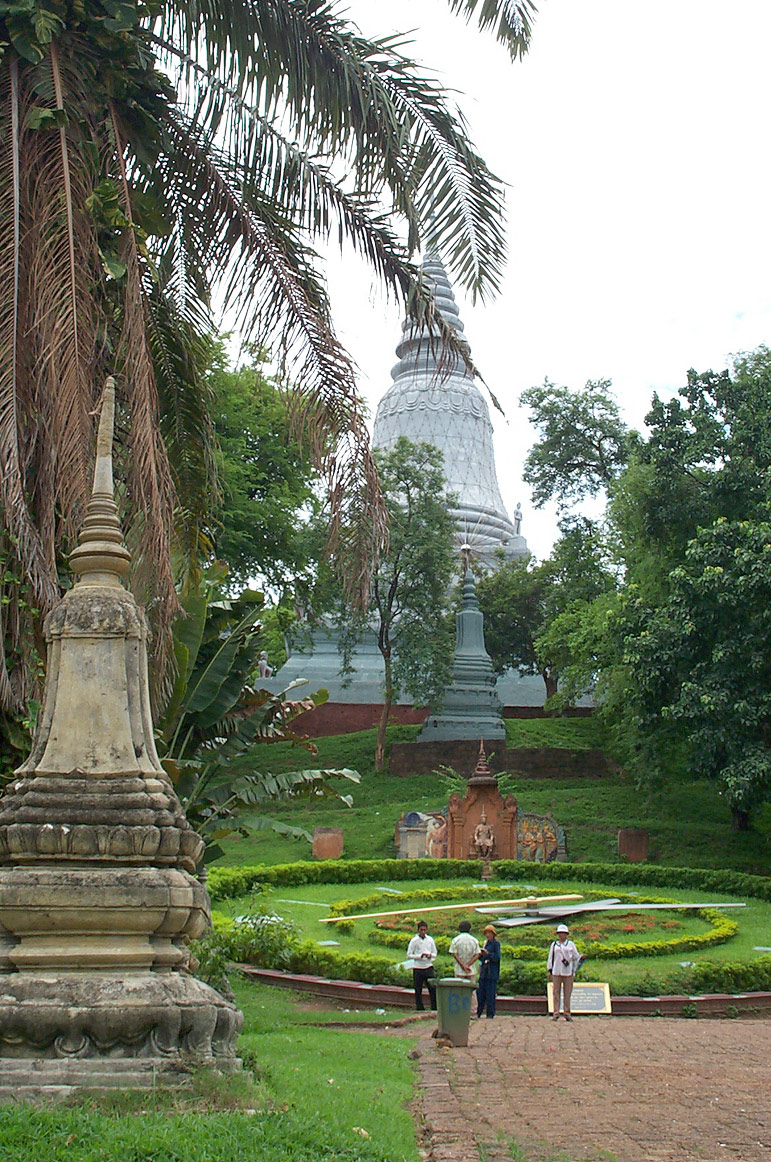
Wat Phnom sits on a small hill in the heart of Phnom Penh, a quiet contrast to the bustling streets below. It’s the city’s oldest temple, founded in the 14th century when legend says a wealthy widow named Penh discovered four Buddha statues washed ashore in the Mekong. She built a shrine to house them, and the hill—*Phnom*—became the spiritual core of what would later grow into Cambodia’s capital. Over the centuries, the temple has been rebuilt and expanded, but its elevated position still makes it a place where locals come to pray, make offerings, or simply escape the heat under the shade of its trees.
The temple’s architecture blends traditional Khmer design with later influences, particularly from the French colonial period. The central stupa, housing the ashes of King Ponhea Yat, dominates the complex, its whitewashed surface gleaming in the sunlight. Around it, smaller shrines and statues crowd the hillside, each with its own story—some dedicated to Hindu deities, others to Buddhist figures, reflecting Cambodia’s layered religious history. The main vihara, or prayer hall, is a more recent addition, its walls adorned with murals depicting scenes from the Buddha’s life, though time and weather have softened their colors.
Climbing the steps to Wat Phnom feels like stepping into another rhythm. Vendors sell lotus flowers and incense at the base, their voices blending with the chatter of visitors and the occasional chanting from inside the temple. Monks in saffron robes move quietly through the crowds, while elderly women kneel in prayer before the altars. The air is thick with the scent of burning joss sticks and the faint sweetness of frangipani blossoms. Unlike the grand, tourist-heavy temples of Angkor, Wat Phnom retains a lived-in feel, a place where devotion and daily life overlap.
For Cambodians, the temple holds deep cultural significance. It’s where people come to seek blessings for exams, business ventures, or personal troubles, leaving offerings of fruit, flowers, or even small bottles of perfume in hopes of good fortune. During festivals like Pchum Ben, when the spirits of ancestors are believed to return, the hill becomes a focal point for ceremonies, its pathways lined with families paying respects. Even on ordinary days, the temple grounds hum with activity—students studying under the trees, children playing near the stupa, and the occasional wedding party posing for photos against the backdrop of the pagoda.
The hill itself is a small oasis in the city. From the top, the view stretches over the rooftops of Phnom Penh, the Tonle Sap River glinting in the distance. The surrounding park, though modest, offers a rare patch of green in a city where space is at a premium. Locals often gather here in the early morning or late afternoon, walking the paths or sitting on benches to watch the world go by. The temple’s presence lends the area a sense of continuity, a reminder that Phnom Penh’s modern skyline is built on centuries of history.
Wat Phnom’s role in the city has shifted over time. Once a royal temple, it later became a symbol of resilience, particularly after the Khmer Rouge era, when many of Cambodia’s religious sites were destroyed. Its survival, like that of the city itself, speaks to a quiet persistence. Today, it stands as both a spiritual landmark and a piece of living history, a place where the past is not just remembered but actively woven into the present. Whether you come for the architecture, the atmosphere, or simply to watch the city from above, the temple offers a moment of stillness in a place that is always moving.