Standing at the bustling intersection of Norodom Boulevard and Sihanouk Street, the Independence Monument is one of Phnom Penh’s most recognizable landmarks—a quiet but powerful symbol of Cambodia’s hard-won sovereignty. Built in 1958, five years after the country broke free from French colonial rule, the monument was designed to mark a new chapter in the nation’s history. Its form draws from traditional Khmer architecture, particularly the stepped towers of Angkor, but reimagined through the clean lines and symmetry of mid-century modernism. The result is a structure that feels both timeless and distinctly of its era, a bridge between Cambodia’s ancient past and its aspirations for the future.
The monument was the work of Vann Molyvann, one of Cambodia’s most influential architects, who shaped much of Phnom Penh’s urban identity during the 1950s and 60s. His design blends national motifs with contemporary aesthetics, creating something that feels uniquely Cambodian. The base rises in a series of terraces, echoing the sacred geometry of Angkorian temples, while the central spire culminates in a stylized lotus bud—a sacred symbol in Buddhism, representing purity and renewal. At night, the monument is illuminated, its sharp silhouette standing out against the dark sky, a beacon in the heart of the city.
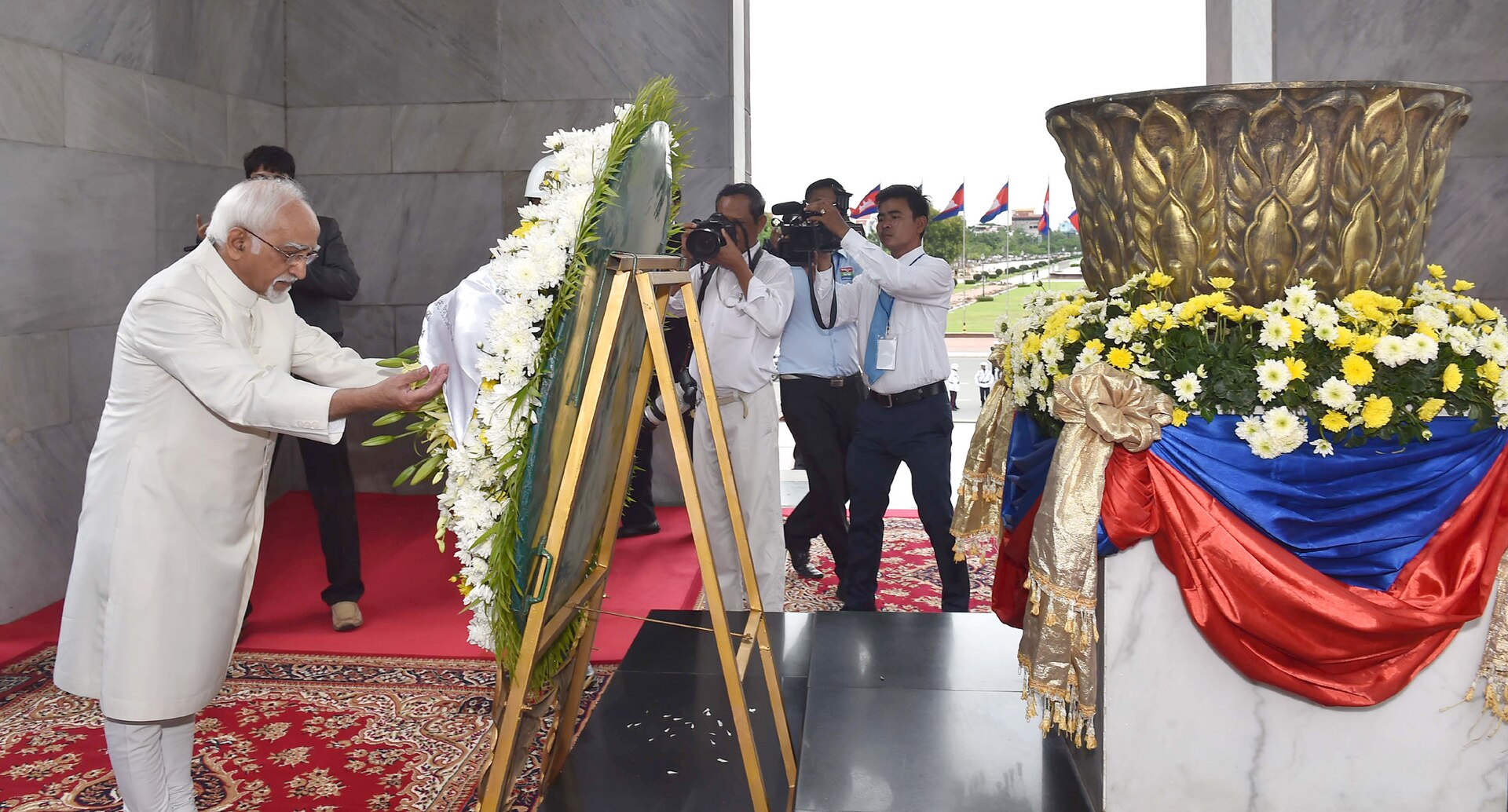
Beneath the monument lies a small crypt, a solemn space where the remains of unknown soldiers who died fighting for independence are kept. This gives the site a deeper significance beyond its architectural beauty. Every year on November 9th, Cambodia’s Independence Day, the monument becomes the focal point of official ceremonies, with wreath-laying and speeches by government officials. On ordinary days, it remains open to the public, a place where locals come to sit in the shade of the surrounding trees, take photographs, or simply reflect. The atmosphere is peaceful, even contemplative, despite the constant hum of traffic nearby.
The square around the monument is more than just a public space—it’s a living part of Phnom Penh’s daily life. On weekends, families stroll with children, students gather to chat, and street vendors sell snacks like *amok*, a fragrant coconut-based curry, or *lok lak*, a classic Cambodian stir-fry. The area has a relaxed, unhurried feel, a contrast to the frenetic energy of the city’s markets. Occasionally, the square hosts festivals, open-air concerts, or cultural events, turning the monument into a backdrop for communal celebration. It’s a place where history and modern life intersect, where the weight of the past meets the rhythm of the present.
For Cambodians, the Independence Monument is more than just a tourist attraction—it’s a reminder of resilience. The years following independence were a time of hope and uncertainty, as the country sought to define itself after decades of foreign rule. The monument became a symbol of that fragile optimism, a physical representation of the nation’s newfound identity. Today, it stands as a testament to how far Cambodia has come, even as it acknowledges the struggles that shaped its journey. For visitors, it offers a different perspective on the country, one that goes beyond the grandeur of Angkor’s temples to reveal a more recent, and equally important, chapter in its story.
Architecturally, the monument reflects the spirit of its time. The 1950s and 60s were a period of rapid change for Cambodia, as Phnom Penh transformed from a colonial backwater into a modern capital. Vann Molyvann’s design was part of this broader vision—a fusion of tradition and progress. The monument’s clean, geometric lines and restrained ornamentation were a departure from the ornate styles of the past, yet it never lost its connection to Khmer heritage. Today, as the city continues to grow and evolve, the monument remains a rare constant, a reminder of an era when Cambodia dared to imagine its own future.
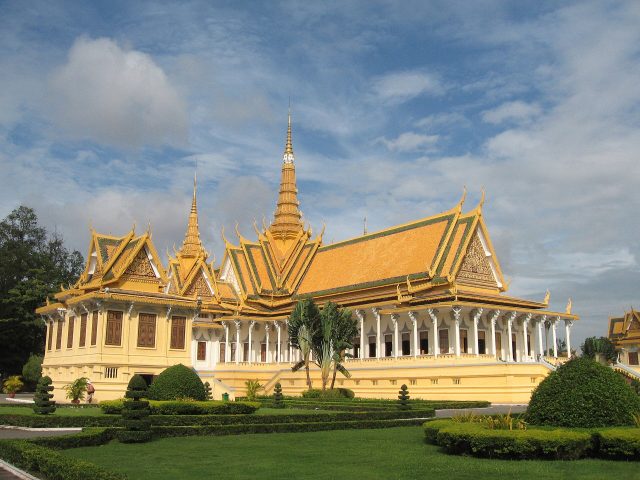
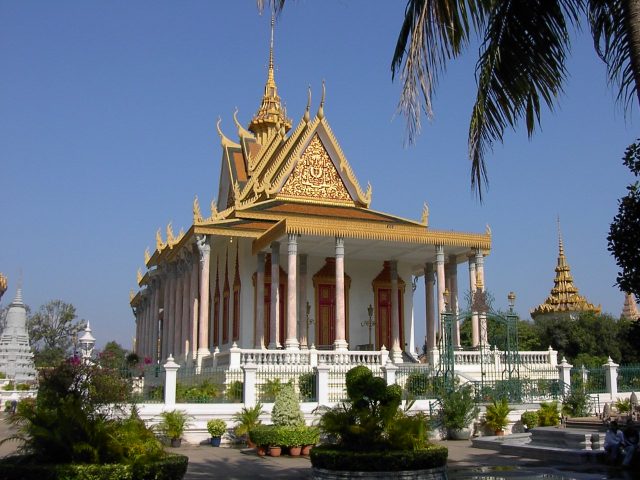
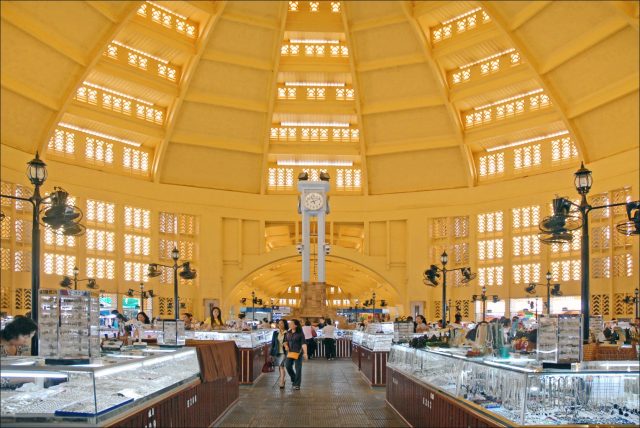
Visiting the Independence Monument is an easy addition to any exploration of central Phnom Penh. Just a short walk away lies the Royal Palace, with its dazzling Silver Pagoda, and the National Museum, home to one of the world’s finest collections of Khmer art. The Mekong River promenade is also nearby, leading to Psar Thmei, the city’s central market, where the scent of spices and the chatter of vendors fill the air. The monument itself sits in a small park, a green oasis where visitors can pause and take in the surroundings. Unlike the crowded tourist sites, this spot offers a moment of calm, a chance to appreciate the monument’s details without the rush.
In recent years, the area around the monument has quietly become a hub for Phnom Penh’s creative scene. Small galleries and art spaces have sprung up nearby, showcasing contemporary Cambodian artists, while occasional film screenings and public talks add to the cultural buzz. Yet the monument itself hasn’t lost its original purpose. It still serves as a gathering place for national ceremonies, a site of remembrance, and a symbol of unity. This duality—between the past and the present, between solemnity and creativity—makes the area feel dynamic without losing its sense of history.
For first-time visitors to Phnom Penh, the Independence Monument is a good place to begin. It’s centrally located, making it easy to explore other nearby attractions, and its design offers a glimpse into Cambodia’s mid-20th-century identity. Unlike the overwhelming scale of Angkor’s ruins, this monument feels approachable, almost intimate. It doesn’t demand awe so much as reflection—on what independence means, on the weight of history, and on the quiet strength of a nation that has endured so much. In that sense, it’s more than just a landmark; it’s a conversation between the past and the present, one that continues to resonate with every person who passes by.