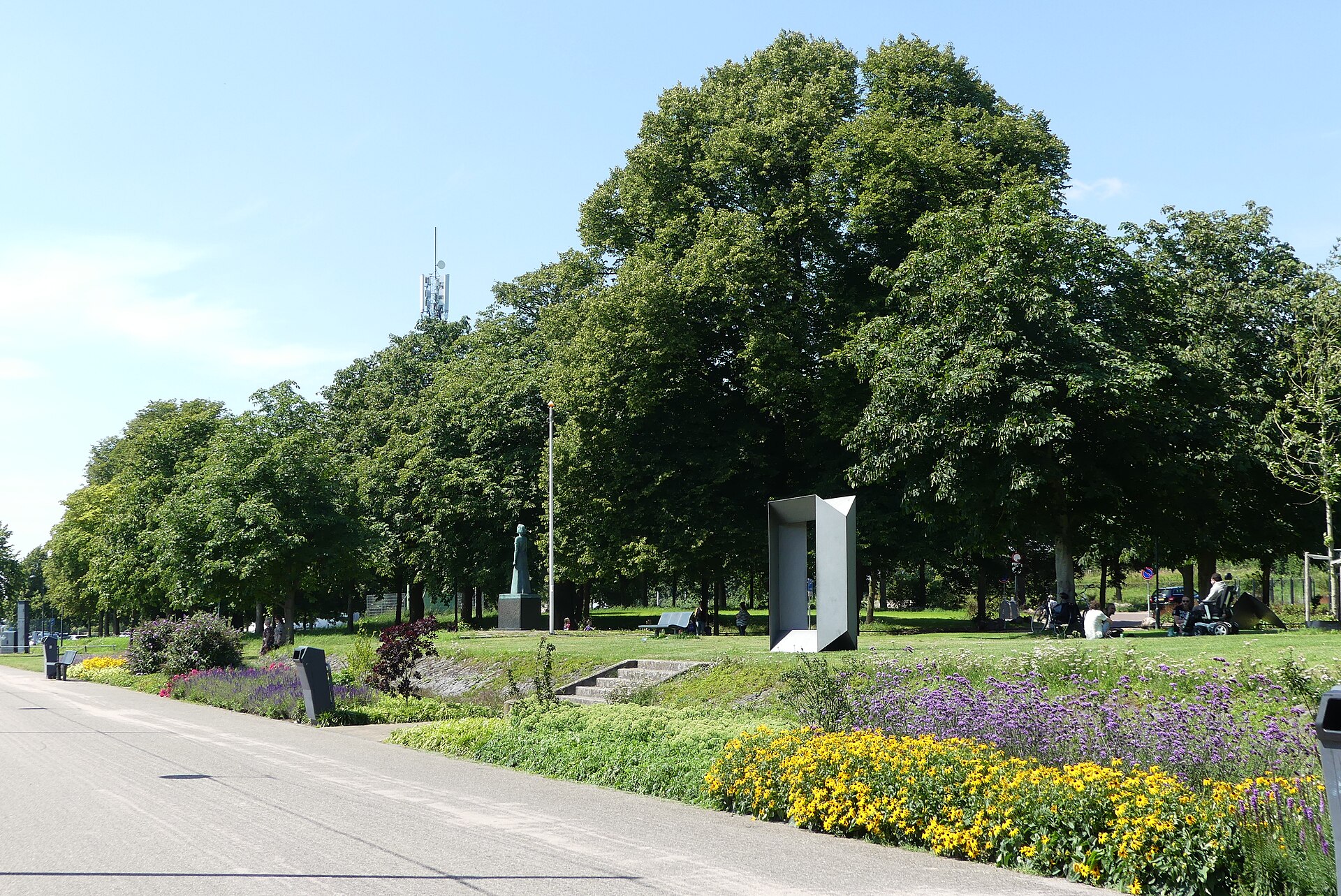
Wilhelminapark is one of those quiet corners of Utrecht where the city briefly lets go of its usual hustle, offering a place to simply be—among trees, winding paths, and still water. Tucked away in the southern part of the city, it spans around twenty hectares, a generous stretch of green where people come to walk, picnic, or sit in silence. There are no crowds here, no flashy attractions, just the quiet rhythm of nature: old oaks casting long shadows, meandering trails, and ponds that mirror the sky. The park isn’t ancient, not like some of Utrecht’s other landmarks, but over time it has settled into its own unassuming charm.
It was the late 19th century when Wilhelminapark took shape, a time when Utrecht, like many European cities, was expanding rapidly. The city’s growth brought factories and crowded streets, and with them, a need for open spaces where people could escape. The park was designed by landscape architect Hendrik Copijn, who shaped it in the English style—gentle curves, artificial hills, and water features blending seamlessly into the landscape. It was named after Queen Wilhelmina, who ascended the throne in 1890, though she never visited. The name stuck, becoming part of the park’s identity, even if its royal connection remains more symbolic than personal.
What makes Wilhelminapark special isn’t grand architecture or dramatic monuments. Instead, it’s the small, almost unnoticed details: a narrow bridge over a pond that feels like something out of a fairy tale, or the old pavilion where a brass band once played. Built in the early 20th century, the pavilion still stands, now a cozy café where visitors can sip coffee while watching ducks glide across the water. The park’s paths lead to quiet clearings, popular with families in the summer and ice skaters when the ponds freeze over in winter. There’s a sense of timelessness here, as if the park has always been this way.
The 20th century left its mark on Wilhelminapark, as it did on the rest of Utrecht. During World War II, the park suffered from neglect, its trees and lawns overgrown under occupation. After the war, efforts began to restore it, and by the 1960s, it had regained much of its former beauty. In the 1970s, playgrounds were added, and in the 1990s, a major renovation brought back Copijn’s original vision. Today, the park is one of the city’s best-maintained green spaces, though it never sought fame. It’s simply there, a quiet constant in a changing city.
For locals, Wilhelminapark is part of everyday life. People walk their dogs along its paths, spread out blankets for picnics, or practice yoga on the grass. In summer, small concerts and festivals take place under the trees, while winter brings skaters to the frozen ponds. Unlike Amsterdam’s more tourist-heavy parks, Wilhelminapark feels lived-in, unpolished in the best way. There’s no sense of performance here—just a place where people come to unwind, whether alone or with friends.
The park’s flora is unassuming, mostly native species like oaks, beeches, and maples that provide shade on hot days. In spring, daffodils and tulips bloom along the paths, while autumn turns the leaves gold and crimson. The ponds attract ducks and swans, and squirrels dart through the bushes. It’s not a botanical garden, but the plants are carefully tended, striking a balance between wildness and order. The trees, some well over a century old, give the park its character, their branches forming a canopy that softens the city’s edges.
Wilhelminapark rarely appears in travel guides, and perhaps that’s why it feels so genuine. There are no grand vistas or legendary tales here—just a well-loved green space where people come to slow down. You won’t find strict rules or schedules; the park is open to everyone, at any time. Some visitors wander the paths, while others sit on benches, watching the light change over the water. It’s the kind of place that doesn’t demand attention but rewards those who take the time to notice it.
In recent years, Utrecht has placed more emphasis on preserving its green spaces, and Wilhelminapark has become a symbol of that effort. As the city grows, with new neighborhoods rising around it, the park remains a quiet refuge. It’s a reminder that even in a bustling urban environment, there should be room to breathe, to sit still, to do nothing at all. For travelers who venture here, it offers a glimpse of Utrecht beyond the postcard images—a city as its residents know and love it.