San Julián Park in Cuenca is one of those places you visit not for grand landmarks, but for the quiet pulse of the city itself. Perched on a hillside, it offers a sweeping view of Cuenca’s old quarter, where the famous hanging houses cling to the cliffs and narrow streets wind through the rock. There are no flashy attractions here, no towering monuments—just a space that feels made for slowing down, for sitting on a bench with the rustle of leaves overhead and the murmur of the city below.
The park’s history is woven into Cuenca’s own. In the Middle Ages, this area was little more than the outskirts, where locals tended gardens and small plots of land. As the city grew, the hillside became a favored spot for walks, especially during the 19th century, when romantic ideals turned such green spaces into urban retreats. Over time, paths were laid, benches added, and small touches like fountains and gazebos gave the park its gentle structure. Today, it retains that same unhurried charm, a place where time seems to move at its own pace, away from the bustle of the main squares.
The architecture here is understated, almost invisible in its simplicity. There are no grand statues or ornate gates, just a few details that give the park its character. Stone steps lead down toward the old town, and a modest fountain in the center draws a constant crowd of pigeons. The real beauty lies in how the park blends into the landscape—paths curve along the slope, trees frame the view, and in places, old stone walls peek through the greenery, hinting at the area’s past. It’s a place where nature and the city feel effortlessly connected.
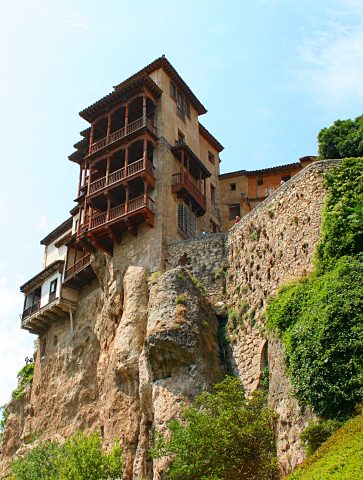
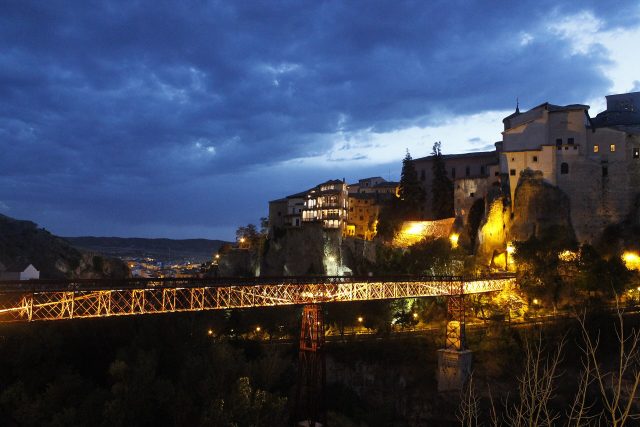
From the upper reaches of the park, the view over Cuenca is one of the best in the city. The hanging houses, perched precariously over the gorge, look almost unreal, especially in the golden light of late afternoon. Below, the Huécar River winds through the valley, while across the water, the newer part of the city stretches out with its modern buildings and wide avenues. The contrast between old and new is striking here, and the park offers a rare chance to take in the whole city at once, without the distractions of crowds or traffic.
The atmosphere in San Julián shifts with the seasons and the time of day. Mornings are quiet—locals walk their dogs, elderly residents settle onto benches with newspapers, and the first tourists begin to trickle in. By midday, the park comes alive: children race along the paths, students from the nearby university spread out picnic blankets, and couples stroll hand in hand. As evening falls and the streetlights flicker on, the mood turns romantic. Autumn is particularly lovely, when the trees blaze with red and gold, and in winter, if snow dusts the ground, the city takes on a storybook quality.
Though it may not be the most famous spot in Cuenca, the park plays a quiet but important role in the life of the city. It’s one of the few places where you can feel like part of the local rhythm, away from the tourist-heavy center. Residents come here not just to walk, but to think, to meet friends, or simply to be. Small events often take place in the park—open-air concerts, art displays, or celebrations tied to traditional Spanish festivals. It’s a space that belongs to the city, not just to visitors.
For those spending a few days in Cuenca, San Julián Park makes a natural starting point. From here, it’s an easy walk down into the old town, where the main sights are clustered, or up to higher viewpoints for even more dramatic vistas. But even if you only pass through, pausing on a bench to take in the view, you’ll begin to understand why Cuenca draws people in. There’s nothing forced about it—just the quiet, enduring spirit of a place that feels alive in a way few tourist spots do.