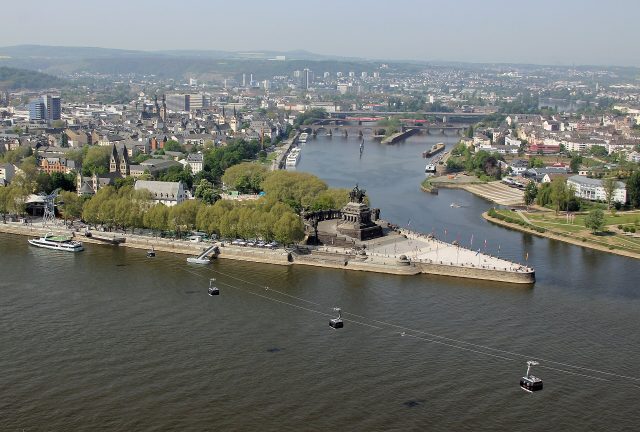
Rheinanlagen isn’t just a park in Koblenz—it’s where the city opens up to two of Europe’s great rivers. Here, at the point where the Rhine meets the Moselle, the landscape feels both carefully shaped and effortlessly timeless. The park stretches along the waterfront, connecting the banks with bridges and tree-lined paths, and from the river, it looks as if the greenery and stone have always belonged together, as though the water itself decided this spot needed a garden.
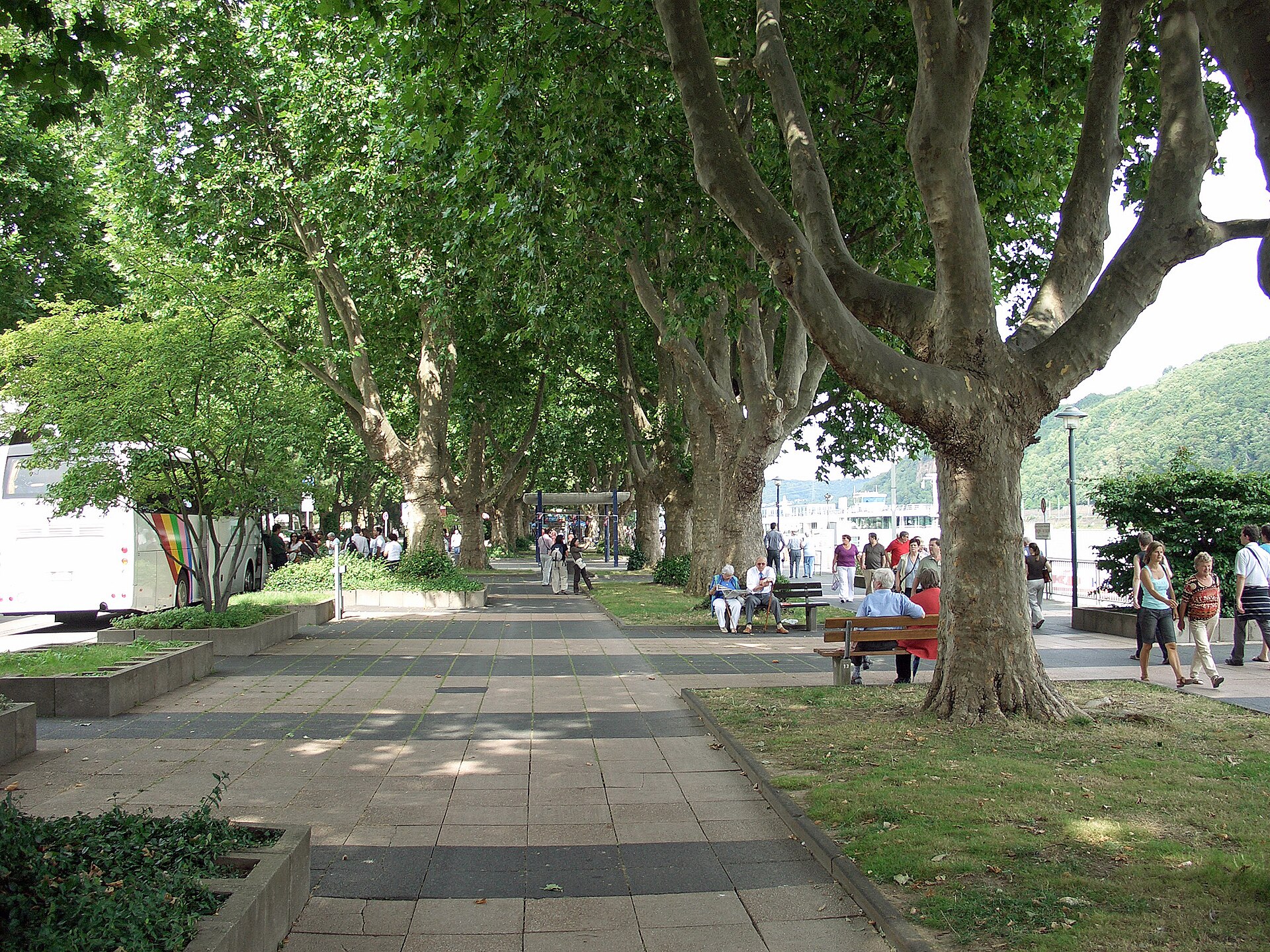
The park didn’t take shape all at once. In the 19th century, when Koblenz was already an important city along the Rhine, the first public gardens appeared on the site of old fortifications. The riverbanks were reinforced to protect against flooding and given a more polished look. But Rheinanlagen truly came into its own in the 20th century, when the city turned this stretch of land into a green buffer between the historic center and the water. Today, you can still see traces of different eras—from the orderly lime-tree avenues planted over a century ago to modern sculptures and paved walkways leading to viewpoints.
The heart of the park is the confluence of the Rhine and Moselle. A marker stands at the water’s edge, and just upstream, the Deutsches Eck rises like a small fortress. This monument to German unity, built in the late 1800s, offers a tower with sweeping views of both rivers. On clear days, you can see far across the valley, where vineyards begin their climb up the hillsides. In summer, the spot is always busy—tourists snap photos, while locals sit on benches, watching boats drift by.
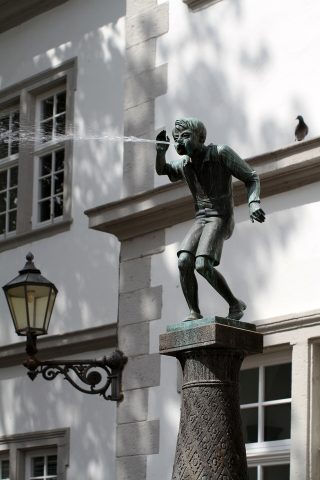
Rheinanlagen is also an open-air museum of sorts. Scattered throughout the park are sculptures and memorials tied to history. One of the most notable is the statue of Emperor Wilhelm I, which once stood in the city center but was moved here after World War II. Nearby, a granite stele with bronze plaques honors war victims. These monuments don’t demand attention, but they’re woven into the landscape, quietly reminding visitors that Koblenz has a layered past.
The park changes with the seasons and the city’s rhythm. In spring, magnolias and cherry trees bloom, while summer brings picnickers and strollers along the waterfront. Autumn turns the leaves gold and crimson, and the low sunlight makes the park glow. Even in winter, when it’s quieter, people still come for fresh air or to watch the river’s slow, icy flow. There are cafés and kiosks for coffee or ice cream, but most visitors prefer to bring their own food and settle onto one of the many benches.
What makes Rheinanlagen special isn’t any single attraction, but the atmosphere—the sound of water, the scent of rain on grass, the cry of gulls overhead. It’s a place to wander without purpose, watching how the light shifts over the river, how barges pass by, how children play near the fountains. There are no strict rules here; you can walk on the lawns, sit on the grass, or just gaze at the water. Maybe that’s why both locals and travelers keep coming back—nothing feels forced, everything feels alive.
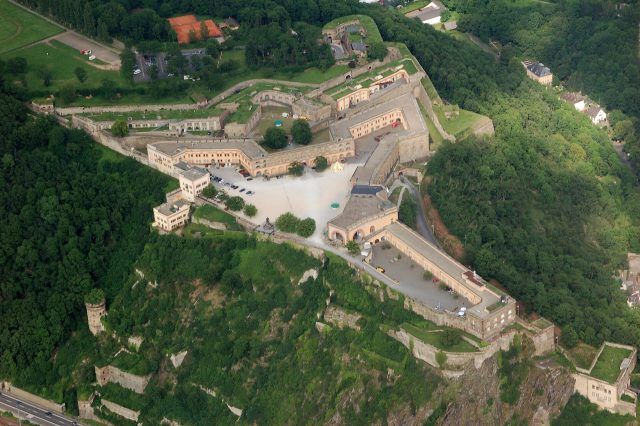
If you spend a few days in Koblenz, Rheinanlagen is a good place to start exploring. From here, you can walk along the riverbanks, wander into the old town, or take the cable car up to Ehrenbreitstein Fortress for a panoramic view of the valley. Even if you’re only passing through, it’s worth stopping by for a little while—just to feel the pulse of this place where the river meets the city, and history blends into everyday life. After all, not many parks in the world sit at the meeting point of two great rivers.