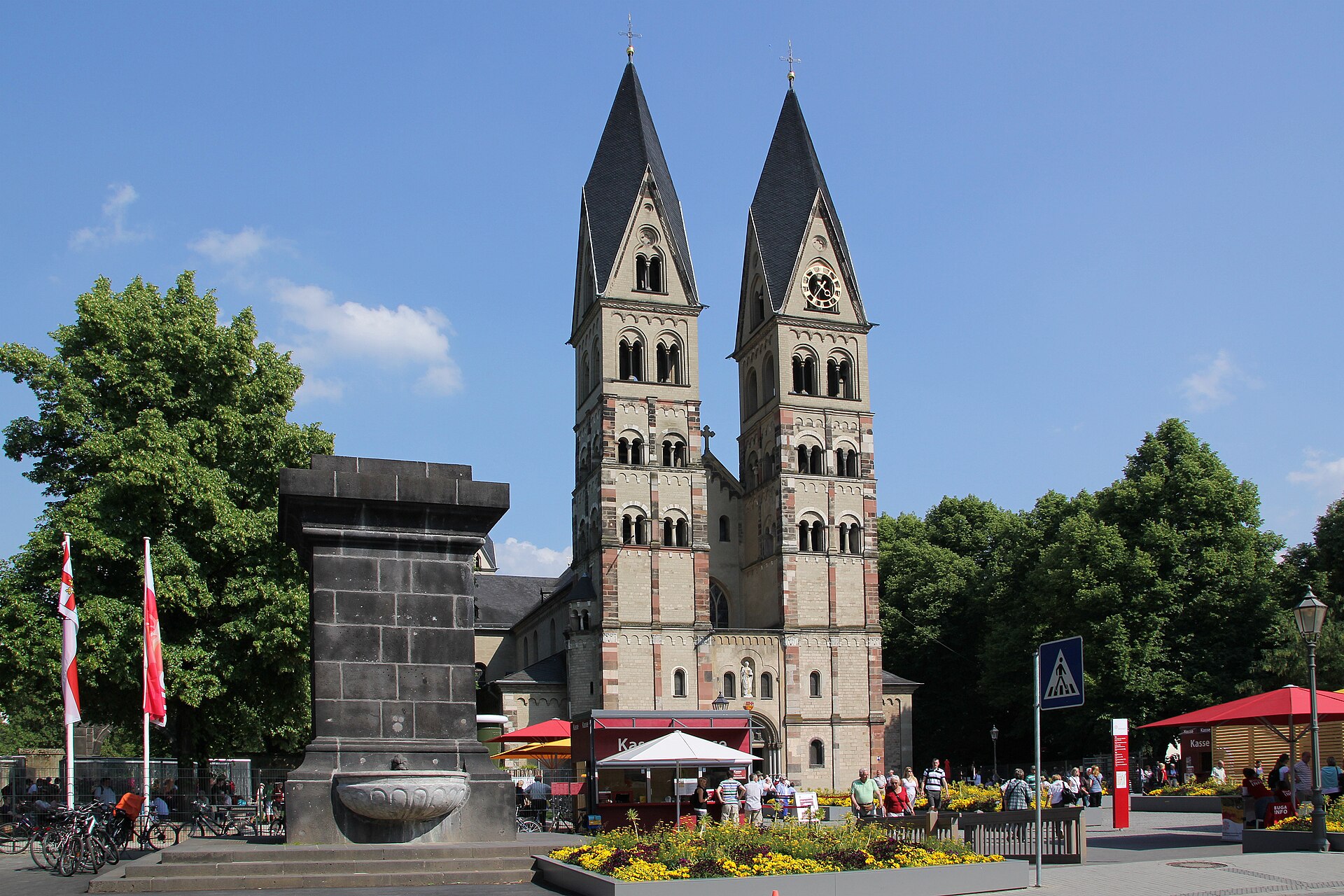
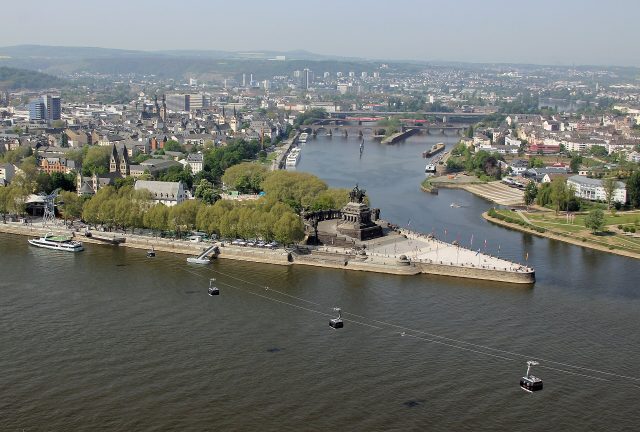
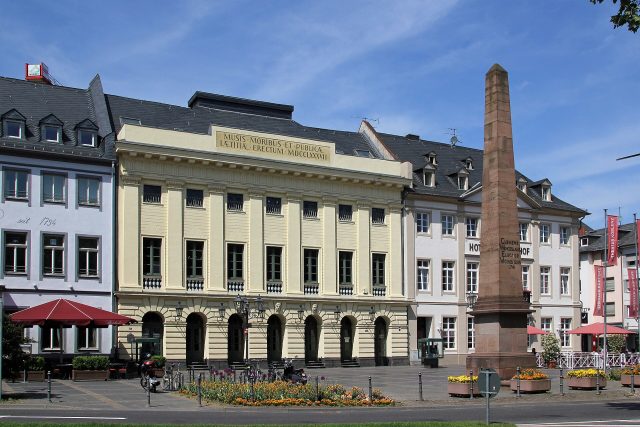
St. Castor’s Basilica in Koblenz is one of those quiet landmarks that seem to have grown out of the city itself, as if it has always been here, watching the river flow by. Built in the early 9th century, it stands where the Moselle meets the Rhine, at the point known as the Deutsches Eck. This spot has long been a crossroads—not just of waterways, but of people. Merchants, pilgrims, kings, and emperors all passed through here, leaving their mark on the land and the building that has witnessed centuries of change.
The architecture tells a story of its own. Originally Romanesque, the basilica was designed for endurance, not ornamentation. Thick walls, sturdy columns, and rounded arches give it a solid, almost timeless presence. Later, Gothic elements were added—taller windows, pointed arches, finer details—that softened the severity of the earlier style without erasing it. The result is a building that feels both ancient and alive, as if each stone carries the weight of the past.
St. Castor himself was a missionary who brought Christianity to this region in the 4th century, and his relics are said to rest within the basilica. During the Middle Ages, the church was a major pilgrimage site, and traces of that era remain in the faded frescoes, weathered tombstones, and sacred relics. History has not always been kind to the basilica. In 842, it hosted negotiations between the grandsons of Charlemagne, a meeting that helped shape the future of Europe. Centuries later, during the Thirty Years’ War, the church was looted, yet it survived, much like Koblenz itself.
Inside, the basilica is striking in its simplicity. There is no gilded opulence, no marble grandeur—just a vast nave, a high ceiling, and light filtering through narrow windows. The altar is modest but powerful, and the old stained glass casts a quiet glow over the space. In the side chapels, tombs of local nobles and clergy offer glimpses into lives long gone. Each one is a small piece of history, a reminder that this was once a place where faith and daily life intertwined.
Today, St. Castor’s Basilica remains a living part of Koblenz. Services are still held here, and the sound of the organ fills the space during concerts. In summer, visitors and locals alike sit on the benches outside, watching the Moselle drift by. A small park surrounds the church, offering a peaceful place to walk and take in the views of the river and the old town. It’s a spot where time seems to slow down, where the noise of the city fades into the background.
Koblenz is a city rich in history, and St. Castor’s Basilica is one of its quiet treasures. It doesn’t draw the same crowds as Cologne Cathedral or Aachen’s chapel, and that’s part of its charm. There’s no rush here, no sense of being just another tourist. Instead, there’s a stillness, a connection to something deeper. If you find yourself in Koblenz, it’s worth stepping inside—not just to see the architecture, but to feel the weight of centuries pressing gently against the present. Maybe that’s why old churches like this one endure: they hold more than history. They hold something intangible, something that lingers long after you’ve left.