Gyeongju World sits quietly in the heart of a city where history isn’t just remembered—it’s still alive. Surrounded by gentle hills and valleys that once cradled the Silla Kingdom, the park feels like a pause in time, a place where the past lingers in the shape of distant pagodas and burial mounds peeking through the trees. It’s easy to forget you’re in one of Korea’s most historically rich cities when the screams from the roller coasters fill the air, but every now and then, a glimpse of an ancient tomb or a weathered stone relic reminds you where you are.
Opened in the late 1980s, the park has grown into one of the country’s largest amusement complexes, though it never tried to mimic the flashy, themed extravaganzas found elsewhere. There are no fairy-tale castles or cartoon mascots here. Instead, it has the unpretentious charm of an old-fashioned fairground, where the thrill of the rides matters more than the decorations. The park sprawls across a wide expanse, offering something for every mood—from heart-pounding coasters to gentle carousels that spin under the open sky.
The roller coasters are the main draw, and none more so than Dragon Hill, one of the tallest and fastest in the country. For a few breathless seconds, the world narrows to the rush of wind and the dizzying view of Gyeongju stretching below. Those who prefer a slower pace can take the Ferris wheel, where the city unfolds in layers—modern buildings standing beside ancient burial sites, with the sacred slopes of Mount Namsan visible on clear days. It’s a strange and beautiful contrast, like flipping through the pages of a history book while suspended in midair.
When the summer heat sets in, the water park becomes the most popular spot. Visitors can drift down an artificial river on a log, splash in a wave pool, or simply lie back on a sunbed, listening to the laughter of children and the distant hum of the rides. In winter, the water attractions close, but the park doesn’t shut down entirely. Ice rinks and tubing slopes take their place, turning the space into a different kind of playground, one where the cold air stings your cheeks and the sound of sliding sleds fills the air.
Gyeongju World isn’t just for children. Adults often come for the seasonal events that transform the park into something even more magical. In summer, nighttime light shows turn the rides into glowing sculptures, while live music and dance performances add to the spectacle. During Chuseok, the Korean harvest festival, the park is draped in lanterns, casting a warm, golden glow over everything. The atmosphere shifts with the seasons, but the sense of celebration remains constant.
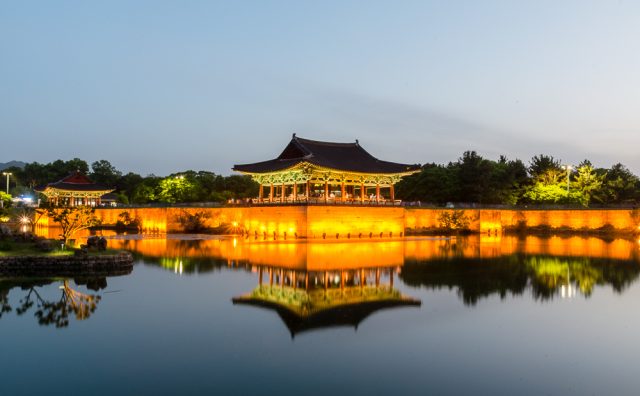
What makes the park unusual is how well it fits into its surroundings. Unlike many amusement parks that feel like they’ve been dropped into a landscape without thought, Gyeongju World seems to have grown there naturally. Some of the pavilions and cafes are designed with traditional Korean elements—curved eaves, wooden railings, and climbing vines—so that even the modern structures feel like they belong. It’s a subtle touch, but it makes the park feel less like a generic attraction and more like a place where the past and present coexist without friction.
After a few hours of rides, the park’s cafes and snack stands offer a chance to rest. The food isn’t anything out of the ordinary—Korean street snacks, burgers, and the occasional bowl of noodles—but after a day of adrenaline, even the simplest meal tastes better. Families gather around tables, comparing notes on which ride was the most terrifying or which one they’ll brave next. The conversations are easy, the kind that happen when people are too tired to pretend and just want to enjoy the moment.
Gyeongju World isn’t the kind of place you visit just for the sake of it. It’s part of a larger experience, one that begins with the city’s ancient tombs and temples and ends with the laughter echoing through the park. You could spend the morning wandering among the ruins of the Silla Dynasty, then come here in the afternoon to let the noise and movement wash away the weight of history. Or you could do it the other way around—ride the coasters first, then walk through the quiet streets, seeing the city with fresh eyes. Either way, the park leaves you with a lightness that’s hard to find in the rush of modern life. It’s not just about the rides; it’s about the way they make you feel—alive, carefree, and just a little bit like a child again.