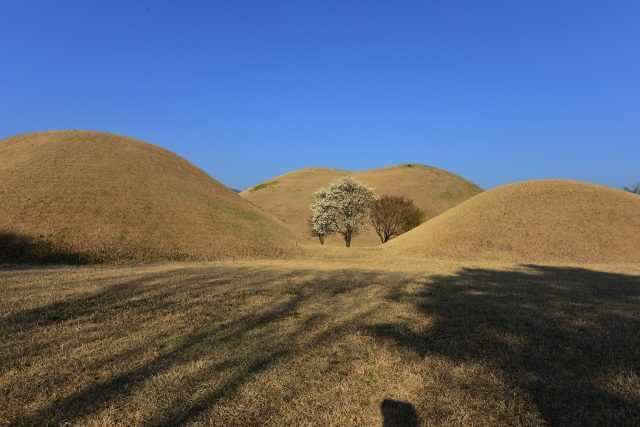
Gyeongju moves to a different rhythm. The past lingers here, not as something distant or forgotten, but as a quiet presence woven into the landscape. Among its many layers of history, the ruins of Donggung Palace and the tranquil Wolji Pond stand as a reminder of the city’s golden age, when Gyeongju was the beating heart of the Silla Kingdom.
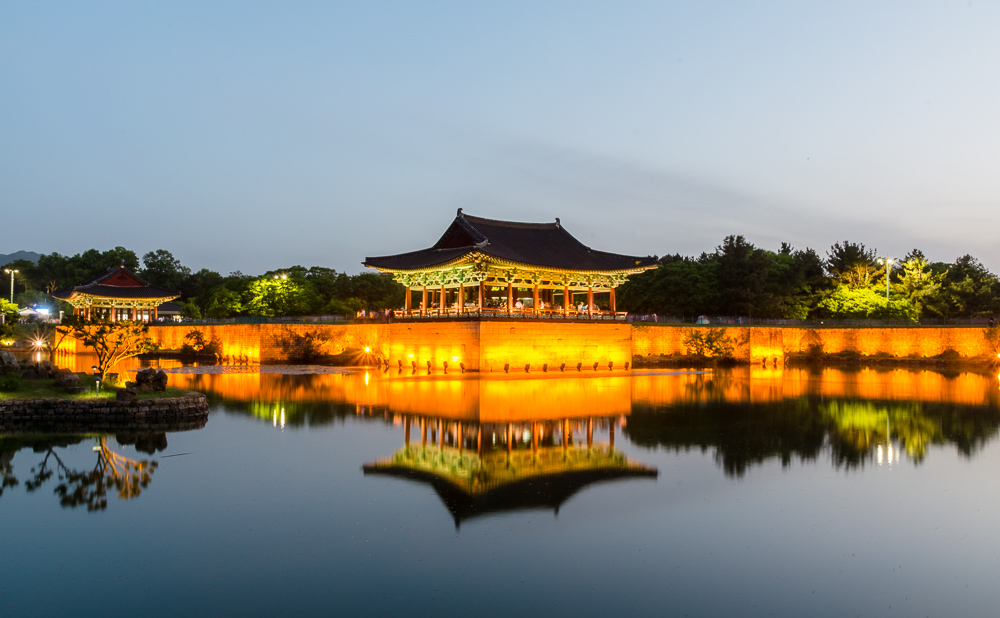
Wolji Pond, once known as Anapji, was commissioned in the 7th century by King Munmu. Its name translates to "pond that reflects the moon," and on still evenings, the water does just that—holding the night sky in its surface like a mirror. Originally, the pond was part of a grand palace complex, serving both as a decorative centerpiece and a functional part of the kingdom’s water system. Canals fed the surrounding gardens, and the water’s gentle flow was carefully engineered to create a sense of harmony between nature and architecture. Today, the pond remains much as it was, though the structures that once framed it have long since faded.
Donggung, or the Eastern Palace, was the royal residence during Silla’s peak. Built when Gyeongju flourished as the political and cultural capital of the peninsula, it was where kings held court, received foreign envoys, and made decisions that shaped the kingdom’s destiny. Little remains of the original palace—only the foundations and fragments of walls, partially restored to hint at its former scale. Yet archaeologists continue to uncover traces of the past, each season revealing more about how the palace once stood. The ruins may be modest, but they carry the weight of centuries, a silent witness to the rituals and daily life of a long-gone era.
The area around Wolji is deceptively peaceful. Low hills encircle the pond, shielding it from the noise of the modern city. Weeping willows dip their branches into the water, and in summer, lotus flowers bloom in clusters, their petals unfolding in the morning light. Locals and visitors come here to escape the rush of the present—some to walk along the paths, others to sit by the water and watch the reflections shift with the breeze. The seasons transform the scene: cherry blossoms in spring paint the banks in soft pink, while autumn turns the foliage into a blaze of gold and crimson.
For a few days each year, the quiet gives way to celebration. Festivals bring the past to life with traditional music, dance performances, and reenactments of historical events. The air fills with the scent of street food—grilled skewers, steamed buns, sweet rice cakes—and the rhythmic beat of drums echoes across the water. It’s a fleeting glimpse into another time, a chance to step into the world of the Silla court, if only for an evening.
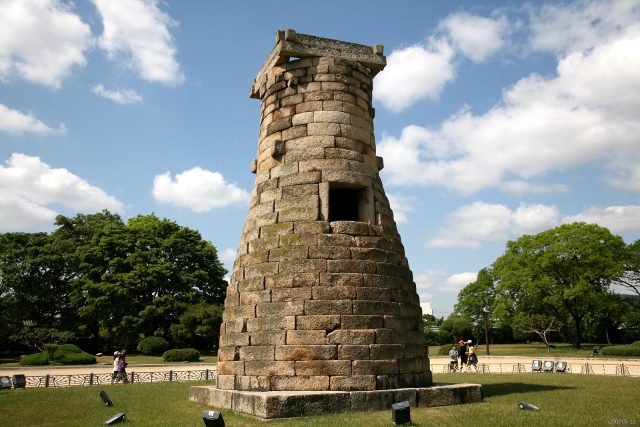
The ruins of Donggung are now part of Gyeongju’s living landscape. The city has long been called an open-air museum, where history isn’t confined to glass cases but spills into the streets, parks, and hills. A walk through this area takes about an hour, though there’s no need to rush. Nearby, the Cheomseongdae Observatory—one of the oldest in Asia—stands as another testament to Silla’s sophistication, while the Gyeongju National Museum houses artifacts that fill in the gaps of the story. From a nearby hill, the view stretches across the entire site, making it easier to imagine how this place must have looked in its prime: a thriving center of power, culture, and beauty.
What makes Donggung and Wolji special is their lack of grand reconstructions. There are no towering facades or polished recreations here—just the raw, enduring presence of the past. The stones, the water, the earth itself seem to hold the memory of what once was. It’s a place for those who want more than a glimpse of history; for those who want to feel its pulse, slow and steady, beneath their feet. In Gyeongju, the past isn’t something to be observed from a distance. It’s something to be walked through, touched, and carried with you long after you’ve left.