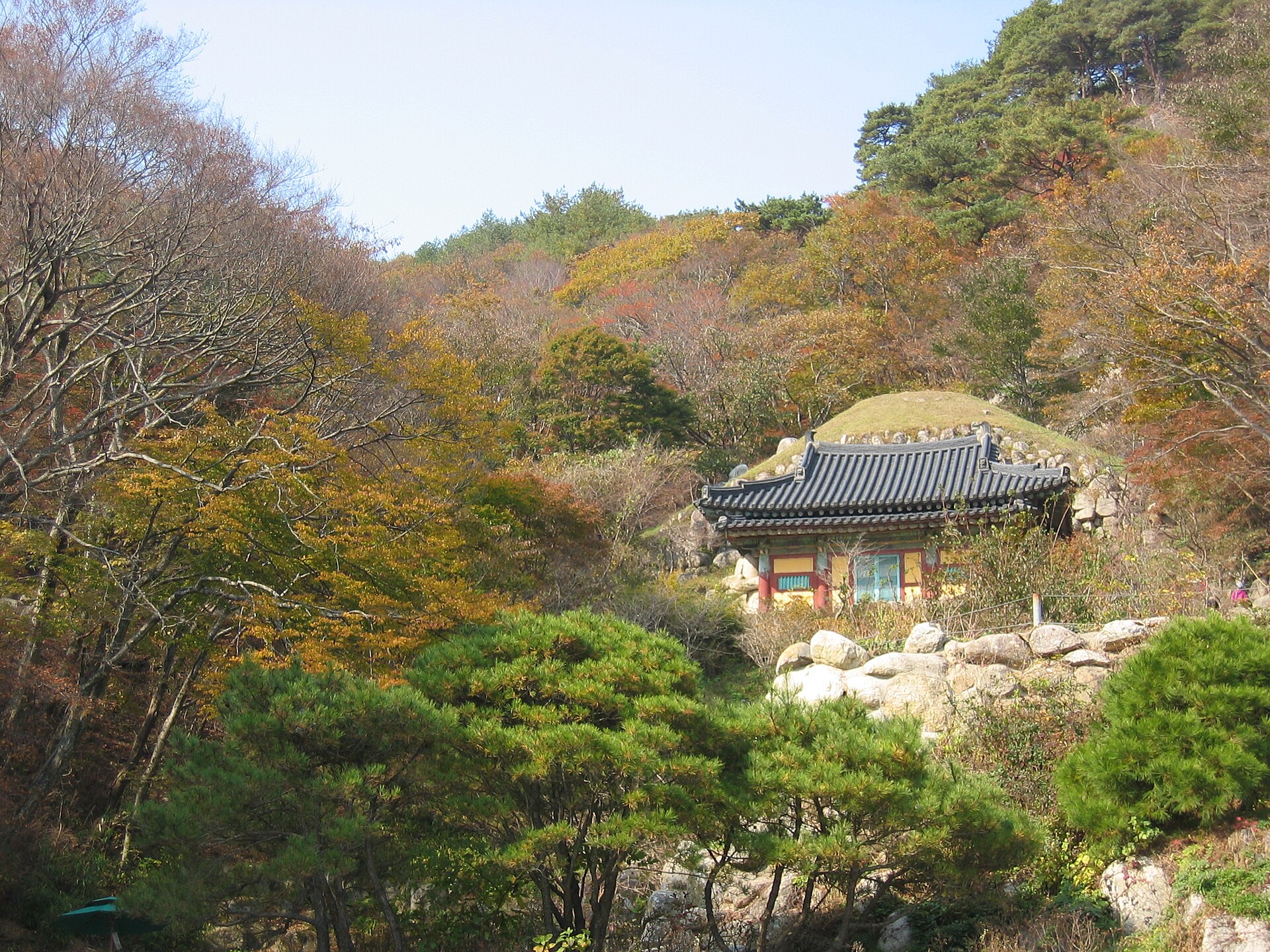
Perched on the slopes of Mount Tohamsan, just outside the ancient city of Gyeongju, Seokguram Grotto feels like a place where time has quietly settled into stillness. Carved into the mountainside in the 8th century, when Gyeongju was the heart of the Silla Kingdom, this man-made cave is more than just an architectural relic—it’s a testament to the skill, devotion, and vision of the people who shaped it over a thousand years ago. The grotto was conceived not as a public monument, but as a sanctuary, a space where the spiritual and the earthly could meet in silence.
The origins of Seokguram are woven into the fabric of Silla’s golden age, a period when Buddhism flourished across the Korean peninsula. Construction began in 751 under the direction of Kim Daeseong, a high-ranking official who dedicated the grotto to his parents in a past life, according to legend. The project outlived him, taking decades to complete, and by the time it was finished, the grotto had evolved into something far more intricate than a simple memorial. Some believe Kim intended it as a refuge for the soul, a place where the burdens of the world could be set aside. The way the grotto blends into the landscape—almost as if it grew from the mountain itself—suggests a deep respect for nature, not an attempt to dominate it.
Stepping inside, the first thing that strikes you is the precision of the design. A narrow corridor, lined with granite, leads from a small rectangular antechamber into the main rotunda. At its center sits the grotto’s focal point: a serene granite Buddha, carved from a single block of stone. The figure is seated in meditation, facing east toward the rising sun, a detail that reflects both Buddhist symbolism and the practical consideration of light. Surrounding the Buddha are intricate reliefs of bodhisattvas, arhats, and celestial guardians, each rendered with remarkable detail. The twelve protectors of the dharma, arranged along the walls, seem almost alive in their dynamic poses, their expressions shifting subtly depending on the angle of the light.
What’s often overlooked is the engineering behind Seokguram’s enduring preservation. The grotto was designed to maintain a stable internal climate, shielding the statues from temperature fluctuations and humidity. Ventilation shafts and drainage systems were integrated into the structure, while the walls and ceiling were lined with precisely fitted granite slabs. These measures weren’t just about aesthetics—they ensured that the grotto could withstand the test of time. For centuries, it remained a private space, accessible only to monks for meditation and rituals. It wasn’t until the 20th century, after extensive restoration, that Seokguram opened to the public, allowing visitors to experience it much as it was in its early days.
The journey to the grotto is part of the experience. A winding forest path, shaded by pines, leads up the mountainside, the air thick with the scent of resin and damp earth. The walk is quiet, broken only by the rustle of leaves and the occasional call of a bird. When the entrance finally comes into view, it feels like crossing into another realm—one where the modern world fades into the background. Inside, the light is soft, casting gentle shadows across the stone figures. The atmosphere is one of reverence, as if the grotto itself is holding its breath.
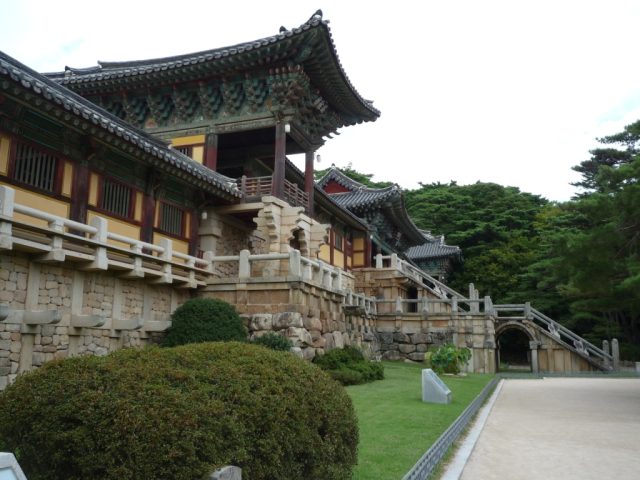
Seokguram is often mentioned alongside Bulguksa Temple, another Silla-era masterpiece nestled at the foot of Mount Tohamsan. Together, they form a UNESCO World Heritage site, though they serve very different purposes. Bulguksa is a celebration of Buddhist teachings in their most public form—grand, ornate, and welcoming. Seokguram, by contrast, is intimate and inward-looking, a place for contemplation rather than spectacle. Yet they complement each other, two halves of a single vision: one reaching outward, the other turning inward.
Today, the grotto remains a place of pilgrimage as much as it is a tourist attraction. Visitors come not just to admire its craftsmanship, but to seek a moment of quiet reflection. There’s no rush here, no crowds jostling for the best view. Instead, there’s the weight of history in the cool stone under your fingers, the play of light on the Buddha’s face, and the sense that you’re standing in a space that has witnessed centuries of human longing. It’s a reminder that some things—faith, art, the search for meaning—transcend the passage of time.
Gyeongju is full of such treasures, but Seokguram holds a unique place among them. It’s not just a relic of the past; it’s a living connection to the people who built it, who prayed here, who found solace in its quiet embrace. When you stand before the Buddha, it’s impossible not to feel the presence of those who came before—craftsmen, monks, pilgrims—all drawn to this place for reasons that still resonate today. Their names may be lost to history, but their work endures, speaking in the language of stone and silence.