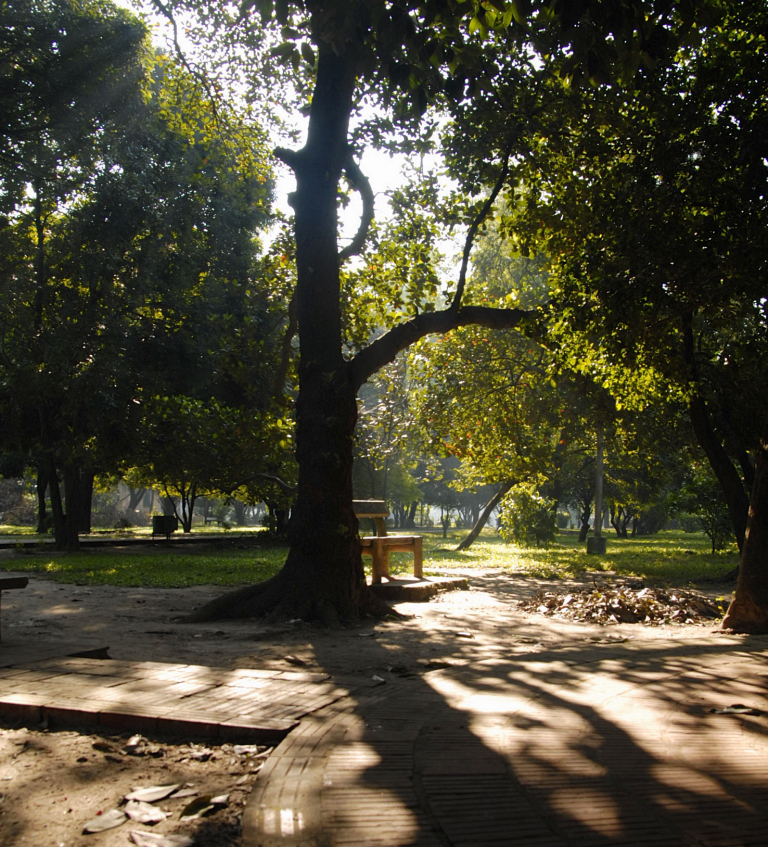
Ramna Park is one of those rare places in Dhaka where the city briefly loosens its grip, allowing itself a moment of quiet. There are no roaring avenues or crowded bazaars here, just shaded pathways, soft grass underfoot, and the gentle rustle of leaves that even drowns out the distant hum of traffic. Unlike the manicured gardens and fountains of more formal parks, Ramna feels like a green refuge that has somehow preserved the spirit of old Dhaka—a time before the city swallowed everything around it.
The park’s history stretches back to the early 20th century, when this land was part of British colonial Dhaka. Back then, it was home to a racecourse, later repurposed into cricket pitches and tennis courts. After Bangladesh gained independence, the area gradually transformed into a public space where city dwellers could escape the heat and dust. Today, Ramna is more than just a park; it’s a place that carries the memories of different eras—colonial rule, the years under Pakistan, and finally, modern Bangladesh.
The architecture here is subtle, almost invisible. There are no grand mosques or palaces to catch the eye, and that’s part of its charm. Towering trees, some of which have stood since British times, create a natural canopy over the winding paths. At the heart of the park lies a small pond dotted with lotuses, surrounded by stone benches. The water is still, disturbed only by the occasional leap of a fish or a whisper of wind. Students often sit by the pond with books, while older visitors engage in quiet conversation, their voices blending into the peaceful surroundings.
Ramna isn’t just a place for relaxation; it’s also a stage for the city’s public life. Festivals, open-air concerts, and even political rallies take place here. The park comes alive during Pohela Boishakh, the Bengali New Year, when music, dance, and vibrant colors fill the air. On such days, Ramna becomes the cultural heart of Dhaka, drawing people from all corners of the city. Yet for all its festivity, the park also carries a quieter significance. In 2005, it was the site of one of Bangladesh’s most devastating terrorist attacks, when bombings during a New Year celebration claimed dozens of lives. Today, a modest memorial near the entrance serves as a reminder of that tragedy, though most visitors come not to reflect on loss but to find a moment of calm.
The park’s atmosphere shifts with the time of day. Early mornings bring joggers, yoga enthusiasts, and those seeking a cool respite before the workday begins. By afternoon, students from nearby universities sprawl on the grass, studying or sharing meals. Evenings are quieter, as families head home and couples or solitary walkers take their place. The park doesn’t cater to tourists—there are no souvenir stalls or guided tours. It exists for the people of Dhaka, offering a rare space where time slows down.
Over the years, Ramna has become more than just a park; it’s woven into the identity of the city itself. It holds the layers of Dhaka’s history—its colonial past, its struggles for independence, and the resilience of its people. Though small by the standards of a megacity, Ramna carries a weight far beyond its size. It’s a place where the past brushes against the present, where nature and urban life coexist, and where the people of Dhaka can simply be, without hurry or expectation.