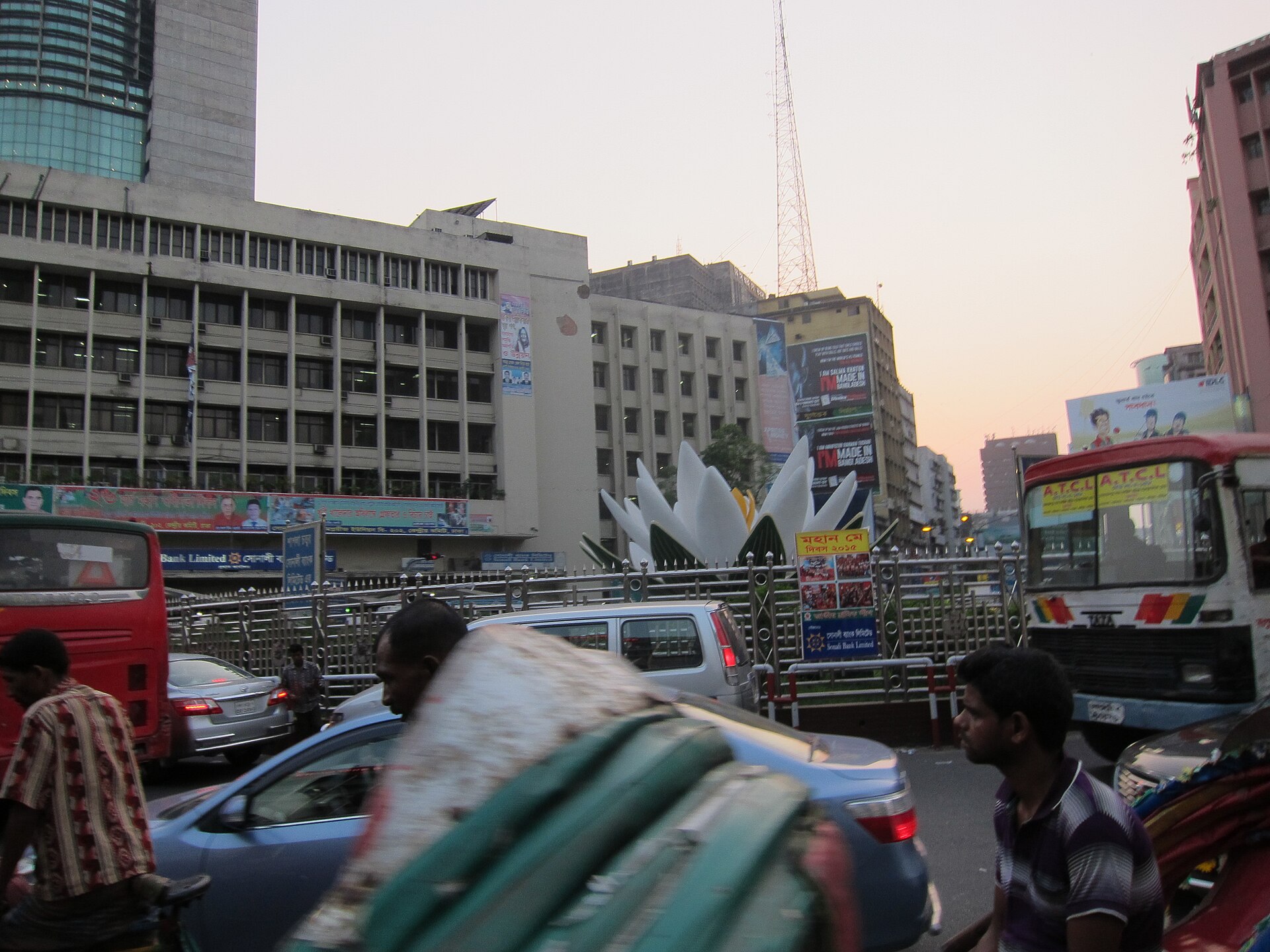
Bangladesh Bank
Bangladesh Bank anchors the nation’s financial system in Motijheel, Dhaka’s commercial core. Established in 1971 alongside the country’s independence, it emerged to guide the economy, secure the currency, and establish trust in financial institutions. The building, a blend of concrete and glass, mirrors the practical mindset of its era. Its design avoids excess, focusing instead on function—a place where decisions shape the taka’s value and the stability of local banks.
The bank’s past intertwines with Bangladesh’s history. After the war, it inherited a broken financial system, remnants of the former State Bank of Pakistan’s Dhaka operations. Early years demanded rebuilding infrastructure, controlling inflation, and earning global credibility. These struggles forged the institution into a pillar of resilience, evolving as the country transitioned from post-war recovery to rapid economic growth. Archives preserve these early struggles, though they remain inaccessible to the public, stored in vaults and official records.
The architecture reflects its time—functional, not flashy. The facade subtly nods to national identity, but the interior tells the real story: expansive meeting rooms, reinforced vaults, and layered security safeguarding more than just money. Unlike commercial banks with their gleaming towers, Bangladesh Bank earns respect through its role, a steady force in a city that never pauses. Motijheel embodies Dhaka’s energy: traffic hums, crowds move, and the contrast with the bank’s deliberate pace is striking.
For Dhaka’s residents, Bangladesh Bank is a familiar part of the landscape, overshadowed by finance and bureaucracy. The area thrives—office workers navigate crowds, rickshaws compete for space, and the scent of street food lingers. The bank doesn’t attract tourists, and its doors stay closed to casual visitors. Yet its presence is undeniable. Here, the taka is printed, interest rates are determined, and the rules governing every transaction are written. To outsiders, it’s just another government building. To those who grasp its significance, it symbolizes Bangladesh’s progress.
The bank’s reach extends beyond its walls. It manages foreign reserves, oversees the banking sector, and crafts policies influencing inflation and employment. Bangladesh’s economic strides in recent decades owe much to its efforts. The bank introduced digital payments, supported small businesses, and combated financial crimes. During crises like the 2020 pandemic, it acted quickly to mitigate damage, aiding struggling industries and individuals. These actions haven’t gone unnoticed—Bangladesh Bank is seen as a stabilizing force in an unpredictable world, a rare constant as the country navigates global challenges.
Most Bangladeshis encounter its policies indirectly. The cost of goods, loan availability, or the taka’s strength reflect its decisions. It’s not a place people visit, but its influence touches daily life. Those curious about its work can explore annual reports or economic analyses, which offer insights into the country’s financial health. Occasionally, Dhaka exhibitions display historical documents or photographs from the bank’s early days, though these are infrequent and often overlooked.
Bangladesh Bank’s significance lies in its embodiment of the nation’s journey. Born during upheaval, it has grown alongside the country. The 1970s’ challenges—hyperinflation, a shattered economy, global skepticism—are now distant. Today, it faces rapid urbanization, a booming garment industry, and globalization’s pressures. The bank adapts, balancing tradition with innovation, caution with ambition. It mirrors Bangladesh itself—resilient and pragmatic.
For foreign investors, Bangladesh Bank sets the rules. Its policies shape the business environment, from exchange rates to startup regulations. For locals, it’s a reassuring presence, a reminder that systems exist to maintain order in a chaotic city. To the casual observer, it’s just another building. But those who look deeper see a story of a nation learning to stand on its own, one financial decision at a time.