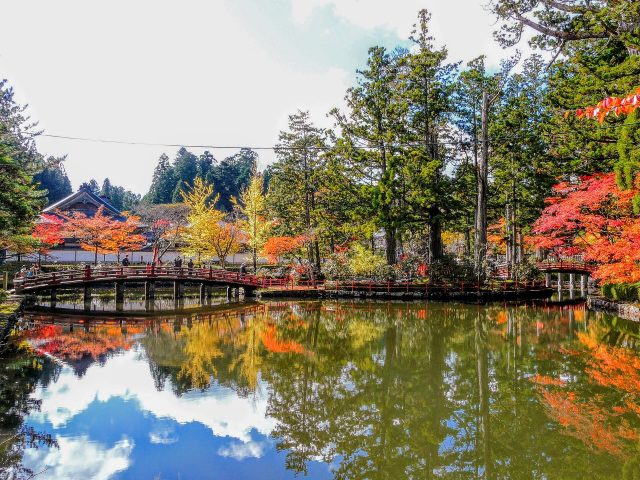
Okunoin is not just a park—it is the spiritual heart of Mount Koya, one of Japan’s most sacred places. Tucked deep within a forest of towering cryptomeria trees, it holds the country’s largest cemetery, where monks, warriors, and ordinary people rest side by side. At its center lies the mausoleum of Kūkai, the founder of the Shingon Buddhist school, who, according to legend, did not die but entered an eternal meditation, awaiting the arrival of the future Buddha, Maitreya. This belief gives Okunoin its timeless quality, as if the past and present exist in the same breath, woven into the moss-covered stones and ancient trees.
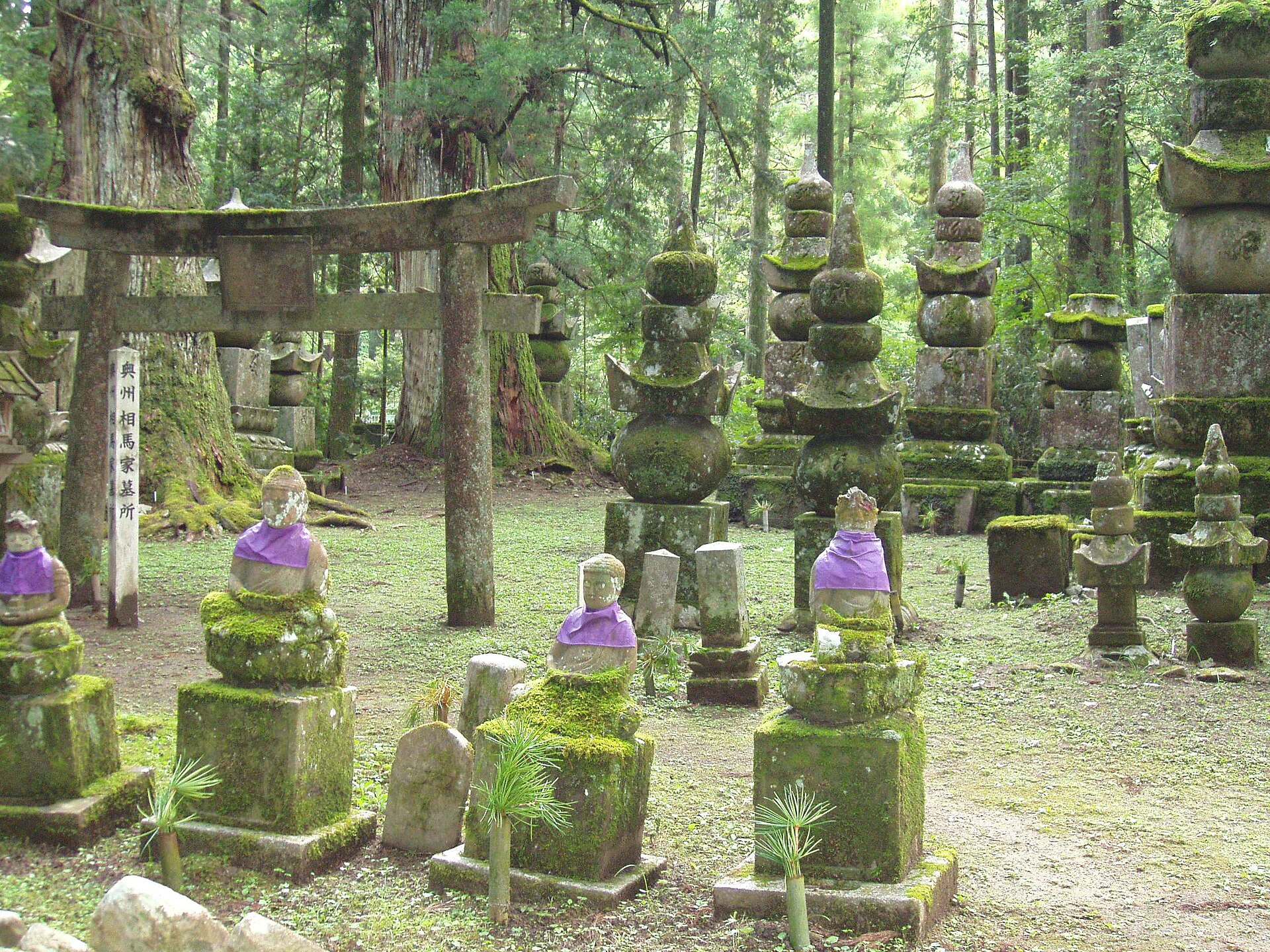
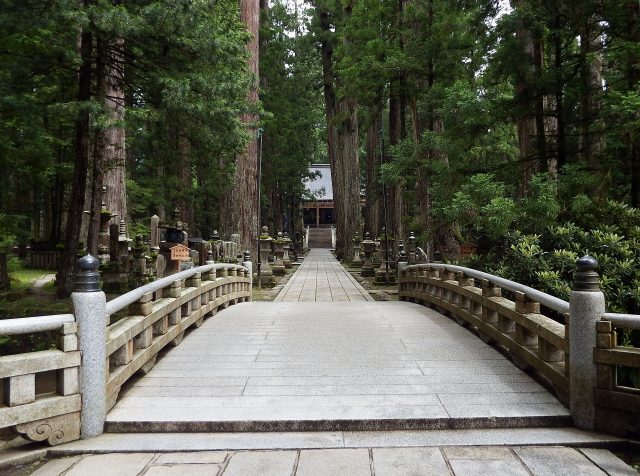
The journey into Okunoin begins at Ichinohashi Bridge, a simple wooden span over a narrow stream. For many, crossing it marks the transition from the ordinary world into the sacred. Pilgrims often pause here to quiet their thoughts, preparing for what lies ahead. Beyond the bridge, the path winds into the forest, where thousands of graves stand beneath the canopy. Some are modest stone slabs, others elaborate pagodas or statues, their inscriptions worn smooth by time. A few belong to famous figures—samurai, poets, or scholars—but most are the resting places of people whose names have long faded, their stories now carried only by the wind and the murmur of the stream.
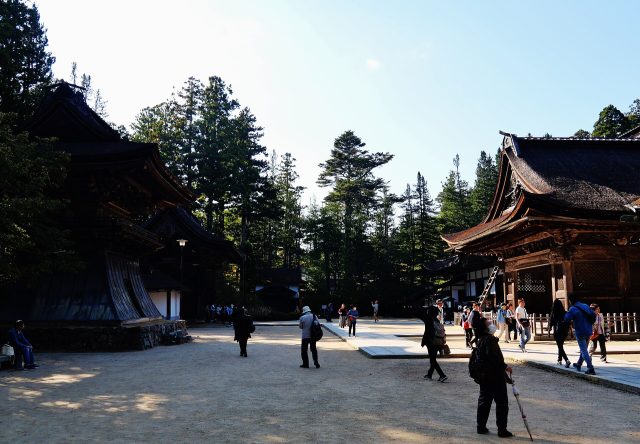
The architecture of Okunoin is unassuming, its power lying in its quiet presence. The main hall, Toribō, dedicated to Kūkai, blends seamlessly into the forest, its darkened wooden walls bearing the marks of centuries. Inside, the air is thick with the scent of incense and the faint glow of oil lamps, said to have burned continuously since the ninth century. Visitors often light their own lamps, whispering wishes as they place them before the altar. Nearby stands the Gobyō, Kūkai’s mausoleum, where offerings—coins, rice, even modern trinkets—are left in reverence. There are no rigid rules here, only the weight of silence and the sense that something profound lingers just beyond sight.
One of the most striking features of Okunoin is the flight of stone steps known as kaidan, leading up to the mausoleum. There are over two hundred of them, each one a step away from the concerns of the world and closer to enlightenment. Lining the path are stone lanterns, some dating back to the Middle Ages, their surfaces softened by moss and time. When evening falls, their flickering light transforms the forest into a realm of shadows and whispers, as if the past itself has come alive. Walking these steps, it’s easy to forget the modern world outside.
Okunoin is a place where nature and spirituality merge. The forest is alive in its own right—cryptomeria trees, some over forty meters tall, form a dense canopy that filters the sunlight into dappled patterns on the ground. Deer and foxes move quietly among the graves, regarded by locals as messengers of the gods. At night, the hoot of an owl or the rustle of leaves might be the only sounds breaking the stillness. In summer, the air is thick with the scent of pine and damp earth; in winter, a light dusting of snow turns the cemetery into a hushed, monochrome landscape.
For many Japanese, visiting Okunoin is more than tourism—it is a pilgrimage, a moment of reflection, or a way to honor the past. Some come to perform memorial rites, others to mark personal milestones, and some simply to sit in silence. Unlike crowded tourist sites, Okunoin does not demand attention. It exists as it always has, undisturbed by the rush of the outside world. There are no guided tours, no souvenir stands, just the quiet rustle of leaves and the sense that time moves differently here.
The changing seasons bring new layers of beauty to Okunoin. In autumn, the cryptomeria needles turn gold and copper, casting a warm glow over the graves. This is when the cemetery feels most alive, as visitors come to reflect on the fleeting nature of life. In spring, cherry blossoms drift like pink snow over the paths and tombstones, their delicate petals resting on the moss-covered stones. Each season reveals a different facet of Okunoin, yet the sense of peace remains constant.
What makes Okunoin truly special is its ability to make history feel present. Every lantern, every tree, every worn step tells a story, and if you listen closely, the past seems to whisper through the leaves. This is not a museum—it is a living place, where the boundaries between then and now blur. That is why people return, not just as pilgrims, but as seekers of something deeper. In a world that moves too fast, Okunoin stands still, a reminder that some things endure beyond time.