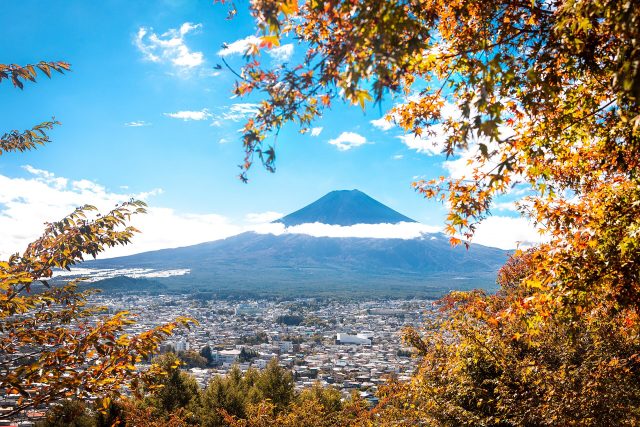
Oishi Park sits quietly at the foot of Mount Fuji, in the small town of Fuji Yoshida, where the crisp mountain air mingles with the stillness of old streets. Unlike the crowded tourist spots nearby, this place feels untouched, even in peak season. The park itself is modest in size, but its location makes it special—from anywhere within its bounds, the snow-capped peak of Fuji looms close enough to touch, though it stands more than twenty kilometers away.
The park’s history is tied to Oishi Yoshisada, a samurai of the Edo period who once owned these lands. What began as a private garden, designed in the traditional Japanese style with ponds, stone lanterns, and carefully chosen plants, has since become a public space. Yet it retains the same sense of seclusion and harmony with nature it had three centuries ago. Some elements of the landscape were restored after the devastation of World War II, but the park still feels much as it did in its earliest days.
The real draw here is Fuji itself, but the park’s design is worth noticing too. The paths are paved with stone, and the trees are pruned just enough to highlight the natural beauty of the surroundings. In spring, cherry blossoms drift through the air like soft pink snow, while autumn turns the maple leaves a deep crimson. Summer brings cool shade beneath the green canopy, and in winter, snow dusts the pine branches, making Fuji appear even more majestic.
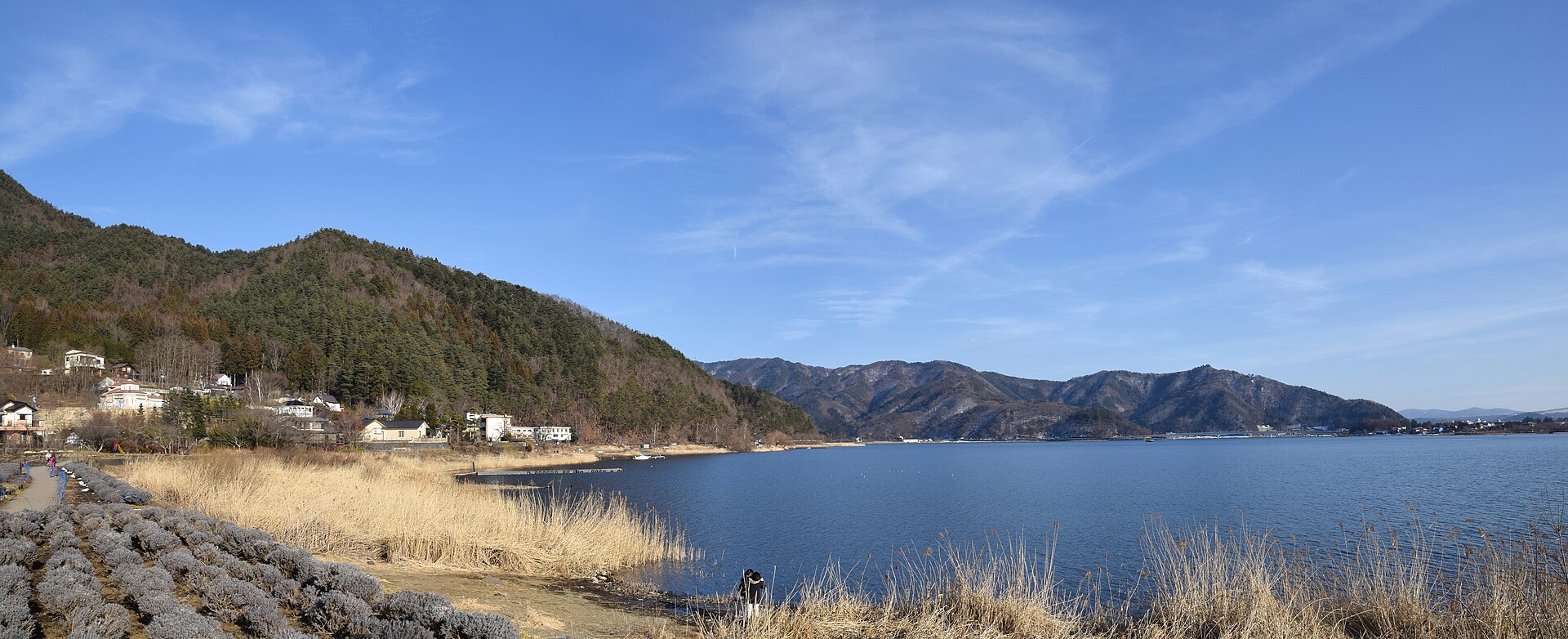
A small pond called Oishi-ike sits at the heart of the park, its clear water home to carp that glide lazily among the reeds. Nearby, stone lanterns stand like silent sentinels, their soft glow reflecting on the water at dusk. On warm days, families often spread out picnic blankets, enjoying the quiet company of the place.
This isn’t the kind of park built for tourists. There are no flashy signs, no cafes, no souvenir stalls—just the quiet rustle of leaves and the occasional call of a bird. It’s a place for those who want to experience Japan as it once was, where nature and history are so intertwined that one can’t exist without the other.
Fuji Yoshida is often overlooked by travelers rushing toward the mountain, but it’s here that Fuji feels most real—not as a postcard image, but as something woven into daily life. Oishi Park captures that feeling better than most. There’s no need to take photos or hurry off somewhere else. You can simply sit on a bench, watch the mountain, and wonder how many others have done the same over the centuries.
Even on weekends, the park is rarely crowded. Locals tend to favor more popular spots, and tourists usually head straight for the lakes or viewpoints. But those who do find their way here seldom regret it. An hour or an entire afternoon can slip by unnoticed, each visit revealing something new—a different angle of the mountain, an old stone with a faded inscription, or just a moment of silence that feels deeper than before.
The park asks little of its visitors beyond a quiet respect for its peace. There are no strict rules, only the unspoken understanding that one should leave no trace, make no loud noises, and let the place be as it is. It’s a rare spot where you can simply exist, free from the usual rush and distraction. Maybe that’s why Oishi Park remains one of those places where you can truly rest.