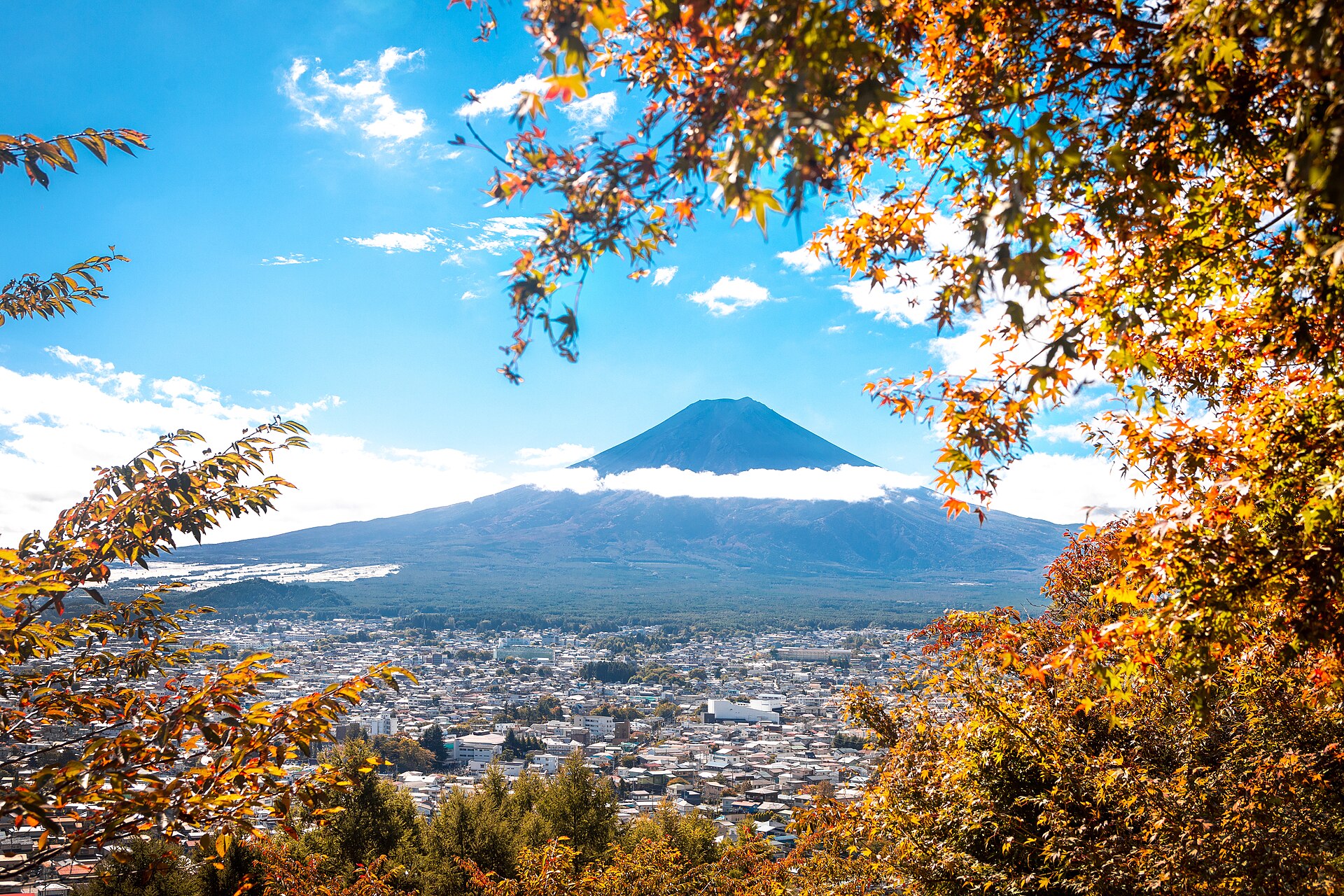
Arakurayama Sengen Park is one of those rare places where nature and human reverence for beauty come together so seamlessly that time seems to slow down. Nestled at the foot of Mount Fuji in the quiet town of Fujiyoshida, the park is best known for its viewpoint, which offers one of the most iconic perspectives of Japan’s sacred mountain. But the appeal of this place goes beyond the postcard-perfect panorama—it’s a spot where history, tradition, and the quiet magic of Japan feel almost tangible.
Mount Fuji has never been just a mountain to the Japanese. For centuries, it has been a symbol, a muse, and a spiritual landmark, shaped by myths and legends. Its near-perfect cone, formed by ancient volcanic eruptions, has inspired poets, artists, and pilgrims for generations. Arakurayama Sengen Park sits on a gentle hillside, offering an unobstructed view of Fuji on clear days. Even when the mountain is veiled in clouds, the park retains its charm—the scent of pine, the rustle of leaves, and the stillness of the air create a sense of peace that lingers.
The viewpoint here isn’t just a lucky accident of geography. At the heart of the park lies Sengen Shrine, a small but significant place of worship dedicated to Konohanasakuya-hime, the Shinto goddess believed to protect Mount Fuji from eruptions and bless those who climb it. The shrine’s red torii gate and stone lanterns add a sense of solemnity to the scene, drawing both locals who come to pay their respects and travelers eager to capture the famous view. It’s a place where the sacred and the scenic blend effortlessly.
The park is especially enchanting during cherry blossom season. In spring, the slopes burst into soft pink, and Fuji framed by blooming sakura looks like a scene from an ancient scroll. The crowds can be large, but the festive atmosphere makes it feel like part of the experience. Summer brings lush greenery, while autumn transforms the maple leaves into fiery reds and golds, contrasting sharply with the snow-capped peak. In winter, when Fuji is dusted with snow, the landscape takes on a stark, almost austere beauty.
Arakurayama Sengen Park isn’t just for passive admiration. It serves as a starting point for one of the trails leading to the base of Mount Fuji, and many hikers use it as a gateway for their ascent. The journey is long, but those who undertake it are rewarded with a different perspective of the mountain—not as a distant postcard image, but as a living, breathing presence. Even if you’re not planning to climb, the surrounding trails offer their own rewards: the chance to spot wild monkeys, listen to birdsong, or simply enjoy the quiet rhythm of the forest.
Unlike the more tourist-heavy areas of Fuji-Hakone-Izu National Park, Arakurayama Sengen feels like a local secret. There are no tacky souvenir shops or flashy attractions here—just nature, history, and a sense of timelessness. It’s a place where visitors and locals alike can appreciate the mountain’s grandeur without the distractions of modern tourism. That simplicity is part of its appeal, drawing those who seek more than just a pretty view.
If you visit, don’t rush straight to the viewpoint. Take your time wandering the narrow paths that lead to the shrine, listening to the sounds of the forest, and breathing in the earthy scent of pine. With luck, you’ll see Fuji in all its glory, just as poets of the Heian era once described it. But even if the mountain remains hidden behind clouds, the park has a way of leaving an impression. There’s something about this place—whether it’s the sense of stepping into a living tradition or simply the quiet awe of standing in the shadow of something greater—that makes the journey worthwhile.