Mahan is a quiet town in southeastern Iran, best known for the Shahzadeh Garden, a masterpiece of Persian landscape design. But step away from the well-trodden paths leading to this famous site, and you’ll find another place entirely—one that feels far removed from the grandeur of traditional Iranian gardens.
Mellat Park sits on the edge of town, a world apart from the geometric precision of classic Persian gardens. There are no marble pools here, no perfectly aligned cypress trees, no rigid symmetry. Instead, you’ll find open lawns, clusters of trees, and the unhurried pace of provincial life. It’s a place where the rules of formal garden design don’t apply, and that’s precisely what makes it special.
The park was created in the mid-20th century, a time when Iran was expanding its public spaces. Unlike the historic gardens built for nobility or religious leaders, Mellat was designed for everyone. Its layout is simple: winding paths for strolling, benches tucked beneath the shade of trees, and playgrounds for children. In those early years, it became an extension of the street—a place for families to gather, friends to meet, or quiet evenings spent watching the sunset.
Mahan itself has changed over the decades. No longer the sleepy backwater it once was, the town now sees a steady stream of visitors, and new buildings have sprung up around it. Yet Mellat Park remains an oasis of calm. There are no crowds here, no rush. People come not for the perfect photo but to spend time with loved ones or simply be alone with their thoughts.
Mornings in the park belong to the elderly, who gather under the plane trees to play backgammon. By afternoon, mothers push strollers along the paths while children chase each other across the grass. As evening falls, groups of young people spread out blankets for picnics, their laughter blending with the rustling leaves.
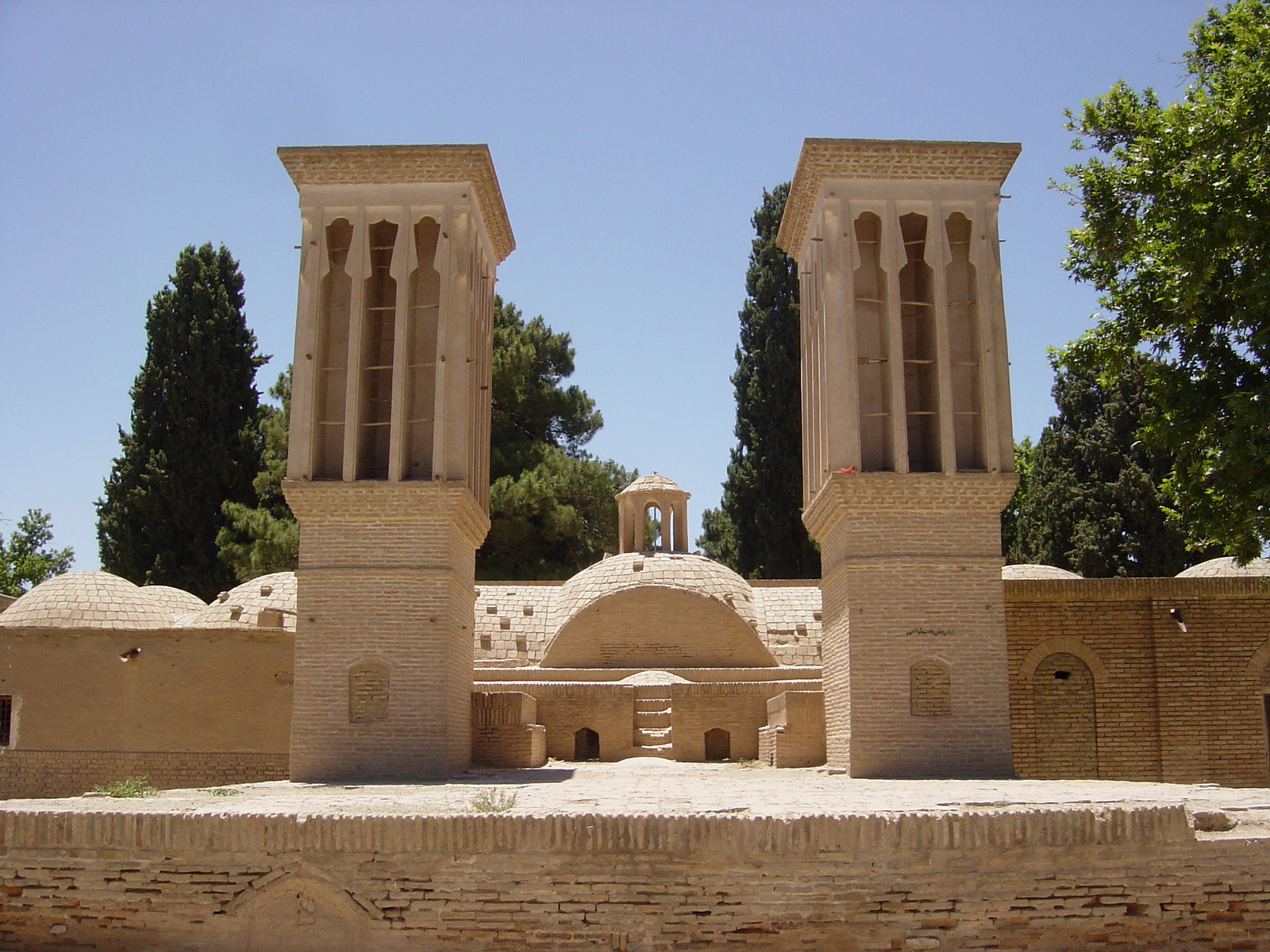
The park’s architecture is understated. Small pavilions with carved wooden latticework, arched bridges over shallow streams, and gazebos with tiled roofs—all designed in a traditional style, but without the ornate flourishes of more famous sites. Instead of marble benches, there are simple wooden seats. Instead of elaborate water systems, gardeners drag hoses across the lawns to keep the grass green.
What gives Mellat its charm is its setting at the foot of the low mountains that encircle Mahan. On clear days, the snow-capped peaks rise in the distance, their outlines sharp against the sky. In the evening, the mountains take on hues of pink and violet as the sun dips below the horizon. The air here is cooler than in the town center, and in summer, the shade of the trees offers welcome relief from the heat.
There’s nothing extraordinary about Mellat Park. It doesn’t try to impress—it simply exists as part of everyday life. There are no festivals here, no exhibitions, no grand events. And that’s why it feels so alive. Unlike many tourist attractions, there’s no artifice, no performance. It’s just a place where people come because they want to, not because they feel they should.
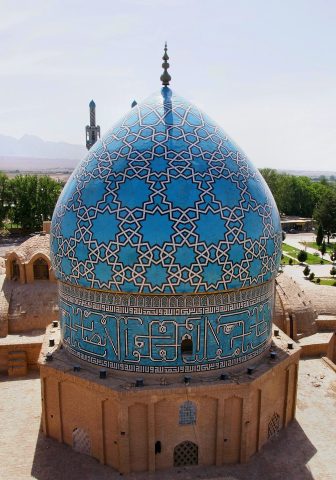
For visitors to Mahan, the park can be an unexpected discovery. While most tourists hurry toward the Shah Nematollah Vali Shrine or the Shahzadeh Garden, Mellat offers a different side of Iran—one that’s not polished for display but lived in. There’s no luxury here, but there is authenticity. No crowds, just people who come because they like the place, because it feels like home.
In Iran, there’s a growing conversation about preserving spaces like this, where life isn’t dictated by tourism. Mellat Park is one of them. It doesn’t need renovation because its value lies in the atmosphere it creates, the quiet rhythm of daily life that continues here, undisturbed.
If you find yourself in Mahan, don’t rush straight to the main attractions. Take a detour to Mellat Park. Sit on a bench beneath the trees, listen to the leaves rustling and the voices around you. Maybe here, in this unassuming corner of the town, you’ll find what you were really looking for.