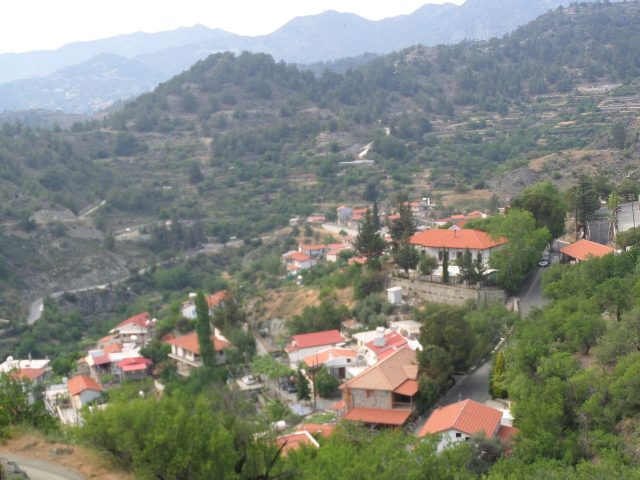
Lapithos is one of those quiet Cypriot towns where time moves at its own unhurried pace, and nature seems to have gathered its finest gifts in one place—rolling hills, the distant shimmer of the sea, and lush greenery that spills over every slope. The town’s park is not the kind of manicured urban space you might expect, with neat pathways and ornamental fountains. Instead, it unfolds like a secret, its winding trails disappearing between ancient trees, inviting you to lose yourself just a little and stumble upon something unexpected around every bend.
Perched on a hillside, the park offers sweeping views of the valley below and, on clear days, the endless blue of the Mediterranean. The air carries the scent of pine needles and wild herbs, and the horizon feels close enough to touch. Locals often come here in the early morning, settling onto one of the secluded benches tucked beneath the trees with a cup of coffee, or spreading out a picnic on the grass. In summer, the park stays cooler than the town below, while winter rains transform it into a vibrant green landscape, as if the earth itself is remembering how to bloom.
This place is deeply tied to Lapithos’s past. The town was once a cultural hub on the island, and though little remains of its former grandeur beyond ruins and stories, the park carries that history in its very soil. There are no grand monuments or museums here, but the land feels alive with the echoes of centuries. Nearby, the remnants of medieval fortifications stand as silent witnesses to the past, while the surrounding countryside is dotted with olive groves that have stood since Byzantine times. Older residents still speak of vineyards that once covered these slopes, where people would gather in the shade to talk, rest, or simply pass the time.
The park’s design is understated, almost invisible. There are no grand sculptures or artificial ponds—just natural materials like stone, wood, and earth. The pathways are lined with local limestone, which glows softly in the sunlight, and the benches are made from roughly hewn timber, blending seamlessly into the landscape. In some corners, you’ll find old stone walls overgrown with ivy, remnants of terraces where fruit and vegetables were once cultivated. Now, they’re part of the scenery, home to birds and small creatures that dart between the leaves.
What makes this park special is its refusal to be perfect. Wildflowers grow where they please, and the paths sometimes fade into tall grass. In summer, tortoises lumber along the trails, while spring fills the air with birdsong. Children play here, climbing over rocks and hiding in the bushes, while adults seek out quiet spots to read or listen to the wind rustling through the leaves. It’s a place where life unfolds without fanfare, where the small moments matter more than any grand spectacle.
Time seems to slow down here. Mornings bring joggers, afternoons see families with children, and evenings belong to couples strolling along the lamplit paths. Weekends can be lively, but even then, the park retains a sense of solitude. Everyone finds something different—some come for silence, others for inspiration, and some simply to feel connected to this corner of Cyprus.
Winter gives the park a different kind of beauty. The trees stand bare, but the ground is carpeted with fallen leaves, and after rain, everything glistens as if under a spell. Fewer people visit, but those who do come seeking crisp air and quiet. You might see elderly men playing backgammon under a shelter or children building forts from damp leaves. Even in the colder months, the park doesn’t lose its charm.
Lapithos and its park remind you that beauty isn’t always obvious. Sometimes it’s hidden in the details—the shade of an old tree, the scent of rain on dry grass, the distant murmur of the sea. There are no tourist attractions here, no crowds, no fanfare. That’s precisely why it feels so precious. This is a place for those who want to experience Cyprus as it truly is—unhurried, unpolished, and full of quiet life.