La Unión Park is one of those quiet corners in Huánuco where the city exhales. Tucked in the heart of the town, it’s more than just a patch of green amid the urban sprawl—it’s a place where time seems to slow, where the past lingers in the shade of old trees, and where the rhythm of daily life unfolds without pretense. Locals come here to escape the midday heat, to watch their children play near the central fountain, or to simply sit on a bench and let the hours drift by. Travelers who stumble upon it often find themselves lingering longer than planned, drawn in by the unhurried pace and the sense that this park has always been here, quietly observing the city’s changes.
The park took shape in the late 19th century, a time when Huánuco was expanding rapidly. As new buildings rose and the streets filled with life, the city needed a public space where people could gather, rest, and connect. The name La Unión—meaning "union" or "unity"—reflected the optimism of the era, a nod to the idea of progress and community. Over the years, the park became woven into the fabric of the city, its history passed down more through stories than official records. Some say its paths once sheltered secret meetings of revolutionaries, their whispers lost beneath the rustling leaves. Others claim it was a place where poets and thinkers debated the future of Peru. Whether these tales hold truth or not, the park carries an air of quiet significance, as if the very ground remembers what was said beneath its trees.
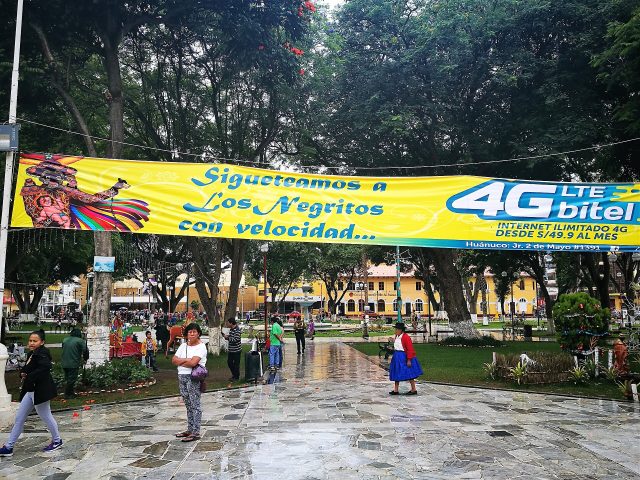
There’s nothing grand about the park’s design—just a simple, functional layout that has endured for over a century. The main walkway, lined with trees planted long ago, curves gently toward the center, where a modest fountain stands. The trees, now towering and broad, cast dappled shade over the benches, offering relief from the Andean sun. In the evenings, the air cools, and the park becomes a refuge from the noise of the streets. The fountain, though unassuming, is a natural gathering spot. Families cluster around it, street musicians occasionally set up nearby, and on weekends, artists sometimes offer to sketch portraits for passersby. It’s not a place designed for spectacle, but for the small, everyday moments that make up life in Huánuco.
What makes La Unión special is its authenticity. There are no flashy attractions, no manicured gardens meant to impress visitors. Instead, it’s a living part of the city, shaped by the people who use it. Mornings belong to the elderly, who come to stretch their legs, chat with neighbors, or sip coffee from thermoses. By midday, students from nearby schools and universities fill the benches, textbooks open, voices low as they study or gossip. As the sun dips lower, young couples appear, their laughter blending with the rustle of leaves. The park doesn’t try to be anything other than what it is—a place where life happens, unscripted and unhurried.
At the edge of the park stands a small pavilion, a simple structure that serves as a stage for the city’s occasional gatherings. On some days, it hosts concerts by local musicians, their melodies drifting through the trees. On others, it becomes a platform for political rallies or craft fairs, where artisans display their work. When no events are scheduled, the pavilion stands empty, its wooden beams holding the echoes of past speeches and songs. Even in silence, it feels like a witness to the city’s evolving story, a quiet reminder of how public spaces can bring people together.
For travelers, La Unión offers a glimpse of Huánuco as it truly is—not polished for tourists, but lived in and loved by those who call it home. There are no guided tours here, no vendors hawking souvenirs, no pressure to perform the role of a visitor. Instead, you can sit on a bench with a book, order a coffee from one of the nearby cafés, and watch the city go about its day. Or you can wander the paths, running your fingers along the rough bark of the old trees, wondering how many conversations they’ve overheard, how many secrets they’ve kept. The park doesn’t demand your attention; it simply invites you to slow down and notice the details—the way the light filters through the leaves, the sound of footsteps on the worn paving stones, the occasional bark of a street dog in the distance.
In recent years, the city has made efforts to preserve the park’s character. Paths have been repaired, lighting updated, and the oldest trees carefully pruned to keep them healthy. But the real preservation lies in the fact that La Unión hasn’t been turned into a museum piece. It’s still a place where people come to live, not just to observe. You can spread a blanket on the grass for a picnic, meet friends for a chat, or simply sit alone, listening to the hum of the city beyond the park’s borders. The changes have been subtle, ensuring that the park remains a part of daily life rather than a relic of the past.
Huánuco isn’t a city that draws crowds of tourists, and La Unión isn’t the kind of place that makes it into glossy travel magazines. That’s precisely what makes it worth visiting. Here, you’ll find a slice of Peru that feels untouched by the expectations of outsiders—a place where the rhythm of life is set by the people who live it, not by the demands of visitors. There’s no need to rush, no pressure to capture the perfect photo. The park doesn’t reveal itself all at once; it unfolds slowly, the way a good conversation does. All you have to do is find a bench, sit down, and let it happen.