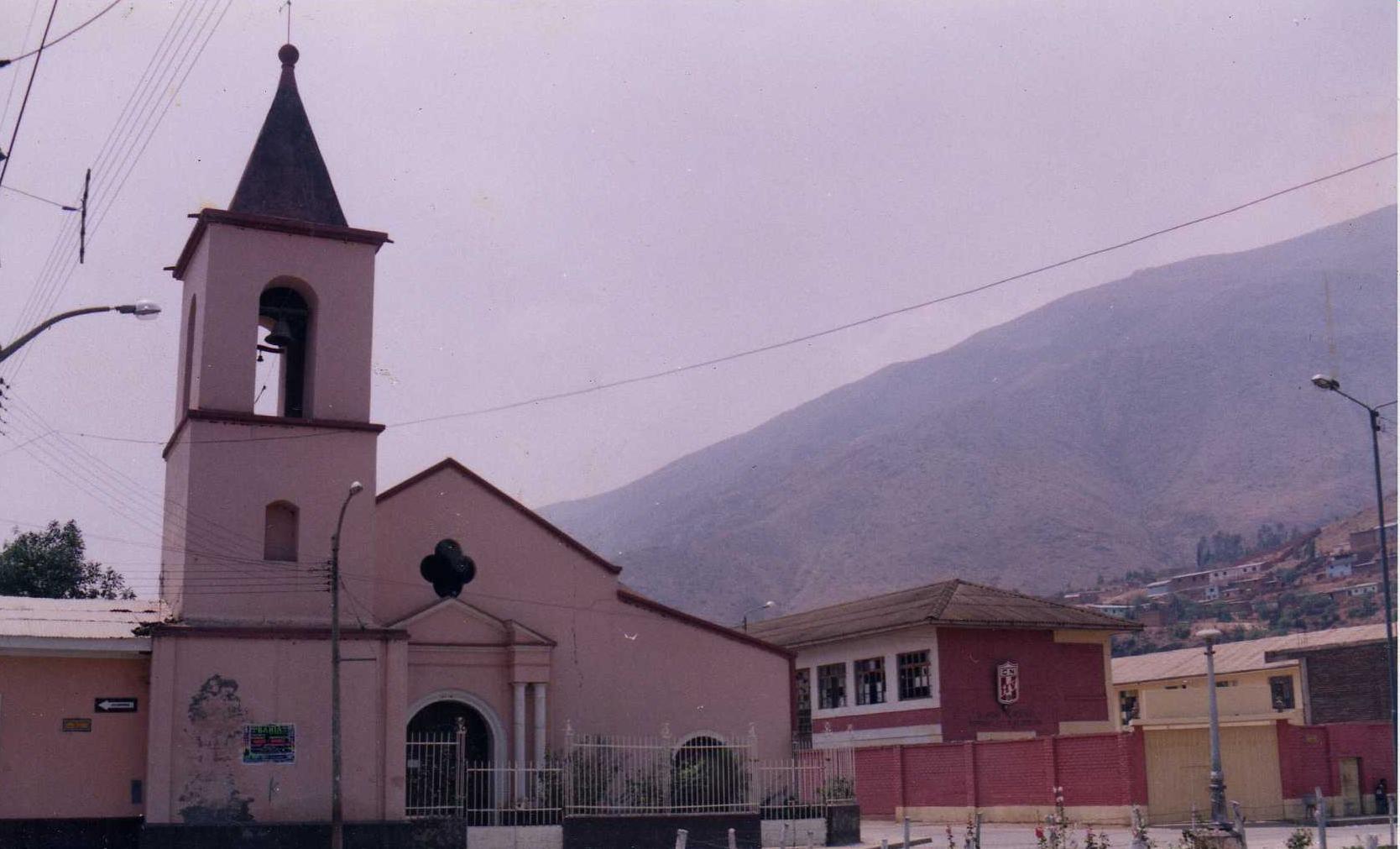
San Cristóbal Church in Huánuco is one of those rare places that feels suspended in time, a quiet witness to centuries of change. Built in the 16th century, it stands on the city’s main square, its weathered walls holding stories of conquest, faith, and the slow blending of cultures. Huánuco was once a strategic outpost for Spanish colonizers, and this church was more than a place of worship—it was a symbol of the new order imposed upon the ruins of the Inca Empire. Even now, walking past its unassuming facade, you can sense the layers of history beneath the surface, where the past and present coexist without fanfare.
The architecture of San Cristóbal reflects the early colonial period in its simplest form. Thick adobe walls, typical of the Andes, give the building a sturdy, almost austere appearance. The rectangular layout and plain exterior offer little hint of what lies inside. Step through the doors, however, and the contrast is striking. The baroque altar, gilded and intricately carved, seems almost too grand for such a modest structure. This was intentional. The church of the colonial era used opulence to assert the power of faith, a display meant to impress and convert. Yet the hands that shaped it were often those of local artisans, descendants of the Inca, who subtly wove their own traditions into the work, creating something neither entirely Spanish nor entirely Andean.
For centuries, San Cristóbal was more than a religious center—it was a gathering place for the community. Royal decrees were announced from its steps, town meetings were held within its walls, and during times of war or rebellion, it offered refuge. The 19th century brought Peru’s struggle for independence, and the church saw both revolutionaries and loyalists pass through its doors. Today, those events feel distant, but traces remain in the faded frescoes and the dark, worn beams of the ceiling. History here isn’t preserved behind glass; it lingers in the cracks and crevices, waiting to be noticed.
Inside, a few details stand out. On one of the side walls, a fresco depicts Saint Christopher, the patron saint of travelers, carrying the Christ Child across a river. The church takes its name from him, and in a city like Huánuco—situated along an ancient trade route between the coast and the jungle—the choice of patron was no accident. Nearby, faint inscriptions in Quechua, the language of the indigenous people, serve as a reminder that this place was never just for the Spanish. It belonged, and still belongs, to the people who have lived here for generations.
Time has left its mark on San Cristóbal. Earthquakes, fires, and the slow decay of centuries have all taken their toll. Yet the church endures, and that is part of its charm. Unlike the meticulously restored landmarks of Lima or Cusco, this building hasn’t been polished to perfection. The peeling plaster, the cracks in the walls, the darkened icons—these aren’t flaws but part of its story. The people of Huánuco treat it with respect, but not reverence. It remains a living place of worship, where baptisms, weddings, and daily services continue as they have for hundreds of years.
Huánuco is not a city that draws crowds of tourists, and that makes San Cristóbal all the more special. There are no souvenir stalls outside, no guides reciting rehearsed facts. The church exists as it always has, quietly going about its business. If you visit at the right moment—when the afternoon light slants through the windows, casting a warm glow over the altar, and the scent of candle wax and old wood lingers in the air—you’ll understand that this isn’t a place to rush through. It demands a slower kind of attention, one that allows the weight of history to settle in.
San Cristóbal is more than just an architectural relic; it’s a living part of Huánuco’s culture. The surrounding region still holds traditions that predate the Spanish arrival, and the church often becomes a meeting point for old and new. During religious festivals, you might see processions where locals wear traditional Andean clothing, blending Catholic rituals with indigenous customs. It’s not syncretism in the academic sense, but something more organic—a coexistence of worlds that never truly separated.
For those who make the journey to Huánuco, the church offers an unexpected glimpse into the soul of the city. Huánuco itself is a place of quiet beauty, nestled in a valley surrounded by mountains, its streets carrying the unhurried rhythm of provincial Peru. San Cristóbal is the key to understanding its past, a place where the echoes of history are still audible if you listen closely. There are no grand exhibits or dramatic displays here, just the quiet persistence of a building that has seen empires rise and fall. In that simplicity lies its true value.