Taman Kusuma is one of those places that reveals itself slowly. At first glance, it might seem like just another well-kept park with winding paths and flowerbeds, but spend even a few hours here, and you begin to notice the small details that make it special. Located in Bogor, a city already known for its mild climate and lush greenery, the park feels like an extension of the town’s quiet charm. Far from the noise of Jakarta, the air here is crisper, the pace of life unhurried. Taman Kusuma doesn’t try to impress with flashy attractions or exotic wildlife—it simply offers a space where nature and culture blend effortlessly.
The park’s history is closely tied to Bogor’s own past. During the colonial era, this area was a favored retreat for Dutch officials and plantation owners seeking relief from the heat and humidity of the coast. Back then, Bogor—known as Buitenzorg—served as the summer residence of the Dutch East Indies’ governor-general. It was during this period that the first public parks began to appear, designed as leisurely escapes for the European elite. Though Taman Kusuma wasn’t the city’s central park, it carries the spirit of that time. The landscaping still reflects 19th-century European garden design, yet there’s an unmistakable local touch—subtle, but present.
The architecture here is understated, and that’s part of its appeal. There are no grand monuments or imposing structures, just small pavilions, bridges, and gazebos that feel like natural extensions of the landscape. The most noticeable feature is the open-air amphitheater, where occasional concerts and theater performances take place. Its stone steps descend toward a modest stage framed by trees, and on performance nights, the park comes alive with music and voices mingling with the rustling leaves. During the day, the amphitheater sits quietly, not as a venue for entertainment, but as a reminder that this place has always been about gathering and connection.
The plant life in Taman Kusuma tells its own story. You won’t find the rare or exotic species that fill botanical gardens, but what you will see are the kinds of trees and shrubs that give the park its character. Towering old trees with sprawling canopies, clusters of bamboo, flowering bushes, and lawns that look like they’ve been tended for decades. Spring is especially beautiful here, when local trees and shrubs burst into bloom, filling the air with fragrance and carpeting the paths with petals. In the rainy season, the greenery becomes even more vibrant, the air thick with moisture. On those days, the park feels particularly inviting—a perfect spot for a slow walk or a quiet moment on a bench with a book.
Taman Kusuma isn’t just a place to relax; it’s a space where you can sense the rhythm of local life. Families with children, students, and elderly visitors all come here, each with their own reasons. Some arrive for exercise—morning yoga groups or tai chi practitioners, evening joggers circling the paths. Others come simply to sit on the grass, watching squirrels dart fearlessly toward visitors in hopes of a snack. On weekends, the park hums with activity: children’s laughter, music from phone speakers, conversations in different languages. There are no strict rules, just an unspoken respect for the space—people keep noise to a reasonable level, clean up after themselves, and leave the flowers untouched.
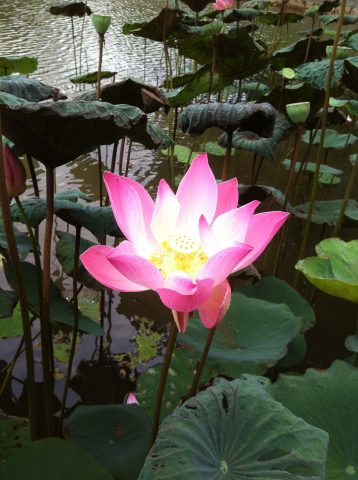
One of the park’s most charming spots is the small lotus pond at its center. Surrounded by a walking path and lined with benches, it’s a natural focal point. In the summer, when the lotuses bloom, the pond becomes a highlight of the park. Pink and white flowers rise above the water, their reflections creating intricate patterns on the surface. Locals sometimes bring bread to feed the fish and ducks that live here, and the pond is a favorite spot for photographers capturing the quiet beauty of Bogor’s landscapes.
Though Taman Kusuma isn’t a typical tourist attraction, it plays an important role in the city’s daily life. For many Bogor residents, it’s a familiar part of their routine—some come every morning for a run, others once a week to meet friends, and some just stop by for a few minutes to catch their breath between errands. The park doesn’t try to be trendy or exclusive; it simply exists, and that’s its strength. There are no crowds, no rush, no pressure to do or see anything in particular. You can arrive empty-handed, spend a few hours in silence or conversation, and leave with a sense of calm.
In recent years, Indonesia has placed greater emphasis on preserving urban green spaces, and Taman Kusuma is a good example of how this can work. The park doesn’t require elaborate upkeep or major investment, yet it serves an important purpose: offering city dwellers a chance to connect with nature without leaving town. In an era of rapid urbanization, places like this become even more valuable. They remind us that even in a bustling city, there are corners where time moves at its own pace, and nature remains as generous and welcoming as it was decades ago.