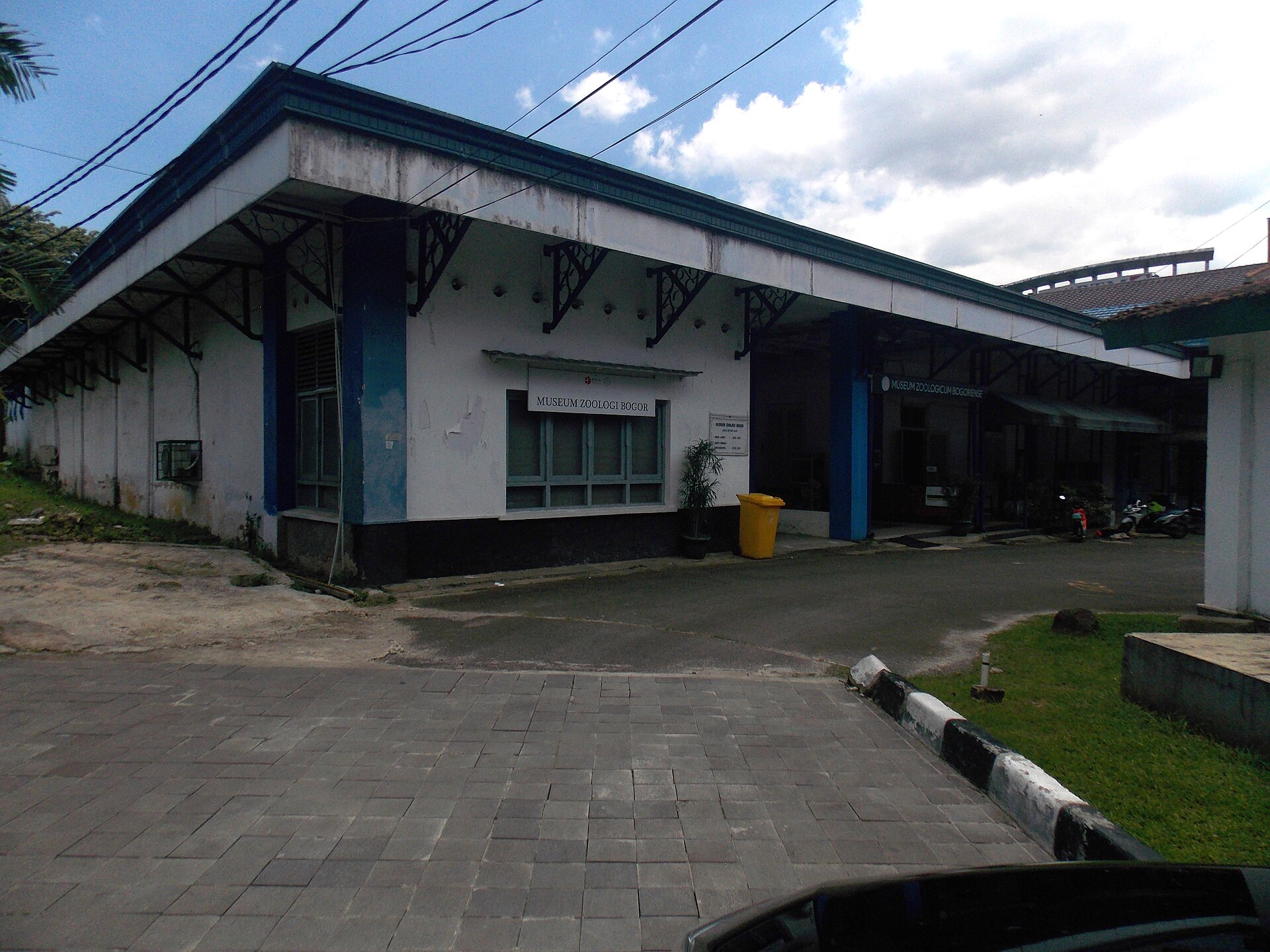
The Zoological Museum in Bogor is one of those quiet places that doesn’t demand attention but rewards those who seek it. Tucked away within the city’s famous botanical gardens, it doesn’t draw crowds or offer flashy displays. Instead, it presents row upon row of glass cases, each holding specimens collected over a century and a half. Founded in the mid-1800s as part of a Dutch colonial research station, the museum began as a scientific outpost for studying the flora and fauna of the Dutch East Indies. Today, it remains a living archive of Indonesia’s natural history, offering a deeper understanding of the country’s biodiversity than any guidebook could.
The building itself feels like a relic of another era. Low and unassuming, with classical columns and large windows, it seems untouched by time. Inside, the high ceilings and soft light create an atmosphere of quiet reflection, as if stepping into a scholar’s study from the last century. The layout is straightforward—wooden cabinets, glass display cases, and small labels with Latin names. There’s no unnecessary decoration, just the quiet presence of science and memory.
The museum’s greatest strength lies in its collection, which spans nearly every species native to Indonesia’s islands. From tiny insects to massive mammals, the exhibits offer a comprehensive look at the country’s wildlife. Some of the most striking displays are those of endangered or extinct species. A stuffed Sumatran tiger, its population now critically low, stands as a reminder of what has been lost. Nearby, the skeleton of a Javan rhinoceros—once widespread, now surviving in only a handful of reserves—tells a similar story. These specimens aren’t just anatomical studies; they’re a testament to the fragility of nature.
A separate hall is dedicated to marine life, where the skeletons of whales and sharks share space with giant shells and coral. The centerpiece is the massive skeleton of a sperm whale, its sheer size a humbling reminder of how little we still know about the ocean. Smaller displays feature delicate fish, sea stars, and mollusks, each unique in its own way. Rare sea turtles, once common along Indonesia’s shores, now serve as a sobering example of how quickly species can decline.
Beyond animals, the museum also houses a modest but fascinating collection of fossils. Ancient reptile bones and petrified shells offer glimpses into how life on these islands has evolved over millions of years. Among the most intriguing exhibits are casts of early hominid skulls discovered on Java, including the famous Java Man—one of the first known representatives of the genus *Homo* outside Africa. These fossils connect visitors not just to Indonesia’s natural history, but to the broader story of human evolution.
What lingers most for many visitors isn’t any single exhibit, but the museum’s atmosphere. There’s no rush, no pressure to move quickly from one display to the next. You can spend long minutes studying the intricate patterns of butterfly wings or examining the structure of an orangutan’s skeleton. The halls often attract biology students sketching specimens or local schoolchildren learning about their country’s rare wildlife for the first time. The quiet focus of these visitors only adds to the sense of discovery.
The museum isn’t just a repository of the past—it’s an active part of the present. Research continues here, and parts of the collection are used for educational programs. In recent years, the museum has placed greater emphasis on conservation, hosting exhibitions and lectures about environmental challenges. This shift has turned it into more than just a place to store specimens; it’s now a bridge between science and the public.
A visit here doesn’t take long—most people spend an hour or two wandering the halls. But even in that short time, it’s impossible not to appreciate the richness of Indonesia’s natural world. There are no flashy attractions or interactive exhibits, just the quiet opportunity to see the world through a scientist’s eyes. The museum doesn’t entertain; it makes you think. And perhaps that’s what makes it so valuable.