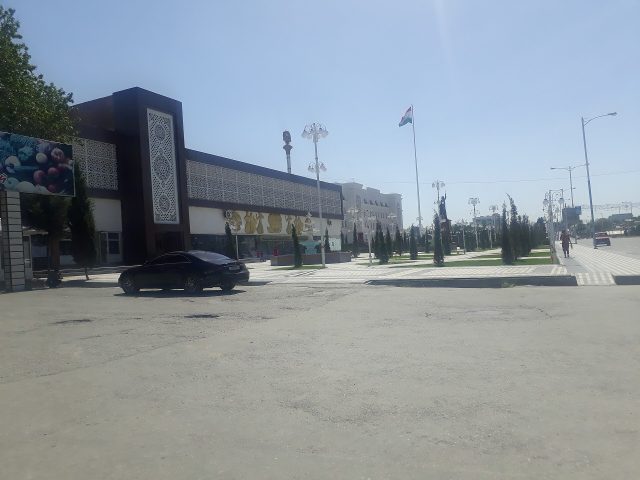
In the town named after Abu Abdullo Rudaki, the 10th-century poet who shaped Persian literature, there’s a park that doesn’t announce itself. It waits for those who slow down long enough to notice the details—the way sunlight filters through the leaves, the laughter of children on the playground, the scent of blooming flowers in spring. This is Rudaki Park, a place where the town exhales.
The park is small, but its paths are well-tended. Shaded walkways wind between flowerbeds that change with the seasons. In summer, the trees offer cool relief from the heat, and by evening, locals arrive to walk, sit, or watch the day fade. A modest fountain trickles in the background, its sound blending with the rustle of leaves.
A statue of Rudaki sits at the center, holding a book. He seems about to speak, as if sharing verses that have endured for centuries. The town itself was founded in the 1950s, and the park was one of its first public spaces, designed to honor the poet’s legacy. There’s no grand monument here—just a quiet reminder of how simplicity can hold meaning.
The park’s design is uncluttered. Pavilions dot the grounds, offering spots to sit with tea and watch the world go by. Sometimes, the small amphitheater hosts poetry readings or concerts. On those nights, the park feels different—softer, as if the words and music are part of the air itself.
For locals, the park is part of daily life. Friends meet on benches, families bring their children, and weekends bring fairs with sweets, fruit, and handmade crafts. Strangers talk easily here, turning the park into a temporary marketplace where everyone knows the rhythm of the place.
Winter changes the park. Snow covers the paths, frost clings to branches, and the usual sounds fade. Yet people still come—children sledding down gentle slopes, adults walking slowly, breathing in the cold air. If the ice is thick enough, they skate, turning the park into a winter playground.
This isn’t a place for crowds or grand gestures. It’s for those who appreciate the quiet—where you can sit on a bench, listen to the wind, and watch the town move at its own pace. Some might call it ordinary, but that’s the point. It doesn’t demand attention. It simply offers a space to pause, to reflect, to be.