The Muhammad Bashoro Mausoleum is one of those quiet corners of Tajikistan where time seems to slow down. Tucked away in the village of Rudaki, named after the great Persian poet, the mausoleum stands as a subtle reminder of the layers of history, faith, and culture that have shaped this part of Central Asia. It isn’t just a monument; it’s a place where the past lingers in the air, in the worn stones, and in the stories that have been passed down through generations.
Little is known about Muhammad Bashoro himself, the Islamic scholar and preacher to whom the mausoleum is dedicated. He lived in the 11th century, and while details of his life remain scarce, the very existence of this site speaks to the respect he commanded. Over the centuries, the mausoleum has become more than a burial place—it’s a destination for pilgrims and travelers seeking to honor his memory, a quiet sanctuary where people come to reflect and pray.
The architecture of the mausoleum is a fine example of medieval Central Asian design. Built from fired brick, the structure is modest in size but striking in its simplicity. The dome rises gently above the landscape, while the facades are adorned with delicate geometric patterns, a hallmark of the region’s craftsmanship. Inside, the space is uncluttered, with only a mihrab pointing toward Mecca and a few gravestones marking the resting places of those buried here. There’s a sense of restraint in every detail, as if the builders intended to create a space that encourages contemplation rather than distraction.
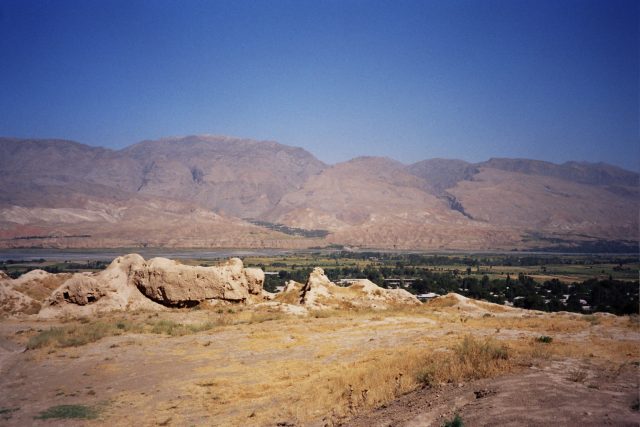
The mausoleum sits in a peaceful valley, surrounded by low mountains and green fields that stretch toward the distant peaks of the Hissar Range. The landscape here feels timeless—orchards and gardens dot the countryside, and the only sounds are the rustling of leaves and the occasional call of a bird. In summer, the air is thick with the scent of wild herbs and blooming flowers, while winter brings a quiet stillness, the ground dusted with snow. It’s a place where the modern world feels far away, even if it isn’t.
For those who visit, the mausoleum offers more than just a glimpse of medieval architecture. It’s an opportunity to step into a different rhythm, one shaped by centuries of devotion and tradition. Locals speak of the site with reverence, sharing stories of miracles attributed to Muhammad Bashoro and the solace people have found here in difficult times. Whether these tales hold truth or not, the atmosphere of the place invites reflection. There’s a weight to the silence, a sense that this ground has witnessed countless prayers and quiet moments of connection.
Rudaki itself is a small village, named in honor of Abu Abdallah Rudaki, the father of Persian poetry. Wandering its quiet streets, it’s easy to imagine the world as it might have been centuries ago—when poetry was recited under the stars, when faith was woven into daily life, and when the land itself held stories waiting to be told. The mausoleum is just one thread in this larger tapestry, but it’s an important one, a tangible link to the people who shaped this region’s identity.
Unlike the crowded tourist sites found in bigger cities, the Muhammad Bashoro Mausoleum remains a place of quiet significance. There are no souvenir stalls or guided tours here, just the occasional visitor seeking a moment of peace. The absence of crowds makes it easier to appreciate the details—the way the light filters through the doorway, the texture of the brickwork, the distant hum of the wind. It’s a place that rewards patience, where the real experience isn’t in seeing but in feeling.
If you find yourself in this part of Tajikistan, it’s worth lingering here for a while. Sit by the entrance, watch the shadows shift across the mountains, and listen to the stories the locals share. There’s something about this place that feels timeless, a connection to the past that isn’t mediated by books or screens but by the earth beneath your feet and the air around you. It’s a reminder that history isn’t just something we read about—it’s something we can still touch, if only we know where to look.