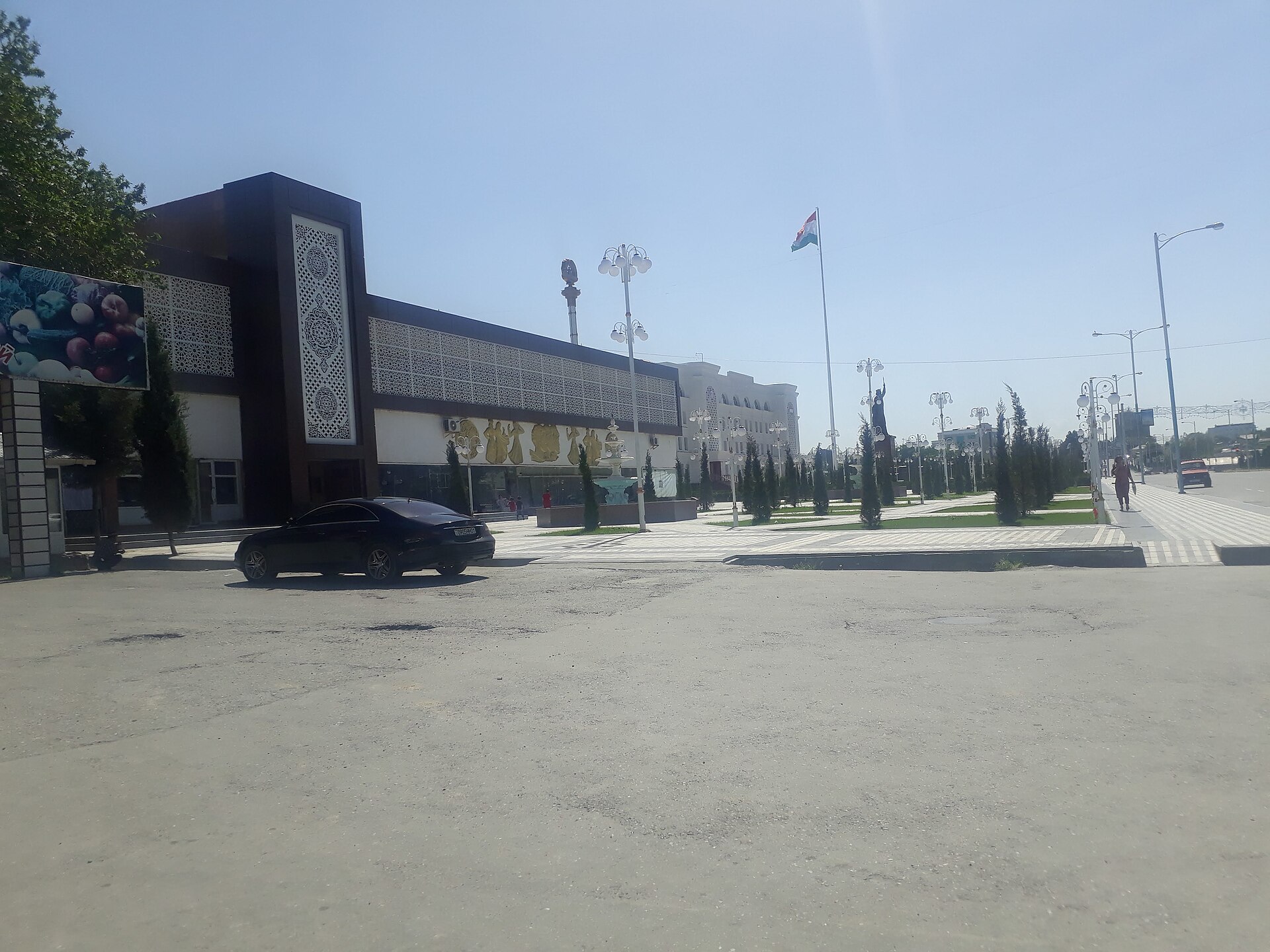
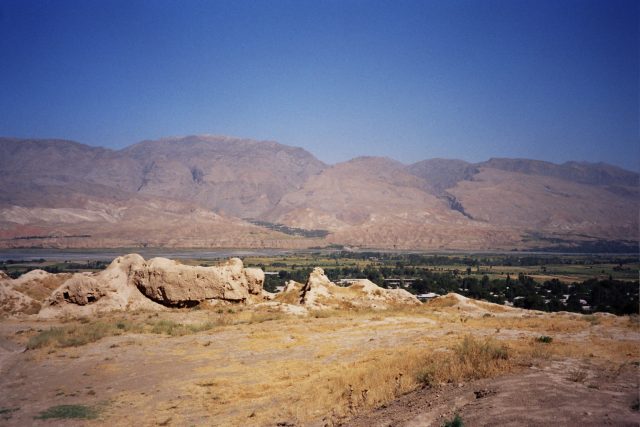
The Central Mosque of Rudaki sits at the heart of a small town, its presence unassuming yet deeply woven into daily life. The streets around it are narrow, lined with low, flat-roofed houses where locals walk at an unhurried pace.
Rudaki is named after Abu Abdullo Rudaki, the revered Persian poet often called the father of classical Tajik literature. The mosque’s history connects to his legacy, a place where culture and faith have long intersected. Centuries ago, it was a hub of activity—where people exchanged news, recited poetry, and made decisions shaping the town. The building still carries echoes of those gatherings, though the conversations have changed.
The architecture reflects the practicality of rural Central Asia. Built from fired brick, the mosque stays cool in summer and warm in winter. The main entrance has a modest arched portal, above which rises a short minaret, just tall enough to carry the call to prayer. Inside, the courtyard is framed by wooden columns supporting a shaded gallery. The columns bear simple carvings, worn by time, hinting at different craftsmen who worked on them over the years. The wear shows the mosque’s evolution, each layer telling a story of adaptation.
Inside, the space feels open. High windows let in soft light that spills across the plastered walls. The mihrab, the niche pointing toward Mecca, is unadorned. The floor is covered with carpets brought by worshippers, their patterns and colors shifting with the seasons. Depending on the time of year, the air might be cool or warmed by the press of bodies during prayer.
People come not only to pray but to sit in silence, chat with neighbors, or take a moment away from the day’s demands. The mosque’s role extends beyond religion—it’s a social space, a refuge, and a thread connecting generations. On Fridays, the courtyard fills with men from Rudaki and nearby villages, their voices rising in unison during the midday prayer. During Eid al-Adha or Eid al-Fitr, families gather, children dart between worshippers, and elders share stories. Communal meals are prepared, and for a few hours, the mosque becomes the center of celebration.
For many, the mosque is part of their personal history. It’s where children were named, where people came in grief or uncertainty, and where news was first shared. The walls have absorbed prayers, whispered confessions, and laughter.
The neighborhood moves at its own pace. Nearby shops sell fresh bread, fruit, and spices. A short walk away, a chaikhana offers tea and conversation. The streets are narrow, rarely troubled by cars. In the shade of mulberry trees, old men play backgammon or talk quietly, while children kick a ball around.
Rudaki isn’t a major tourist destination, and the mosque doesn’t draw crowds. Visitors—those curious about Tajikistan’s history—often leave with a different impression. There are no grand monuments here. Instead, what lingers is the sense of a place that belongs to the people who use it. The mosque isn’t just a relic; it’s a living part of the present, shaped by those who pass through its doors.
Faith, history, and everyday life intertwine here. The mosque isn’t just a backdrop—it’s an active participant, where the sacred and the mundane coexist. If you’re in Rudaki, step inside. You might arrive during a quiet afternoon or stumble upon a festival, where the courtyard buzzes with conversation and the scent of shared food fills the air. In those moments, it becomes clear: the mosque is a pulse, beating in time with the lives of those who call it home.